Explosion, fire at Canadian military base leave multiple fatalities, injuries
Updated 1 hour ago

Reports indicate Trump is willing to offer Iran sanctions relief for nuclear progress
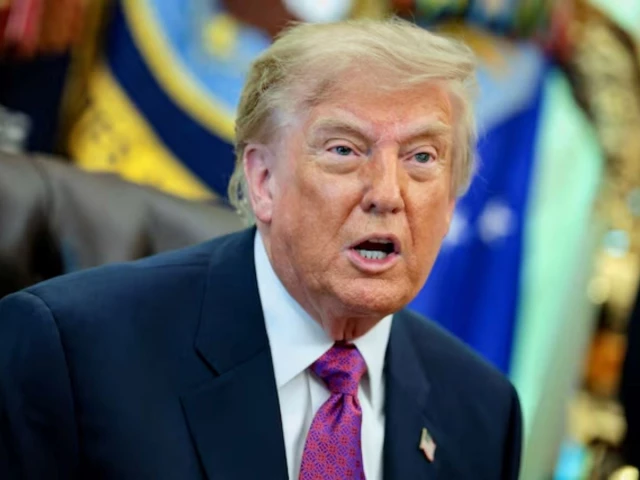
US President Donald Trump told reporters that United States officials talked with mediators trying to end Washington's war with Iran on Monday, adding the US would win the Iran war "very soon."
"We're going to win, as far as I'm concerned, it's going to be one way or the other," Trump said in the Oval Office. "It's going to go pretty quickly."
Trump also said that gas prices would come tumbling down after the US won the war.
Trump on Iran:
— Clash Report (@clashreport) September 28, 2026
We’re going to win. It’s going to be one way or the other. It’s going to go pretty quickly. pic.twitter.com/jIarJZouCV
Separately, a US official told American news outlets Axios and CNN that President Trump was willing to offer economic sanctions relief and release frozen funds to Iran in exchange for concrete progress related to its nuclear program.
Washington was engaging in "positive and constructive" talks via mediators, CNN quoted a US official as saying, emphasising that negotiators would not finalise an agreement unless nuclear-related concerns received full resolution.
The White House did not immediately respond to a request by Anadolu for comment on the remarks.
NEW: Trump offers Iran economic relief for concrete nuclear concessionshttps://t.co/CyP4k4292c
— Axios (@axios) September 28, 2026
The prospective diplomatic opening came after Trump on Saturday rejected an Iranian proposal aimed at easing tensions and reopening the strategic Strait of Hormuz, calling Tehran's conditions "unacceptable" amid the seven-month Iran war.
Trump said on Sunday that he expected additional negotiations with Tehran this week, asserting that Iranian officials had "overplayed" their hand during earlier talks.
US, Iran set to hold separate talks with mediators on Monday or Tuesday, official says
Qatari mediators were likely to hold talks with Iranian Foreign Minister Abbas Araghchi in New York, and separately with the US side on Monday or Tuesday, an official briefed on the negotiations told Reuters, in a fresh push to end the war.
The talks were expected to focus on an amended version of a seven-day proposal that Iran presented last week on the sidelines of the United Nations General Assembly, said the official, who spoke on condition of anonymity.
Araghchi remains in New York after attending the General Assembly. It was not immediately clear who would represent the US side in the talks with mediators.
🔴 Mediators are expected to hold separate talks with the US and Iran on Monday or Tuesday, with Iran’s Foreign Minister Abbas Araghchi and Qatari mediators remaining in the US, an official briefed on the negotiations tells Reuters
— Al Arabiya English (@AlArabiya_Eng) September 28, 2026
🔴 Talks will focus on an amended version of a… pic.twitter.com/3P6dNkfMng
Iran's ISNA news agency later confirmed that Araghchi would meet the mediators in the United States on Monday morning, New York time.
The two sides would "examine the latest proposals and views regarding the current situation", ISNA added.
Iranian Foreign Minister Seyed Abbas Araghchi will meet Monday morning, New York time, with the mediators in the talks with the United States.https://t.co/9WNXEG7Avr pic.twitter.com/MoYi99RGEN
— Isna English (@Isna_English) September 28, 2026
Iran's seven-day plan envisages an end to all hostilities in Iran and Lebanon, the unfreezing of billions of dollars worth of Iranian assets, an end to sanctions on Iranian oil and the lifting of the US blockade on Iranian ports.
Tehran would then allow the reopening of the Strait of Hormuz, and the two sides would also resume talks on Iran's nuclear programme.
US President Donald Trump said on Saturday he had rejected Iran's proposal, saying Tehran wanted a swift agreement because of the crippling economic pressure it is under.
However, he also told Axios on Sunday that he expected US negotiators to engage in further talks this week.
Araghchi said on Sunday that mediators had not formally conveyed a US rejection to Tehran and that Iran was awaiting Washington's definitive position before deciding its next steps.
"Our conditions are clear, and any move toward reopening the Strait of Hormuz is contingent on these conditions being met," he said on Sunday, adding that only a negotiated solution could resolve the impasse.
Iran's Khamenei says 'enemy forces' would soon be driven out of Arabian Sea
Iranian forces have driven enemy forces back from waters off southern Iran to the Arabian Sea, Supreme Leader Mojtaba Khamenei said on Monday, according to his Telegram channel, warning that Iranian forces would soon push them out of the Arabian Sea as well.
Today, because of the painful blows they [the enemies] have suffered at the hands of the valiant [Iranian] fighters & the guardians of the #Strait_of_Hormuz, they dare not advance beyond the Arabian Sea. It won’t be long before the Arabian Sea rids itself of their presence too.
— Ayatollah Mojtaba Khamenei (@MKhamenei_ir) September 28, 2026
"Today, there are various declarations of readiness throughout Islamic Iran, particularly for armed participation, creating an arena in which our people will gain honour and their enemy disgrace," he wrote on his X account.
Today, there are various declarations of readiness throughout Islamic Iran, particularly for armed participation, creating an arena in which our people will gain honor and their enemy disgrace.
— Ayatollah Mojtaba Khamenei (@MKhamenei_ir) September 28, 2026
He then said that the "bygone days" which Iran's enemies "longed to return to" have passed and "will never be repeated."
I, as a servant of the dear people of Iran, declare that those bygone days to which our enemy longs to return have passed and will never be repeated.
— Ayatollah Mojtaba Khamenei (@MKhamenei_ir) September 28, 2026
Mediators press Iran for nuclear concession to revive ceasefire talks with US: report
Mediators are pressing Iran to make concessions on its nuclear program in an effort to revive ceasefire negotiations with the US, The Wall Street Journal reported.
The initiative follows US President Donald Trump's rejection of an Iranian proposal for a seven-day ceasefire that would have reopened the Strait of Hormuz and ended the US blockade of Iranian ports, according to the Journal.
Mediators described the effort as a long-shot attempt to secure movement from Tehran on its nuclear program, while Iran has so far given little indication that it is prepared to discuss the issue.
Iranian Foreign Minister Abbas Araghchi said on Sunday that Tehran remained open to negotiations but would respond to renewed military action.
"We are fully prepared for the war to resume," Araghchi told NBC News when asked about the Journal report.
"We stand firm in the face of any new aggression, even if it comes to a doomsday war. But at the same time we stand ready for diplomacy. It is up to President Trump to choose," he added.
Arab mediators said Iran had made no concessions since Trump rejected its ceasefire proposal, while Gulf officials said Tehran wants Washington to offer concessions before negotiations advance.
Qatari Prime Minister Sheikh Mohammed bin Abdulrahman bin Jassim Al Thani, whose country is relaying messages between Washington and Tehran, said the conflict was becoming increasingly difficult to resolve.
"This conflict is very complex," he said earlier in New York at a special UN General Assembly edition of the Qatar Economic Forum.
Iran wants Washington to return to a memorandum of understanding reached in June that included reopening the Strait of Hormuz and eventually beginning nuclear negotiations in exchange for measures including sanctions relief, the unfreezing of billions of dollars in Iranian funds held overseas and an end to the US blockade.
US officials, however, said Trump no longer wants to return to that agreement, while Washington has tightened sanctions and maintained its blockade.
A senior Middle Eastern official involved in the talks said Iran could compromise on its nuclear program but would require explicit assurances that Israel would not attack again after any US-Iran agreement.
Yemeni government forces bomb Houthi positions in Taiz as conflict escalates
Yemeni government forces bombed Houthi positions west of the city of Taiz in southwestern Yemen on Monday as fighting continues to escalate in the war-torn country.
The media centre of the Taiz Military Axis said airstrikes targeted Houthi sites in the Al-Rubaie area west of Taiz.
It did not immediately provide details on casualties or damage resulting from the strikes.
There was no comment from the Houthis on the attack.
On Sunday, Yemeni government forces said that they targeted Houthi gatherings and positions in Taiz, Lahij and Al-Dhalea in the country’s southwest.
Qatar-linked LNG traffic through Hormuz strait picks up despite conflict
More QatarEnergy-linked liquefied natural gas vessels, laden and in ballast, have transited the Strait of Hormuz in the last week despite the US-Iran conflict.
In August, Kpler data showed no visible transits by Qatar-linked LNG vessels or vessels carrying cargoes from the Ras Laffan gas terminal, amid fears of attack by Iran, which has tried to throttle traffic through the Strait.
Some may have got through undetected if they kept their transponders off, but this month, visible transits of LNG tankers have begun to pick up.
The latest LNG vessel to reappear outside the strait is the GasLog Skagen, which showed up off Sri Lanka on September 27 with a cargo from Ras Laffan, LSEG and Kpler data showed.
The vessel, managed by Greece's GasLog LNG Services, had been inside the Gulf from the start of the war, ferrying cargoes from Qatar to the United Arab Emirates and Kuwait, until it was last seen there on September 20.
Another LNG vessel carrying a Qatar-origin cargo, Al Shamal, was last seen inside the strait on September 19 and reappeared outside Hormuz around September 24-25. Managed by Seapeak Maritime, it is currently skirting southern India.
The two Qatari-linked vessels Mesaimeer and Al Ghashamiya also left the Gulf with cargoes from Ras Laffan. The Mesaimeer reappeared off Oman on September 23, while Al Ghashamiya delivered its cargo to Dahej, India, on September 24.
The Qatari-linked Al Samriya appeared outside the waterway on September 17, the same day that Seapeak Maritime-managed Al Daayen emerged with a cargo en route for Caofeidian, China.
Shandong Redwood, managed by Shandong Marine Energy, transited through the strait on September 19 and delivered a cargo to Pakistan on September 23.
At least one LNG vessel entered the strait last week. Qatari-linked Al Mafyar, last seen outside Hormuz on September 19, reappeared in ballast inside the strait on September 22.
QatarEnergy, GasLog LNG Services, Shandong Marine Energy and Seapeak Maritime, an independent owner and operator of gas carriers, did not immediately respond to requests for comment.
The Strait of Hormuz carried a fifth of global supplies of crude oil and LNG before it was blockaded in the war, which began in February with US-Israeli strikes on Iran.
Many vessels passing through the strait make "dark transits" by turning off their Automatic Identification System (AIS) transponders to avoid detection.
Iran says filed complaint to UN aviation watchdog over US flight restrictions
The head of Iran’s Civil Aviation Organisation said the body has filed a complaint to the United Nations aviation agency against the United States for imposing restrictions targeting the country’s airlines, AFP reported.
“To defend the legitimate rights of the aviation industry and counter illegal restrictions imposed by America, Iran has drafted and submitted a formal protest to the International Civil Aviation Organisation (ICAO),” said Iran’s civil aviation chief Abouzar Shiroudi, according to state news agency IRNA.
Iran exercises full control over Strait of Hormuz, Persian Gulf: Iranian commander
A senior Iranian military commander said on Monday that the country exercised full control over the Strait of Hormuz and the Persian Gulf.
Army Chief of Staff and Deputy Coordinator Rear Admiral Habibollah Sayyari remarked on Monday as he spoke on the situation in the Strait of Hormuz.
Iran exercises full control over Strait of Hormuz, Persian Gulf: Senior commanderhttps://t.co/0quE5uOhhl
— Press TV 🔻 (@PressTV) September 28, 2026
“The western part of the Strait of Hormuz, the strait itself, and the Persian Gulf are under the full control of the Islamic Revolution Guards Corps (IRGC) Navy, while the eastern part of the Strait of Hormuz and the northern Indian Ocean are under the full control of the Army Navy,” he said.
“We act powerfully in the northern Sea of Oman and east of the Strait of Hormuz and will not allow anyone to pass,” he added.
Sayyari said that the Army has identified its weaknesses and is working to address them while preparing for future developments.
“Today, we can say that we are far more prepared than before,” he said.
Trump’s annihilation threats made at UNGA ‘grave and alarming’: Iranian envoy
Iran’s Ambassador and Chargé d’Affaires to the United Nations in New York, Gholamhossein Darzi, said the latest threats made by US President Donald Trump to “annihilate” Iran were "grave and alarming" because they were issued from the podium of the United Nations.
Darzi made the remarks in a letter dated September 27 to UN Secretary-General António Guterres and President of the UN Security Council Jérôme Bonnafont In response to Trump’s address at the 81st session of the United Nations General Assembly on September 22.
Iran: Trump’s annihilation threats made at UNGA are ‘grave and alarming’https://t.co/pmRNO5rZdQ pic.twitter.com/vMsRrAO2sI
— IRNA News Agency ☫ (@IrnaEnglish) September 28, 2026
“These repulsive statements are not ambiguous remarks or isolated utterances. They are rather part of a sustained pattern of public threats against Iran by the head of a permanent member state of the Security Council,” the Iranian envoy said.
“This latest development is particularly grave and alarming because the United Nations General Assembly is not a venue for threats of annihilation.”
UK minister says unwise to speculate about any Iran involvement in air base arrests
British defence minister Wes Streeting said on Monday it would be "very unwise" for him to speculate about the motives of the individuals arrested near a UK air base on Sunday, when asked if Iran was involved in the incident.
Iran has no plans to negotiate with US: state media
Iranian state media reported on Monday that no new talks were planned with the United States, after US President Donald Trump told media he expected more negotiations, according to AFP.
“Iran’s delegation in New York (for the UN General Assembly) has no plans for negotiations with the United States,” according to IRNA, citing an unnamed source close to the group.
EU's Red Sea naval mission needs more ships, Kallas says
European Union foreign policy chief Kaja Kallas said on Monday that the EU needed more ships in its mission to protect shipping in the Red Sea, known as Aspides, for it to become operational.
Speaking on arrival at a meeting of EU defence ministers in Brussels, Kallas said she had been pushing member states to contribute more to the mission, but had yet to receive any new firm commitments.
Eight US Marines injured in Iranian missile attack in Strait of Hormuz: report
Eight US Marines were injured two weeks ago when an Iranian anti-ship cruise missile struck a vessel they were operating on in the Strait of Hormuz, NBC News reported on Sunday, citing three US officials.
The report said the Marines were not seriously injured but suffered smoke inhalation and possible traumatic brain injuries after experiencing concussion-like symptoms, including headaches.
Seven of the Marines were enlisted personnel, while the eighth was an officer. All eight returned to duty shortly after the Sept. 14 attack, according to the officials.
The Marines were operating as part of a battalion landing team when the Iranian missile struck the vessel, they said.
The officials said the vessel was not a US Navy ship but declined to specify its type, referring to it only as a maritime vessel.
The Pentagon has faced growing scrutiny over casualty figures since the US-Israel war with Iran began in February, with the number of injured and killed troops subject to changes in reporting and classification.
Read: Trump attends dignified transfer of four US troops killed in Middle East
As of Wednesday, the Pentagon’s Defence Casualty Analysis System (DCAS) had recorded 861 US service members as injured in the conflict.
The eight Marines were added to the database nearly 10 days after the September 14 attack, while a US official attributed delays in reporting to symptoms that may appear later and the system’s lack of real-time updates.
We 'did not come to New York to sell a war': Iranian foreign minister
Araghchi in an interview with NBC News said that "President Pezeshkian and I did not come to New York to sell a war. We came to forge peace."
Told @MeetThePress:
— Seyed Abbas Araghchi (@araghchi) September 27, 2026
President Pezeshkian and I did not come to New York to sell a war. We came to forge peace.
Iran nonetheless remains steadfast in the face of any aggression—even if it comes to an apocalyptic war. At the same time, we are ready for real diplomacy.
He stated that Iran "nonetheless remains steadfast in the face of any aggression-even if it comes to an apocalyptic war. At the same time, we are ready for real diplomacy."
When asked if they trusted Donald Trump, Araghchi said "we trust ourselves. We are ready for diplomacy, we are ready for war at the same time. They have tested us in both cases; they have tested us in their aggression twice, and they are welcome if they want to test us once again."
Iran’s main airport remains fully operational despite US sanctions, CEO says
Ramin Kashef-Azar, CEO of Tehran’s Imam Khomeini International Airport, says the airport remains fully operational despite US sanctions on Iran’s aviation industry, Al Jazeera reported.
He told Iranian media that the airport continues to serve more than 30 international destinations and that 60 flights operated successfully on September 23, the day the sanctions took effect.
The US Treasury Department sanctioned 27 airlines on September 8, covering the remaining Iranian carriers not previously sanctioned. US Treasury Secretary Scott Bessent said airports and companies that provide Iranian-operated aircraft with fuel, landing services or ticket sales risk secondary sanctions that could cut them off from the US financial system.
Oman and the UAE have since suspended Iranian flights, and four airports in Iraq have halted them. Iranian airlines continue to fly to countries including China and Russia.
Iran insists on diplomatic solution after Trump rejects peace plan
Iran insisted on Sunday that only diplomacy can solve its conflict with the United States and Israel, after Donald Trump said he rejected an Iranian proposal to reopen the Strait of Hormuz and end fighting.
"Our conditions are clear, and any move toward reopening the Strait of Hormuz is contingent on these conditions being met," Araghchi posted on social media. "Only a negotiated solution can get them out of this deadlock."
Iran announced a peace proposal last week at the UN General Assembly in New York, saying it had been transmitted to the Americans via Qatari mediators. Trump said on Saturday he rejected the plan, and argued that desperation was driving the Iranians’ push for an agreement on the key waterway.
"They want to make a deal to open the Hormuz Strait immediately because they're losing so badly," Trump told reporters at the White House.
Read more: Iran Guards claim seizure of US underwater drone in Hormuz, US denies
Keeping the door to diplomacy open, however, Trump told Axios in a phone interview on Sunday that he expected US negotiators to engage in more talks this week.
Araghchi said mediators facilitating Tehran's talks with Washington had not officially relayed a US rejection of the plan.
"We are waiting for the mediators to convey the definitive views to us, and we will make a decision based on them," Araghchi posted.
The US has imposed an economic blockade on Iran to put pressure on Tehran to stop Iranian attacks on vessels in the Strait of Hormuz, which have drastically reduced shipping through the area even as Trump repeatedly asserts that the US controls the waterway.
The commander-in-chief of Iran's army, Amir Hatam, said the war was at a critical and decisive stage, adding that Tehran would not accept a situation in which it was unable to trade while foreign powers used the region's strategic waterways.
"If Iran cannot trade, if Iran cannot live, no one will be able to trade or live," he said, in comments reported by state media.
Saudi Arabia drawn deeper into war
Previous attempts at diplomacy have failed to end the war, which began on February 28 with US and Israeli strikes on Iran.
Since then, it has alternated between pauses and renewed strikes, killing thousands while degrading the conventional forces of Iran and damaging its already ailing economy.
Iran and its allies have responded by extending the conflict throughout the region. Iran has struck US allies in the Gulf with drones and missiles, while its Houthi allies in Yemen have hit Saudi interests.
Saudi Arabia, the largest of the Gulf states, has been drawn deeper into the war this month as Houthi fighters have advanced in Yemen, routing forces of the Saudi-backed government and threatening Saudi oil exports through the Red Sea.
The Iran-backed Houthis have repeatedly fired into Saudi Arabia and, in a possible sign of further escalation, parents in Riyadh received notices from schools on Sunday saying classes would shift to remote learning for the week, according to people who received the messages.
The notice did not give a reason for the decision. Saudi authorities did not immediately respond to a request for comment.
Yemen's health ministry, meanwhile, said seven people were killed and 40 wounded, including children, in a strike on shops at a market at the Mawiya junction in Taiz province, in the southwest.
Later, Yemen's internationally recognised government said its forces had targeted a Houthi military camp and vehicles at the same junction.
Conflict disrupts oil, harms global economy
The Iranians also engaged their Saudi rivals regarding the Strait of Hormuz during the brief flurry of diplomacy in New York, underscoring the stakes of a seven-month-old conflict that has disrupted oil flows through a critical shipping lane and taken a toll on the global economy.
Araghchi told reporters at the UN on Friday the proposed deal would trigger a seven-day countdown to reopening the strait and a pause in regional fighting.
"If there is seriousness on the US side to come to a deal and reopen the Strait of Hormuz, everything is now prepared," Araghchi said. If the US agreed, the warring parties could start broader talks "on mutually agreed subjects."
That could potentially include discussions of Iran's nuclear programme. Trump has cited preventing Tehran from ever acquiring a nuclear bomb as a key goal, along with ending its ability to attack its neighbours and creating conditions for Iranians to topple their leadership.
US envoy to the United Nations Mike Waltz said on Sunday in an interview with CNN's State of the Union that Trump rejected the Iranian proposal because it required immediately lifting sanctions and releasing frozen assets.
"So the bottom line is they were asking for everything up front with a promise that they would then talk," Waltz said. "The president's just not confident that the Iranians are coming in good faith and that they will truly negotiate the end of their nuclear programme."
Iranian President Masoud Pezeshkian, in an interview with the CBS show "Face the Nation", said Tehran was ready for talks on its nuclear programme and other issues, but would not accept "bullying or coercion".
"Iran is not seeking war, but will defend itself against pressure, threats and attacks,” Pezeshkian said, adding that it had already agreed that "we're not supposed to develop nuclear weapons".
Israel's Netanyahu visited Abu Dhabi on Sunday, Israeli official says
Israeli Prime Minister Benjamin Netanyahu visited Abu Dhabi and met with UAE President Sheikh Mohammed bin Zayed Al Nahyan on Sunday, a senior Israeli official told Reuters.
There was no immediate comment from Netanyahu's office and the UAE's foreign ministry.
The visit comes after Israeli newspaper Haaretz this month reported that Sheikh Mohamed had warned Netanyahu a week and a half before October 7, 2023, that Hamas was planning a major operation against Israel. The warning was not passed to Israeli intelligence agencies or the military, Haaretz reported.
Netanyahu, who has denied the report and threatened legal action against the newspaper, is facing a tough reelection campaign. Opposition leaders have accused the prime minister of bearing responsibility for security failures that preceded the October 7 chaos.
Also read: Netanyahu failed to relay UAE warning of possible Hamas attack to security chiefs: NYT
The UAE has declined to comment on the Haaretz report but has said that the UAE and Israel have maintained "open and direct lines of communication" since establishing diplomatic relations in 2020. A UAE source previously told Reuters that the UAE discusses security matters with countries through the "relevant entities," but not "at the level of national leaders."
Earlier this year, the UAE denied that President Sheikh Mohamed met with Netanyahu after the Israeli prime minister's office said in May that Netanyahu had "secretly visited" the Gulf country and met with the president.
A source familiar with the meeting said at the time that Netanyahu and Sheikh Mohammed met in Al-Ain, an oasis city in Abu Dhabi along the country's border with Oman, on March 26.
Since coming under attack during the Iran war, the UAE has strengthened its relationships with the United States and Israel, with which it opened ties as a result of the 2020 Abraham Accords. The relationship with Israel gives the UAE a lever for regional influence and a unique channel to Washington.









This material may not be published, broadcast, rewritten, redistributed or derived from. Unless otherwise stated, all content is copyrighted © 2026 The Express Tribune.


1727268465-0/Untitled-design-(42)1727268465-0-208x130.webp "sisyphus in the land of saviours")



COMMENTS (2)
Comments are moderated and generally will be posted if they are on-topic and not abusive.
For more information, please see our Comments FAQ