Iran's 'Midday Meal' takes top prize at Asia's biggest film festival
Updated 8 hours ago

Hira Khan, Zoya Nasir and others weigh in as stars and fans debate shifting attitudes towards divorce
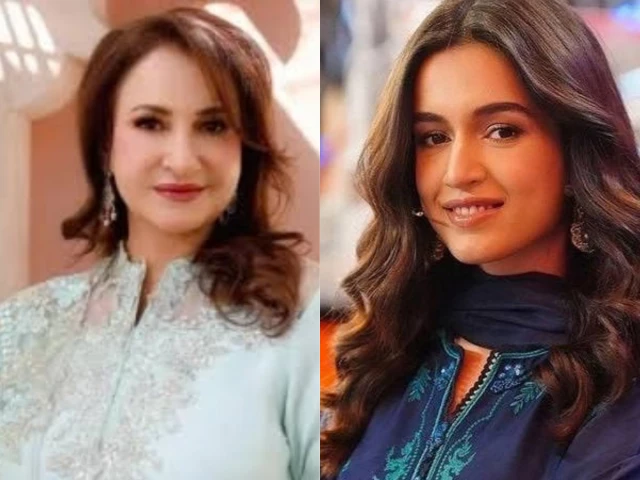
Pakistani celebrities have voiced differing views on actor Saba Faisal’s remarks about divorce, arguing that the end of a marriage should not simply be framed as something being “normalised”, but also recognised as a difficult experience that people navigate in different ways.
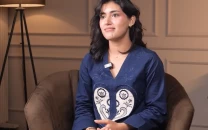
Faisal recently came under fire after appearing in an interview, where she spoke about what she described as the changing attitudes towards divorce in society.
Her comments have since sparked a debate among celebrities and fans over whether greater acceptance of divorce reflects a loss of sensitivity towards marriage or a changing willingness to acknowledge difficult circumstances.
“Before, when someone used to get divorced, there used to be a ‘sog’ happening for months,” she said, referring to the period of mourning and grief that would traditionally follow a divorce.
“Dads couldn’t do anything, but now when we find out girls have got divorced, it’s mentioned casually over a phone call. ‘Oh, I got divorced many months back,’ when someone asks about their husband. After that, I went abroad and tried to figure stuff out,” she added.
Her remarks prompted a strong reaction online, with celebrities including Hira Khan and Zoya Nasir speaking out, while fans also joined the discussion.
Taking to her Instagram story, Khan responded to Faisal’s comments, writing, “It’s better to go through this than to be carried through a grave. I said it once before and will again. She needs help.”
Khan went on to write, “In a country — in fact, subcontinent — where women are burned to death every day because they chose to remain in marriages they should have been allowed to leave alive; where infants are raped and tortured and women and children aren’t even safe in their graves, it is astonishing that there are still people on social media who find endless reasons to police, shame and condemn women.”
She further clarified, “No one celebrates divorce,” adding that “even Allah gave women the right to it.”
Khan also wrote, “I’m half your age, but I understand this much. Perhaps I was raised to understand that a woman’s dignity, safety and right to choose matter.”
She continued, “And honestly, it isn’t your fault that you weren’t.”
The exchange escalated when Faisal’s daughter, Sadia Faisal, appeared to respond to Khan, writing, “I wish I could see this so-called actress someday.”
Khan was not the only celebrity to challenge Faisal’s remarks.
Zoya Nasir also weighed in, writing in the comments, “Oh. My. God. I have SO much to say, with all due respect. What a dangerous and twisted narrative.”

Dr Ejaz Waris offered a different perspective, pointing out that divorce can affect families on both the husband’s and wife’s sides.
Waris agreed with Faisal on one point, saying that “divorce shouldn’t be celebrated”, but added that regardless of whether a family is “modern, lives in DHA or in Anarkali, they share the same grief.”
He said he respected Faisal’s opinion, while also stressing that Khan is “half her age” and that people in the industry should learn to respect their elders.
Fans also questioned the assumption that divorce affects only the woman’s family, pointing out that both sides can experience grief.
Others echoed the sentiment that “One can’t understand the pain unless it's their daughter at stake”.

At the same time, some users defended Faisal’s comments, arguing that “All she meant to say is that divorce is normalised” and that people can now return to their everyday lives more quickly after a separation.

The debate has ultimately highlighted a generational shift in how divorce is discussed.
Faisal’s comments focused on what she sees as the changing social response to the end of a marriage, while her critics emphasised that greater acceptance does not necessarily mean divorce is celebrated or that the emotional toll has disappeared.
For many, the conversation reflects a broader tension between preserving the sensitivity traditionally associated with marriage and recognising that people’s experiences of marriage, separation and divorce can differ significantly.









This material may not be published, broadcast, rewritten, redistributed or derived from. Unless otherwise stated, all content is copyrighted © 2026 The Express Tribune.






COMMENTS
Comments are moderated and generally will be posted if they are on-topic and not abusive.
For more information, please see our Comments FAQ