Doctors escalate strike after LRH assault
Updated 3 hours ago

Travellers complain of traffic congestion, difficult access to platforms
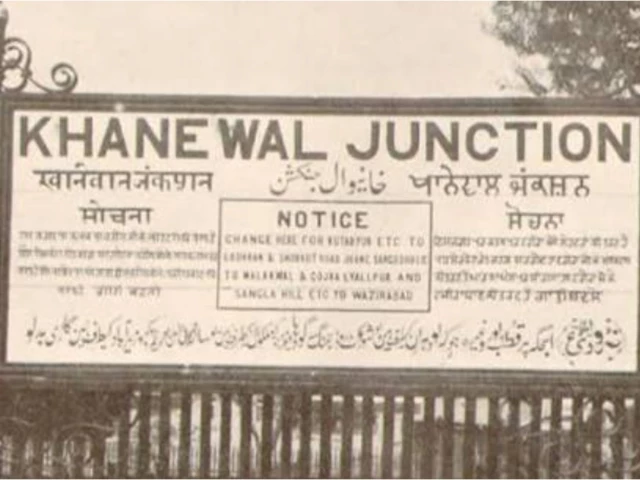
Khanewal Railway Junction, one of Pakistan Railways' historic and strategically important railway centres, continues to face several longstanding challenges.
Although the station building has undergone renovation and beautification, passengers still face difficulties relating to basic facilities.
Improved waiting areas, washrooms, drinking water, cleanliness and platform facilities are among the key needs identified by passengers.
Parking and traffic management around the station have also remained longstanding issues, with no permanent arrangement, according to local residents.
Train delays, linked to broader operational challenges facing Pakistan Railways, can have a wider impact at Khanewal because trains operating on different routes converge and change directions at the junction.
Preserving the station's historic buildings, railway colony and old infrastructure while providing modern facilities is another challenge.
Residents say traffic congestion, encroachments and urban planning issues around the station also directly affect passengers.
According to local accounts, the railway station's history dates back to 1865, when a small flag station was established at the site.
Elder Baba Sher Dil Khan said a flag station was considerably smaller than a regular railway station and trains would stop when required or when passengers were present.
He said the modest railway halt gradually transformed the area by facilitating the movement of people, goods, traders and government employees.
Before the arrival of the railway, the area around present-day Khanewal was sparsely populated, with large tracts of land consisting of grazing grounds and relatively undeveloped areas, according to local historical accounts.
"The railway gradually became a catalyst for settlement and commercial activity," Baba Sher Dil Khan said.
Ishrat Khan, another local resident familiar with the area's history, said small shops, passengers, labourers, railway employees and local businesses gradually began gathering around the station.
What started as a small railway halt eventually developed into a centre of population and commerce.
Historical accounts cited by local residents indicate that Khanewal's importance increased during the 1870s as plans were developed to connect the area with routes towards the south.
In 1874, additional railway staff were reportedly posted at Khanewal to oversee railway work towards the Khanewal-Lodhran direction.
A small formal railway station, along with post and telegraph facilities, was reportedly established in 1876 as passenger and freight traffic increased.
The growing railway activity also provided employment to a large number of porters.
However, some longstanding passenger-related problems remain unresolved.
Elderly porter Baba Malangi said the long pedestrian bridge at the station had been a source of difficulty for passengers for decades.
Elderly travellers and people suffering from heart-related ailments, in particular, faced considerable physical strain while crossing hundreds of steps to reach trains, he said.
He called for an alternative to the existing pedestrian bridge and suggested that the ticket office be relocated inside the station to reduce the distance passengers have to cover and ease their difficulties.
Malik Mahmood, a retired railway officer, said Khanewal had acquired importance during the British period as a key railway link between northern and southern parts of the region.













This material may not be published, broadcast, rewritten, redistributed or derived from. Unless otherwise stated, all content is copyrighted © 2026 The Express Tribune.








COMMENTS
Comments are moderated and generally will be posted if they are on-topic and not abusive.
For more information, please see our Comments FAQ