'Indian duty-free access threatens GSP Plus edge'
Updated 11 hours ago

Aims to pay liabilities of Rs1.49tr out of Rs3.6tr gas-sector circular debt
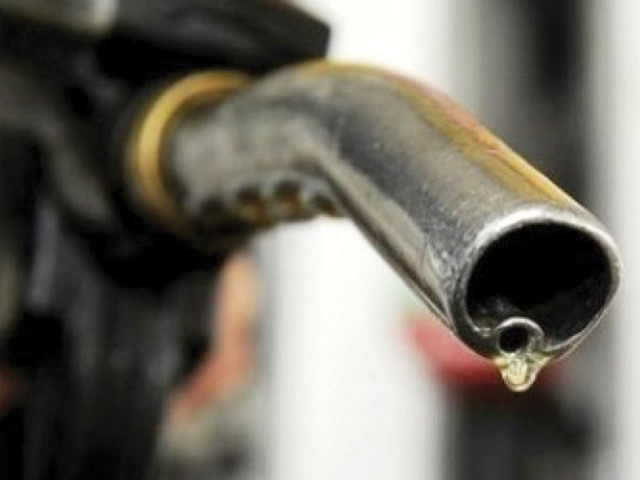
The Petroleum Division has submitted a circular debt settlement plan to the Cabinet Committee on Energy (CCOE) to clear liabilities of Rs1.49 trillion in the gas sector.
A report was presented to the CCOE in a meeting held on Tuesday, chaired by Prime Minister Shehbaz Sharif.
Sources said the meeting was informed that circular debt in the gas sector had jumped up to Rs3.6 trillion, which included a principal amount of Rs1.8 trillion and late payment surcharge of Rs1.7 trillion. According to the settlement plan, Rs540 billion will be paid through incremental dividends from Oil and Gas Development Company (OGDC), Pakistan Petroleum (PPL) and Government Holdings Pvt Ltd.
Additionally, Rs270 billion will be collected from oil consumers by imposing the petroleum development levy at Rs5 per litre on annual sales of 18 billion litres of petroleum products. Also, Rs590 billion will be generated through a reduction in liquefied natural gas (LNG) cargoes and savings arising from replacement by natural gas.
The Petroleum Division is expected to receive Rs80 billion through LNG price recovery and Rs15 billion via take-or-pay claims. Sources said that the government had agreed with the IMF and the World Bank regarding the net financial burden on Sui companies due to policy and regulatory decisions. The energy ministry has engaged the World Bank to define circular debt after consultation with all gas-sector stakeholders. The bank has also developed a circular debt reporting tool.
According to the circular debt report, the tariff differential amounts to Rs1.4 trillion, power companies' receivables stand at Rs123 billion, sales/income tax receivables at Rs211 billion and litigation costs at Rs58 billion. The total circular debt amounts to Rs3.6 trillion including the principal and late payment surcharge. Officials revealed that the tariff differential was based on Sui companies' reported numbers. The Petroleum Division suggested that Ogra should review the shortfall/surplus and update numbers based on the final revenue requirement for 2026.
Sources pointed out that the gas utilities had been diverting expensive LNG to the domestic consumers, which also caused an increase in the circular debt. Pakistan State Oil (PSO) had an agreement with Qatar Gas for LNG import but supply was halted by the US-Iran war.
To bridge the gap, Pakistan arranged spot LNG cargoes at high rates, which even reached $19 per million British thermal units (mmBtu). The normal price for Qatar LNG cargoes ranged from $12 to $13 per mmBtu. The expensive LNG was given to power plants whose cost was recovered from electricity consumers. The circular debt has mainly impacted oil and gas exploration companies like OGDC and PPL because Sui companies drew gas but could not pay their bills.
According to a statement released on Tuesday, during the CCOE meeting, the Power Division presented amendments to the National Electricity Plan 2023-2027. The amendments were related to integrated energy planning, increasing power generation, supplying electricity generated from renewable sources to remote areas, cross-border electricity trade, expansion of transmission system, tariff design, energy conservation, system and market operations, identification and management of risks, enhancement of local capacity in fuel and technology, research and development, and digitalisation.
The cabinet committee approved the amendments and directed that further consultations be held with the government of Khyber-Pakhtunkhwa and the National Electric Power Regulatory Authority (Nepra) regarding the amendments.
Approval of IEP design
Meanwhile, the Ministry of Energy (Power Division) on Tuesday presented the High-Level Design of Pakistan's National Integrated Energy Plan (IEP) 2027-2060 to the CCOE. The committee approved the design, marking an important milestone towards adopting a coordinated, long-term and cross-sector approach to energy planning.
The National Integrated Energy Plan shall provide a holistic framework for energy-sector planning by moving beyond the traditional approach of targeting the individual energy sub-sectors in isolation. It will facilitate coordinated planning across different energy sectors and between federal and provincial institutions, enabling better optimisation of energy resources, infrastructure and investments.
The high-level design is based on four fundamental pillars: energy, economics, equity and environment. The energy pillar focuses on a secure, reliable and resilient energy system. The economics pillar emphasises a competitive and financially sustainable energy sector. Equity ensures inclusive, accessible and just energy transition while the environment pillar aims to achieve a sustainable, low-carbon and climate-resilient energy future.
The IEP is expected to provide significant benefits to consumers and the economy. By promoting holistic planning between federal and provincial departments, it will help reduce fragmented decision-making and enable more efficient and optimised use of Pakistan's available energy resources. Better coordination of energy investments and infrastructure can help avoid duplication, improve system efficiency and contribute towards reducing the overall cost of energy.
For the common consumer, the ultimate objective is to ensure reliable, affordable and accessible energy for all. The integrated approach will also support greater utilisation of indigenous energy resources, integration of renewable energy and emerging technologies such as storage systems, while reducing dependence on costly imported energy where economically and technically viable. At the same time, the IEP will ensure that future energy development is aligned with environmental sustainability and climate resilience. The four pillars provide a balanced framework for energy security, affordability, universal access and environmental sustainability.
The approval of the high-level design is a significant first step towards the formulation of the National Integrated Energy Plan for 2027-2060, which will provide a long-term roadmap for a secure, economically sustainable, equitable and environmentally responsible energy future.







This material may not be published, broadcast, rewritten, redistributed or derived from. Unless otherwise stated, all content is copyrighted © 2026 The Express Tribune.

1727268465-0/Untitled-design-(42)1727268465-0-208x130.webp "the reverse renaissance")




COMMENTS (1)
Comments are moderated and generally will be posted if they are on-topic and not abusive.
For more information, please see our Comments FAQ