SHC seeks cabinet record over enforcement of UN rules on used vehicle imports
Updated 27 minutes ago

Pakistani flag ascends the mast across the country
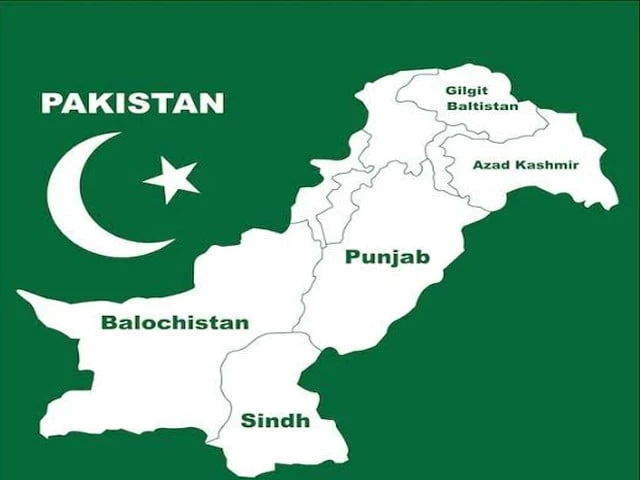
Pakistan's Independence Day is not merely an annual ritual of flags and parades. It is a reaffirmation of a promise - the promise that this nation will remain Secure, Sovereign and Second to None in the defence of its skies and its destiny.
In every era, that promise has taken a different form. In our time, it finds its sharpest expression in the Pakistan Air Force, whose ascendancy under the visionary leadership of Air Chief Marshal Zaheer Ahmed Baber Sidhu has transformed the green and white of the national flag into living realities of Strength, Sacrifice and Strategic maturity.
A Vision Rooted in Jinnah's Words
Quaid-e-Azam Muhammad Ali Jinnah envisioned the Pakistan Air Force as "an efficient Air Force, Second to None." He did not ask for mere numbers or for spectacle. He asked for a Force rooted in Discipline, Character and Professionalism.
From the early struggles of a fledgling service in 1947 - with limited aircraft, minimal infrastructure, and immense geopolitical pressure - to its storied heroics in 1965, 1971, and beyond, the PAF has treated the Quaid's words not as a slogan, but as an oath. It is an oath that every generation of "Men in Blue" must earn afresh in the crucible of operations.
On Independence Day, when the Pakistani flag ascends the mast across the country, that oath is renewed. Today, it is embodied with exceptional clarity in the leadership philosophy of ACM Sidhu.
The Sidhu Era: A Doctrinal and Technological Renaissance
Air Chief Marshal Zaheer Ahmed Baber Sidhu assumed command in 2021. This was not a routine transition. It marked the beginning of a doctrinal and technological renaissance for the Pakistan Air Force.
The world in the 2020s is different. Wars are no longer fought only in the skies. They are fought across Land, Air, Space, Cyber and the Electromagnetic Spectrum. Threats are faster, smarter, and more networked. In this volatile regional environment, ACM Sidhu made a deliberate strategic choice:
PAF would no longer chase prestige platforms for headlines. Instead, it would build war-winning capabilities - integrated, survivable, and decisive.
Under his leadership, the Force shifted from platform-centric thinking to Kill Chain-centric doctrine. The goal is simple yet profound: the ability to Find, Fix, Track, Target, Engage and Assess across multiple domains with Speed, Precision and Coherence.
What does that look like in practice?
Radars, AEW&C platforms, fighter aircraft, UAVs, UCAVs, ground-based air defences and long-range strike assets have been fused into a single, intelligent system. The objective is to See First, Decide First and Strike First.
This leadership renaissance did not merely modernize hardware. It recalibrated mindset. PAF is now a Multi-Domain Air Force that understands the character of 21st century warfare and is prepared to stay ahead of it.
Modern Fleet and Future Platforms
Today, Pakistan commands a formidable fleet of modern combat aircraft. The JF-17 Thunder Block III represents indigenous innovation with AESA radar, advanced avionics and extended-range weapons. The F-16 variants continue to provide proven capability. The newly inducted J-10C fighters add agility, beyond-visual-range lethality and network-centric warfare capacity.
Backing these aircraft are advanced munitions: long-range Air-to-Air missiles, hypersonic weapons and precision strike warheads. These are not just tools of war. They are tools of deterrence.
Looking ahead, PAF is poised to operate multiple fifth-generation platforms. The flagship of this future is the indigenous stealth program, PFX. PFX is not just an aircraft project. It is a statement that Pakistan intends to master the technologies that will define airpower in the 2030s and beyond - stealth, sensor fusion, and networked operations.
This will usher in an era of doctrinal flexibility and stealth-enabled deterrence, ensuring that Pakistan's airspace remains inviolable.
Beyond Aircraft: Force Multipliers and the Kill Chain
Yet, numbers alone do not define dominance. Modern airpower is about the system behind the fighter jet.
PAF has invested heavily in Force Multipliers:
Electronic Warfare platforms to jam, deceive and dominate the spectrum
Space and Cyber capabilities that bind Air, Ground, Naval and digital battlespace into a unified Kill Chain
UAVs and UCAVs, including MALE/HALE systems, loitering munitions and Manned-Unmanned Teaming concepts
These assets expand the battlespace. They enable persistent ISR, standoff strikes, and saturation of hostile defences without risking pilots unnecessarily. In a future conflict, the side that processes information faster and acts on it first will win. PAF is building exactly that advantage.
NASTP: From Import Dependency to Innovation
Perhaps the most transformative step has been the creation of National Aerospace Science and Technology Parks, NASTP.
Through NASTP, PAF has nurtured an ecosystem where radars, EW suites, AI systems, drones and avionics are conceived, tested and fielded on Pakistani soil. Engineers, scientists, startups and the armed forces now collaborate under one roof.
NASTP has shifted Pakistan from import dependency to innovation-driven autonomy. This matters strategically. In a world of sanctions, embargoes, and shifting allegiances, self-reliance is not a luxury. It is survival.
The green of our flag now finds tangible expression in indigenous capability. The white symbolizes a technologically inclusive Pakistan - ready to partner with the world, but determined to stand on its own feet.
Operational Maturity: Lessons from Swift Retort
Capability means little without credibility. PAF's operational maturity was visible in Operation Swift Retort in 2019. When faced with provocation, the response was measured, precise, and decisive. The message was clear: Pakistan's sovereignty is not negotiable, and its air force has both the will and the means to defend it.
That operation was a validation of training, doctrine, and technology. It showed that PAF could operate under pressure, integrate multiple assets, and deliver effects with minimal escalation. It is this balance of strength and responsibility that defines a modern air force.
The Road Ahead: Frontiers of the Future
As we move from the Dawn of Freedom in 1947 to the Frontiers of the Future, the challenges will only grow. Hypersonic weapons, artificial intelligence, space-based sensors, and drone swarms will change how wars are fought.
But the principles will remain the same: vigilance, professionalism, and innovation. Under ACM Sidhu's leadership, PAF has embraced those principles fully. The focus is no longer on catching up. The focus is on leapfrogging - building capabilities that adversaries cannot easily counter.
For the people of Pakistan, this means security. It means that on every Independence Day, when children wave flags and jets roar overhead, they can do so with confidence. The guardians of the sky are not only present. They are prepared.
Conclusion
From the modest beginnings at Mauripur to the multi-domain force of today, the Pakistan Air Force has lived up to Jinnah's vision. "Second to None" was never about boasting. It was about a standard - a standard of excellence, sacrifice, and service.
As Pakistan celebrates another Independence Day, the oath is renewed. Secure. Sovereign. Second to None. And with leaders like Air Chief Marshal Zaheer Ahmed Baber Sidhu at the helm, and institutions like NASTP driving innovation, that oath is in capable hands.
The journey from the dawn of freedom to the frontiers of the future continues. And the PAF will be leading from the front.









This material may not be published, broadcast, rewritten, redistributed or derived from. Unless otherwise stated, all content is copyrighted © 2026 The Express Tribune.



COMMENTS
Comments are moderated and generally will be posted if they are on-topic and not abusive.
For more information, please see our Comments FAQ