Police assault case: Islamabad ATC fixes Oct 6 for indictment of Imaan, Chattha
Updated 3 hours ago

Karachi’s major public hospitals have 7,750 beds for nearly 30 million people
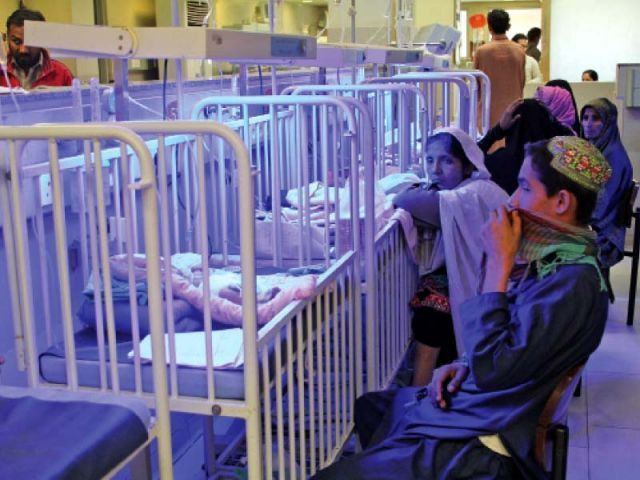
Public hospitals in Karachi are struggling to cope with rising patient numbers as their bed capacity has remained unchanged for the past decade despite annual budget increases of 10 to 15 per cent.
Hospital administrations say growing patient numbers and higher medicine and surgical costs have made existing budgets insufficient, while the health department says allocations are based on hospital bed capacity.
Major facilities, including Civil Hospital Karachi, Jinnah Postgraduate Medical Centre (JPMC) and the National Institute of Cardiovascular Diseases (NICVD), have not increased their regular inpatient beds in 10 years.
Karachi, with a population of nearly 30 million, has around 7,750 beds across six district and teaching hospitals, including JPMC, Civil Hospital Karachi, Lyari General Hospital and Abbasi Shaheed Hospital. Some additional beds have been added to emergency departments, but overall capacity remains under pressure.
Paediatric emergency care is particularly constrained, with around 500 beds available at NICH and other government hospitals in Karachi. Doctors say two or even three children are sometimes accommodated on a single bed, while patients unable to secure beds often turn to private hospitals.
Health experts say medicine prices have increased by around 50 per cent over the past four years, while surgical supplies have become 60 to 70 per cent more expensive.
Civil Hospital Karachi has 2,000 beds and a medicine budget of Rs1.59 billion, while JPMC has 2,000 beds and Rs1.91 billion. Lyari General Hospital has 500 beds and Rs453.4 million, while Abbasi Shaheed Hospital has 1,000 beds; its medicine budget was not available.
NICVD has 750 beds and a medicine budget of Rs344.56 million, while the National Institute of Child Health (NICH) has 530 beds and Rs319.5 million. Among district hospitals, Liaquatabad and New Karachi each have 200 beds, with medicine budgets of Rs52.32 million and Rs121 million respectively.
Saudabad Hospital has 200 beds and Rs166.5 million, Korangi Hospital has 350 beds and Rs96.58 million, while Qatar Hospital has 400 beds and Rs213.3 million in medicine funding.
Dr Khalid Bukhari, medical superintendent of Civil Hospital Karachi, said 6,000 to 7,000 patients visit its outpatient departments daily, while 800 to 1,000 report to the emergency department.
“Treating a fracture patient costs between Rs100,000 and Rs150,000, including surgery, medicines and surgical supplies. The hospital has 12 operating theatres where more than 100 surgeries are performed daily,” he said.
JPMC spokesperson Dr Waqas Khan said around 2,000 patients visit the emergency department and 5,000 to 6,000 visit its outpatient departments every day.
Around 150,000 patients seek treatment at JPMC each month, with complex cases requiring admission. Its 10 operating theatres perform 25 to 30 surgeries daily, while medicines are provided free through the hospital pharmacy.
Public health expert Dr Pir Ghulam Nabi Shah Jilani said patient numbers at NICVD, Civil Hospital Karachi and JPMC had increased by 25 to 30 per cent, while bed capacity remained unchanged.
“It is correct that there has been no increase in the number of beds at these hospitals. The existing bed capacity is around a decade old,” he said.
Dr Jilani said hospitals were responsible for patients’ food, medicines and surgical treatment, while inflation and rising costs were making existing budgets inadequate.
He also criticised the lack of a proper mechanism for distributing public hospital budgets, saying funds should be allocated according to patient numbers.
“An adequate number of hospital beds in proportion to the population, along with trained doctors, nurses and paramedical staff, is a basic requirement of an effective healthcare system,” he said.
He called for new hospitals, expansion of existing facilities and a substantial increase in bed capacity, warning that budget increases alone would not ease the growing pressure on Karachi’s public hospitals







This material may not be published, broadcast, rewritten, redistributed or derived from. Unless otherwise stated, all content is copyrighted © 2026 The Express Tribune.


COMMENTS
Comments are moderated and generally will be posted if they are on-topic and not abusive.
For more information, please see our Comments FAQ