Palestinian woman killed, 2 injured in Israeli airstrike in Gaza despite ceasefire
Updated 1 hour ago

Move to help mitigate component shortage fueled by the AI boom for memory chips
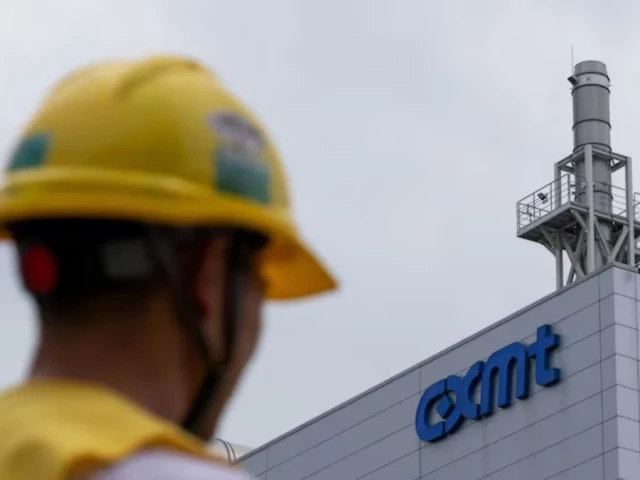
Apple has been testing memory chips from China's ChangXin Memory Technologies (CXMT) across product lines including iPhones and MacBooks to mitigate a component shortage fueled by the AI boom, the Wall Street Journal reported on Sunday.
Apple held early talks with CXMT, which is China's largest chipmaker by market value, about supplying components with the goal of using them in some devices sold in China, the report said, citing people familiar with the matter.
Reuters could not immediately verify the report. Apple and CXMT did not respond to Reuters' requests for comment.
Reuters had earlier exclusively reported that CXMT was considering building a second memory-chip plant in Beijing to boost production.
READ: China’s memory chip makers ride AI boom to new power and US scrutiny
Laptop makers HP and Acer have started using CXMT memory chips in devices sold outside the US to ease supply shortages, the newspaper said.
CXMT has risen to become the world’s fourth-biggest maker of memory chips, including the DRAM variety used in smartphones, laptops and servers.
Memory chips that help devices run apps and store files were once a low-margin business. CXMT and its flash-memory counterpart, Yangtze Memory Technologies Corp, or YMTC, spent years relying on government funding and racking up losses.
READ MORE: Chip technology: the emerging battlefront?
But the global buildout of AI data centres has transformed memory chips into one of the world's most sought-after products, sparking battles over pricing and a scramble for supply. The Chinese memory makers are now picking clients and dictating prices.
In some cases, they are charging more than their larger South Korean rivals, Samsung and SK Hynix, as skyrocketing demand for memory chips forces Chinese buyers to pay ever-higher prices.
The Chinese companies’ grip on chip supply is putting them on a collision course with Washington. The Pentagon has designated both firms as Chinese military companies for what it says is their role in aiding China’s military-civil fusion strategy — a charge they deny. YMTC is already on the US Entity List, a designation that has restricted its access to US-origin suppliers, software and tools used in memory-chip production.
The rapid build-out of artificial intelligence infrastructure by US tech firms such as OpenAI, Alphabet-owned Google and Microsoft has absorbed much of the world's memory chip supply, pushing up prices as manufacturers prioritise components for higher-margin data centres over consumer devices.
Samsung, SK Hynix and Micron, the world's three largest producers of memory chips, have said in recent months that they were struggling to keep up with demand as they reported rosy quarterly earnings on the back of surging prices for their semiconductors.














This material may not be published, broadcast, rewritten, redistributed or derived from. Unless otherwise stated, all content is copyrighted © 2026 The Express Tribune.






COMMENTS
Comments are moderated and generally will be posted if they are on-topic and not abusive.
For more information, please see our Comments FAQ