Tola budget proposes rupee at 250 per dollar
Updated 1 hour ago

Cellphone production drops 35% in April amid rising costs, 18% GST
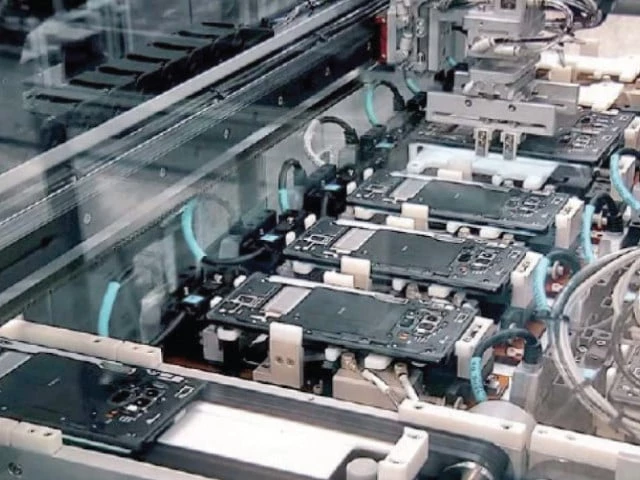
Pakistan's emerging mobile phone manufacturing industry is coming under mounting pressure from a global artificial intelligence (AI)-led technology shift and domestic taxation measures, with industry players warning that rising costs and weakening demand are hurting a sector once viewed as a major industrial success story.
Industry stakeholders say a global surge in demand for AI infrastructure and data centres has sharply increased the prices of memory chips and other key electronic components, making mobile phone manufacturing significantly more expensive worldwide.
According to industry estimates, global memory chip prices have risen by nearly 100% as semiconductor supplies are increasingly diverted towards AI?focused data centres being established across the world, said Aamir Allawala, CEO of Tecno Pack Electronics. "The resulting supply squeeze has raised handset production costs internationally, including in Pakistan, where the industry is still in a nascent stage."
The situation has become more difficult after the imposition of an 18% sales tax on mobile phones last year, which, he said, substantially increased retail prices and weakened consumer demand. Manufacturers say the combination of higher input costs and taxation has led to inventory accumulation across the sector, with many assemblers carrying unsold stock and facing financial losses.
"The slowdown is now becoming visible in production data as well," he said. According to the latest figures released by the Pakistan Telecommunication Authority (PTA) and compiled by Topline Securities, local mobile phone manufacturing and assembly declined 35% month?on?month in April 2026, falling to 1.81 million units from 2.79 million units in March. Cumulatively, local manufacturing and assembly stood at 9.17 million units during the first four months of 2026.
Pakistan met 83% of domestic mobile phone demand through local manufacturing and assembly in April, down from 89% in March. The ratio stood at 85% during the January?April 2026 period. Despite the recent slowdown, industry officials maintain that Pakistan has developed a sizeable domestic manufacturing base over the past few years. Currently, about 37 companies hold PTA licences for mobile phone manufacturing and assembly in Pakistan. Of these, nearly 10?12 companies are producing smartphones, while the remaining firms are assembling 2G feature phones, according to the Pakistan Mobile Phone Manufacturers Association (PMPMA).
The sector employs around 50,000 people directly in electronics manufacturing and has attracted major global brands including Samsung, Xiaomi, Tecno, Oppo, Vivo, Infinix, Redmi, Realme, Nokia and Honor.
Industry representatives argue that Pakistan has successfully transitioned from being entirely dependent on completely built unit (CBU) imports before 2019 to becoming a domestic assembly hub after the launch of the Mobile Device Manufacturing Policy (MDMP) in 2020. According to industry data, more than 90% of phones sold in Pakistan are now manufactured or assembled locally.
"The country also has strong export potential because of comparatively lower labour costs and the growing presence of international brands in the domestic market," highlighted Allawala. However, he argues that inconsistent policies and tariff distortions are preventing deeper localisation of components such as chargers, batteries and cables. Industry players point to "reverse cascading" as one of the biggest structural issues facing the sector. They explain that importing raw materials and parts for local manufacturing often attracts duties of 20?25%, while some finished imported accessories face lower or zero duties. This anomaly discourages local production and makes imported finished products comparatively cheaper.
"The industry wants to localise components, but the tax structure makes local manufacturing unfeasible," he said, adding that global brands become reluctant to invest in local parts manufacturing under such conditions. Manufacturers are also pushing the government to provide policy continuity and export incentives similar to regional competitors. They noted that while Pakistan had previously announced a 3% research and development allowance for exports, the incentive was never implemented. The industry is now hoping that the upcoming mobile policy will include an 8% export allowance to support exports and localisation. Stakeholders compare Pakistan's position with India, where the government introduced a production linked incentive (PLI) scheme offering incentives of about 10% to major manufacturers such as Apple, Samsung and Xiaomi. Industry representatives say India's policy consistency and supportive tariff structure helped the country rapidly increase localisation and mobile exports, which now exceed $25 billion annually.
According to industry projections, sustaining Pakistan's local mobile industry between 2026 and 2031 could generate foreign exchange savings of more than $2.3 billion while gradually reducing dependence on imports. Industry also projects that by 2030?31, foreign exchange outflows under the local manufacturing model could remain 32% lower compared with a fully import?based model.
Stakeholders are urging the government to remove policy distortions, ensure stable tariff and tax structures, eliminate reverse cascading, support investment in local components, and create a favourable environment for technology transfer and exports.






This material may not be published, broadcast, rewritten, redistributed or derived from. Unless otherwise stated, all content is copyrighted © 2026 The Express Tribune.













COMMENTS
Comments are moderated and generally will be posted if they are on-topic and not abusive.
For more information, please see our Comments FAQ