33 killed in Ukraine village
Updated 52 minutes ago

Iran says container ship sinks after hitting mine in Strait of Hormuz
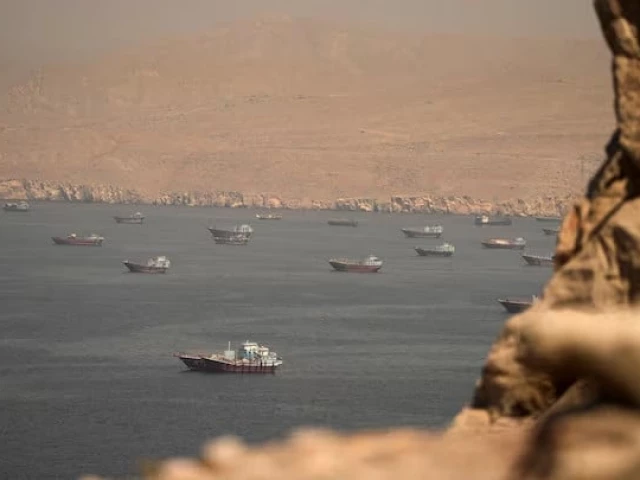
Crude oil and petroleum exports from the Middle East sharply dropped over the past week as Yemen's Houthi militias intensified their attacks on commercial vessels transiting the Strait of Hormuz, disrupting regional shipping lanes.
Maritime transit in the region has suffered drastically since the US and Israel’s pre-emptive joint strikes on Iran on February 28, followed by Tehran’s effective closure of the vital waterway and a subsequent American naval blockade.
Attacks on commercial vessels in the Strait of Hormuz reached a new peak this year over the past week.
At least 14 incidents of attacks, attempted strikes, and obstructions were recorded in and around the Strait of Hormuz on October 5-12, while six ships were attacked on Monday alone, according to the UK Maritime Trade Operations and global maritime security sources.
Commercial vessel traffic via the strategic chokepoint fell to its lowest since July 22, affecting outward energy flows.
Oil, petroleum, and liquefied natural gas (LNG) exports from the Middle East plummeted in the wake of the war, and while there have been signs of partial recovery, intensifying security risks sparked concerns.
Houthis increased their attacks on Saudi Arabia, threatening transit through the Bab el-Mandeb Strait, which connects the Red Sea to the Gulf of Aden and the Indian Ocean.
Middle Eastern crude oil, petroleum, and liquid chemical exports — including shipments from the Gulf of Oman and the Red Sea — fell from 21.1 million barrels per day on October 8 to 6.7 million barrels on October 11, 10.4 million barrels on Monday, and 8.3 million barrels on Tuesday, according to Kpler.
The weekly average of 17 million barrels remained below the pre-war volume of around 23.3 million barrels per day.
Only six commercial ships were able to transit the Strait of Hormuz on Monday, while previously 32 ships passed through on October 8, 24 on October 9, 11 on October 10, and 12 on October 11.
Meanwhile, vessel transit through the Bab el-Mandeb Strait also dropped, with 35 vessels passing through on October 8, 39 on October 10, 46 on October 11, and 32 on Monday.
The attempts by the Houthis to establish a naval blockade on Saudi Arabia to seize control of the Bab el-Mandeb corridor added a new volatile dimension to the wider conflict.
Large-scale supply disruptions across both the Strait of Hormuz and the Bab el-Mandeb Strait could pressure global energy supplies and market stability even further, analysts say.
Iran says container ship sinks after hitting mine in Strait of Hormuz
The IRGC navy said on Wednesday that a container attempting to "pass through the unauthorised and high-risk route of the Strait of Hormuz struck a naval mine, exploded, and caught fire severely," according to IRNA.
IRGC Navy: A violating container ship that intended to pass through the unauthorized and high-risk route of the Strait of Hormuz struck a naval mine, exploded, and caught fire severely. pic.twitter.com/fiJJM445ay
— IRNA News Agency ☫ (@IrnaEnglish) October 14, 2026
"This ship, carrying more than 2,500 containers, sank on Wednesday morning in the southern waters of the Strait of Hormuz due to the intensity of the fire."
Trump, Netanyahu weigh new Iran strikes before elections despite White House denial: report
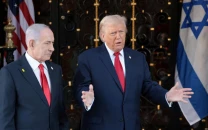
US President Donald Trump and Israeli Prime Minister Benjamin Netanyahu discussed launching a major new operation against Iran ahead of upcoming elections in both countries, the Axios news site reported on Tuesday.
The report, citing two US officials and other sources with knowledge of the matter, said the discussions took place before Trump publicly stated that he would not strike Iran before the US midterms. Netanyahu raised Israeli intelligence suggesting that Iran was working to rebuild its nuclear program, including possibly operating the Pickaxe Mountain site for uranium enrichment, according to one source.
A White House official called it "false" that the two leaders discussed resuming the war, claiming that Trump has ruled out attacks before the midterms in November.
Both militaries remain on alert and are finalising preparations in case Trump changes course, sources said. One US official described Trump's stance as noncommittal, saying he told Netanyahu to prepare without making a commitment.
According to the report, US Defence Secretary Pete Hegseth and the US Central Command leadership are the strongest advocates of renewed strikes, while most advisers favour continued sanctions and economic pressure.
Israeli Army Chief of Staff Lieutenant General Eyal Zamir reportedly told US Joint Chiefs Chairman Gen. Dan Caine that fighting within three weeks could force the postponement of Israel's October 27 vote, given likely Iranian missile retaliation.
Qatari mediators are still awaiting Iran's response to the latest US counterproposal, the report added.
Three fishermen injured in drone incident off southern Iran
Three fishermen were injured after a fishing boat was struck in an incident involving an unidentified drone near Sirik in southern Iran’s Hormozgan province, the provincial governor’s office says, according to Reuters, citing Tasnim news agency.
Tasnim cites local sources as saying a fishing boat was hit in what they described as an attack by a US drone, although Iranian authorities have not officially confirmed the circumstances of the incident or who was responsible.
‘They know what will happen’: IRGC says US would never dare to put boots on ground in Iran
Senior commander of the Islamic Revolutionary Guard Corps (IRGC) says the United States never dares to carry out a land invasion of Iran, according to Press TV.
‘They know what will happen’: IRGC says US never dares put boots on ground in Iran https://t.co/eIoBoc5fj6
— Press TV 🔻 (@PressTV) October 14, 2026
Even the most senior officials in Washington know that such a scenario would lead to devastating consequences for the US military, Brigadier General Mohammad Reza Naqdi said.
Naqdi, who serves as a high-profile advisor to the IRGC chief commander, made the comments on Tuesday in response to speculations that the US would deploy troops to Iran months after its joint aerial aggression with Israel against the country failed for good.
Iran shifting tactics to step up attacks on shipping before US vote, officials say
Iran is deploying new tactics to target ships sailing through the Strait of Hormuz as it seeks to keep oil prices high and influence the US midterm elections, two senior Iranian officials told Reuters.
Tehran has tried to exert control over the Strait of Hormuz since the US and Israel launched strikes against Iran on February 28. It has restricted passage through the waterway, which carried about a fifth of global oil and liquefied natural gas trade before the war, in an effort to gain leverage over Washington.
Its threats and attacks have severely curtailed traffic through the strait, driving up oil prices, though some oil has continued to transit.
The two officials declined to provide details of the new strategy, but one said that Iran had started using different offensive tactics against vessels it considered in violation of its restrictions about 10 days ago, adding that this had led to an increase in attacks on such ships.
The strategy included a change in the type as well as the pace of attacks, with one goal being to influence the outcome of the US vote, they said.
"The aim is to frustrate efforts by the United States and its allies to bring down global oil prices," one of the two officials said.
Read: Iran will pursue diplomacy to counter sanctions, secure national interests: Iranian FM
The decision to adopt the new strategy had been taken at the highest levels of Iran’s leadership and was fully coordinated across the country’s ruling system, the officials said.
Iran using spotters
A US military official, speaking on condition of anonymity, confirmed that Iran had changed tactics in one significant way: after the US destroyed much of Iran’s radar capabilities, Iran's Islamic Revolutionary Guard Corps (IRGC) had started using unarmed spotters in small boats to identify potential targets, including US naval vessels, the official said.
Last week, in a previously unreported incident, the US military determined that Iranian spotters were operating from a dhow, calling in targets to the IRGC, the official said. US forces confronted the vessel, told its occupants to abandon ship and then destroyed it. There were no casualties, the US official said.
Unwilling to risk its remaining fast boats, Iran had been unable to prevent a ramp-up in oil exports through the strait, the official said, particularly after US strikes devastated its navy.
The war — and its $3 billion monthly price tag — has become a key issue on the US campaign trail for November's midterm elections, which will decide control of Congress.
US President Donald Trump has been weighing next steps against Iran, but has said he will not attack again before the vote.
The US has meanwhile been pressing its own naval blockade of Iranian ports and extending sanctions as it tries to pile economic pressure on Tehran to reach a deal to end the conflict.
The standoff over Hormuz has left global energy markets exposed to further disruption, with the threat of attacks and high shipping and insurance costs complicating efforts to restore normal traffic.
In recent days, attacks on commercial ships still sailing through the strait have surged to their highest level since the war began, according to independent data.
There have been at least five incidents in the past 48 hours involving tankers and other commercial ships around the Hormuz area, including drone strikes, according to data analysis from maritime security sources and incidents reported to the British navy-affiliated agency United Kingdom Maritime Trade Operations (UKMTO).
Read more: Iran says reviewing US proposals for talks as indirect messages continue
That approximately mirrored the rate of attacks on October 3-5, pointing to a new escalation, according to data from the UN shipping agency, the International Maritime Organisation.
"There is a tempo increase in strikes, which looks deliberate," one maritime security source said.
Attacks over an expanded area
As part of the new strategy, Tehran will also expand the geographical scope of its operations beyond the Strait of Hormuz to the Gulf of Oman and waters further afield, the officials said.
Analysis by maritime security sources based on attacks reported to UKMTO and maritime security companies in the region suggests this may already be happening. They show Iran targeting ships in areas beyond the Strait of Hormuz, including waters off the coast of Qatar and the United Arab Emirates, in recent days.
UKMTO WARNING 171-26
— UKMTO Operations Centre (@UK_MTO) October 13, 2026
Click here to view the full warning⤵️https://t.co/dwpZ53A0Wa#MaritimeSecurity #MarSec pic.twitter.com/swko5njXqh
The second Iranian official added that Tehran would not allow Trump to bring down oil prices before the November elections.
"Just when they think they are getting close to the point where prices will fall, we will push them away from it. This is a game of chess,” the second official said.
"Such vessels would be safe nowhere, even outside the Strait of Hormuz."
The Pentagon and Iran's Foreign Ministry did not immediately respond to requests for comment.
Complete closure of Hormuz soon
Both Iranian officials said Tehran is moving towards a situation in which no vessel violating its restrictions would be able to pass through the strait. "It will be complete closure soon," one of the officials said.
In its latest report on Sunday, the US Navy-led Joint Maritime Information Centre (JMIC) said the threat to merchant shipping in the Strait of Hormuz remained "severe", the second-highest level.
"IRGC attacks, attempted attacks, and/or harassment activity persisted, including UAV overflight, targeted surveillance of merchant shipping, and occasional VHF hailing," JMIC said.
Trump warns of further action against Iran
US President Donald Trump signalled further action against Iran during a campaign rally on Tuesday in the state of Alaska.
“Wait till you see what we do to Iran. We're going to do a number. We sort of had it. You know we've had it,” Trump told supporters in Wasilla, where he was campaigning for Republican candidates ahead of the November 3 midterm elections.
“They’re just waiting. They’re waiting,” he said.
“We’ve had it, but you know it doesn’t matter. The big thing is they were not going to have a nuclear weapon,” he added.
Trump's remarks came after the Axios news site reported Tuesday that he and Israeli Prime Minister Benjamin Netanyahu discussed launching a major new operation against Iran ahead of elections in both countries.
The report, citing two US officials and other sources with knowledge of the matter, said the discussions took place before Trump publicly stated that he would not strike Iran before the US midterms.
US rejects Iran’s claim of control over Strait of Hormuz
The US military’s Central Command (CENTCOM) on Tuesday rejected claims by Iran’s Islamic Revolutionary Guard Corps (IRGC) that it controls the Strait of Hormuz and would sink any approaching US Navy warships.
"IRGC's navy commander has no navy. American forces and regional partners clearly control the Strait of Hormuz," CENTCOM said on US social media company X.
🚫 CLAIM: The navy commander for Iran's Islamic Revolutionary Guard Corps claimed today that the Strait of Hormuz is under IRGC control and any approaching U.S. Navy warships would be "sunk."
— U.S. Central Command (@CENTCOM) October 13, 2026
✅ FACT: IRGC's navy commander has no navy. American forces and regional partners… pic.twitter.com/n9dhNsyI8O
It disputed an Iranian navy commander’s remarks that Tehran controls the strategic international chokepoint, declaring that US forces had helped Gulf partners transport more than 19 million barrels of crude oil through the strait on Monday.
The statement came amid heightened tensions between Washington and Tehran about maritime security and control of the Strait of Hormuz, a critical passage for global oil shipments.











This material may not be published, broadcast, rewritten, redistributed or derived from. Unless otherwise stated, all content is copyrighted © 2026 The Express Tribune.






COMMENTS
Comments are moderated and generally will be posted if they are on-topic and not abusive.
For more information, please see our Comments FAQ