FM Dar, Chinese envoy discuss CPEC, trade and regional stability
Updated 1 hour ago

According to Anadolu NA Speaker Ayaz Sadiq invited Tehran's chief negotiator Bagher Ghalibaf to visit Pakistan
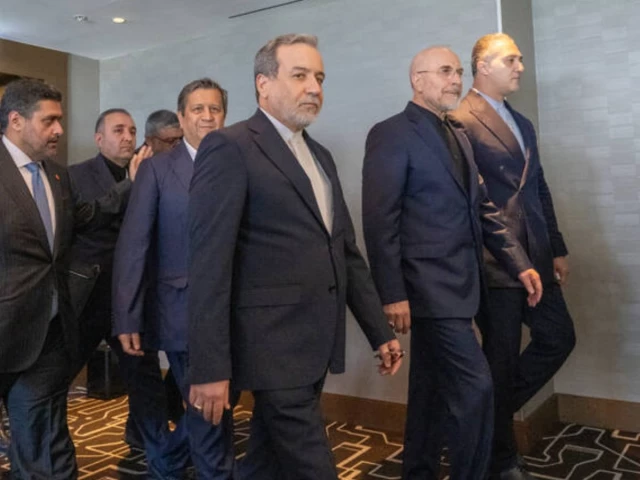
Pakistan has invited top Iranian negotiators to visit Islamabad at their "earliest convenience" to discuss the ongoing diplomatic efforts to restart stalled direct talks with the United States (US).
Foreign Minister Ishaq Dar spoke to his Iranian counterpart Abbas Araghchi about regional and international developments, including the deteriorating situation in Occupied East Jerusalem, the Foreign Ministry said in a statement late on Monday.
National Assembly Speaker Ayaz Sadiq separately invited Tehran's chief negotiator Bagher Ghalibaf to visit Pakistan, a government source told Anadolu, requesting anonymity as they were not authorised to speak to the media.
Deputy Prime Minister/Foreign Minister Senator Mohammad Ishaq Dar @MIshaqDar50 spoke today with the Foreign Minister of Iran, Seyyed Abbas Araghchi.
— Ministry of Foreign Affairs - Pakistan (@ForeignOfficePk) August 3, 2026
They exchanged views on regional and international developments, including the deteriorating situation in Occupied East… pic.twitter.com/KHA2I5OctV
It is, however, unclear when the Iranian officials would visit Islamabad.
The latest contacts came after US President Donald Trump cancelled planned military strikes on Iran on Saturday.
Trump said allies had urged him to hold off because a deal appeared imminent.
Read: Trump's Board of Peace reassures Israel after objections on Gaza pullout plan
Iranian Foreign Ministry spokesperson Esmaeil Baqaei said on Monday that Tehran was not engaged in negotiations with the US.
Earlier on Monday, government sources told Anadolu that no date or venue has yet been finalised for the resumption of the long-stalled direct talks between the two warring sides.
Pakistani and Qatari mediators are in contact with Washington and Tehran to finalise a date and venue for the resumption of direct talks, the sources said.
Washington and Tehran signed the memorandum on June 17, agreeing to advance negotiations toward a permanent settlement on several contentious issues, including Iran’s nuclear program, within 60 days. However, hostilities that began last month have cast uncertainty over the future of the agreement.
Since the outbreak of the US-Iran conflict on February 28, Pakistan has positioned itself as a key intermediary, maintaining contacts with both Washington and Tehran while coordinating closely with Qatar and other regional states. The Express Tribune reported throughout the conflict that Islamabad leveraged its relations with both sides to facilitate dialogue.
Read more: Mediators intensify US-Iran diplomacy after Trump orders 'pause' in strikes: sources
Pakistan's mediation culminated in the Islamabad Memorandum of Understanding (MoU) signed by the US and Iranian leadership on June 17, which established a 60-day framework for negotiations on contentious issues while providing for a ceasefire and reopening of the Strait of Hormuz. However, fighting resumed in July and Islamabad repeatedly urged both sides to honour their commitments under the MoU.
Despite US President Donald Trump's declaration that the agreement was effectively "over" following renewed hostilities, Pakistani officials maintained that the peace framework remained viable.
The renewed hostilities stemmed from disputes over implementation of the MoU—including the Strait of Hormuz, sanctions relief and Iran's nuclear programme—raising doubts over the agreement's future while Pakistan continued urging both sides to return to the negotiating table.
Diplomatic efforts gained fresh momentum after US President Donald Trump ordered a pause in planned military strikes last week, with Pakistani and Qatari mediators stepping up contacts with Washington and Tehran to revive the stalled peace process. Officials described the pause as fragile but said it created an opening for renewed negotiations.
This week, the diplomatic push accelerated after Trump said he had cancelled planned military strikes because allies believed a deal was within reach.
However, Tehran publicly pushed back, with Foreign Ministry spokesman Esmaeil Baqaei insisting Iran was not engaged in negotiations with the United States, underscoring the gap between Washington's and Tehran's public positions. Against this backdrop, Pakistan intensified its outreach to Iran.






This material may not be published, broadcast, rewritten, redistributed or derived from. Unless otherwise stated, all content is copyrighted © 2026 The Express Tribune.




1727268465-0/Untitled-design-(42)1727268465-0-208x130.webp "the reverse renaissance")




COMMENTS
Comments are moderated and generally will be posted if they are on-topic and not abusive.
For more information, please see our Comments FAQ