Mines, minerals provincial subjects, says G-B CM
Updated 55 minutes ago

Govt snubs claims of arming Afghans against Taliban

The Ministry of Information and Broadcasting on Saturday rejected former US envoy Zalmay Khalilzad's allegations that Pakistan was arming Afghans to fight the Taliban, describing them as baseless and misleading while reiterating its concerns over terrorist groups operating from Afghan territory.
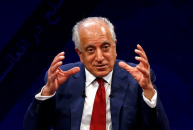
The ministry's response came a day after Khalilzad, who served as the US special representative for Afghanistan during the first Trump administration, claimed on X that there were "many reports" of Pakistan arming Afghans to fight the Taliban in Afghanistan.
He also alleged that Islamabad was recruiting Afghans to fight anti-Pakistan insurgents and predicted that relations between the two countries would deteriorate further.
In a post on X, the ministry's fact-check account said Khalilzad's sweeping assertions recycled speculative narratives and reflected what it described as a personal agenda to support the Afghan Taliban regime. It said his unsubstantiated allegations exposed his "skewed agenda-based views".
The ministry said it was misleading to conflate Pakistan's counterterrorism operations against organisations operating from areas controlled by the Afghan Taliban with allegations that Islamabad was recruiting Afghan nationals or sponsoring armed groups inside Afghanistan.
It maintained that Pakistan's operations were aimed at terrorist organisations threatening its citizens and stressed that the country had made enormous sacrifices in the fight against terrorism and for regional peace and security.
In a separate statement issued on Saturday, the ministry said the Afghan Taliban regime had resorted to diversionary allegations instead of addressing Pakistan's longstanding security concerns.
It said blaming Pakistani security institutions did not absolve Kabul of its responsibility to prevent Afghan territory from being used for attacks against Pakistan.
Citing international assessments, the ministry referred to the United Nations Security Council's Analytical Support and Sanctions Monitoring Team's 16th report, S/2025/796, which examined the presence and activities of terrorist groups in Afghanistan.
It also cited the US Lead Inspector General's Operation Enduring Sentinel report to Congress for January-March 2026, which stated that the Afghan Taliban continued to allow the banned Tehreek-e-Taliban Pakistan (TTP) to operate from Afghan territory.
According to it, the report linked Taliban support and greater freedom of operation for the group to an increase in attacks against Pakistan and estimated the TTP's strength at 4,000 to 6,000 fighters.
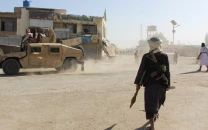
The ministry said repeated attempts by armed terrorists to cross the Pakistan-Afghanistan border, casualties among Afghan nationals and members of terrorist groups during Pakistani counterterrorism operations, and the recovery of foreign-origin weapons from militants warranted serious scrutiny.
It also referred to Pakistani concerns over the alleged facilitation of terrorist groups by Afghan Taliban officials, including in Kandahar, saying such concerns required credible explanations and verifiable action rather than blanket denials.
The statement urged the Afghan Taliban regime to end any tolerance, facilitation or support for terrorist organisations, including the TTP, the Balochistan Liberation Army (BLA) and their affiliates, and ensure that Afghan territory was not used to plan or launch attacks against Pakistan.
It added that Pakistan's security measures were directed against terrorist threats, not the Afghan people, and that peace and stability in the two neighbouring countries were closely linked.
Islamabad, it said, remained open to engagement based on mutual respect, verifiable commitments and concrete action against terrorist sanctuaries, support networks and cross-border infiltration.
Khalilzad, who negotiated the US agreement with the Taliban that paved the way for the withdrawal of NATO forces from Afghanistan, has repeatedly called for Islamabad and Kabul to reach a negotiated settlement, including in January this year.
The former envoy has previously drawn criticism from Pakistan. In November last year, the ministry accused him of creating a false impression about the presence of the Islamic State-Khorasan (IS-K) group in Punjab after he claimed an IS-K commander had been killed in Akhtarabad.
The ministry said the man had died in a robbery-related incident, not a counterterrorism operation, and that there was no evidence linking him to IS-K.







This material may not be published, broadcast, rewritten, redistributed or derived from. Unless otherwise stated, all content is copyrighted © 2026 The Express Tribune.




COMMENTS
Comments are moderated and generally will be posted if they are on-topic and not abusive.
For more information, please see our Comments FAQ