Kelly Osbourne says there is no hope of reconciliation with Aimee Osbourne
Updated 22 minutes ago

Former shipyard welder helped build Navy destroyers before receiving Congressional Gold Medal for wartime service
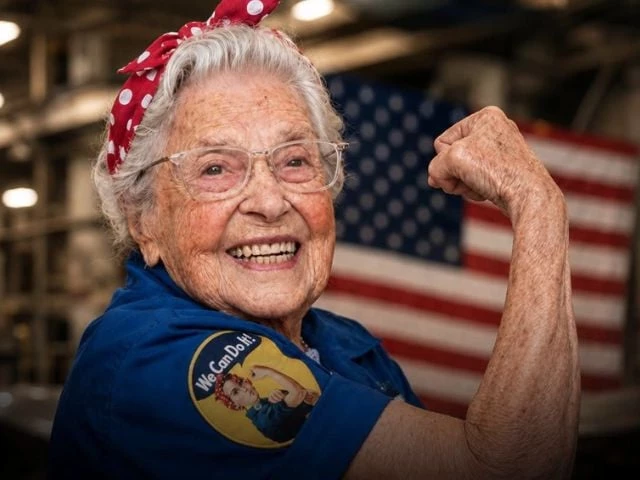
Jeanne Gibson, one of the women who came to represent the enduring legacy of the Rosie the Riveter campaign during the Second World War, has died at the age of 100. Gibson was recognised for her work as a shipyard welder during the war, helping construct United States Navy destroyers at a time when millions of women stepped into industrial jobs to support the Allied war effort.
Her death marks the passing of another member of a remarkable generation whose contributions reshaped both the workforce and the role of women in American society. In 2024, Gibson and thousands of fellow women who served as Rosie the Riveter workers were collectively awarded the Congressional Gold Medal, one of the United States' highest civilian honours, in recognition of their extraordinary service during the war.
During the Second World War, labour shortages created by military enlistment opened opportunities for women to work in factories, shipyards and other industries traditionally dominated by men. More than six million American women answered that call, manufacturing aircraft, ships, weapons and military equipment that proved essential to the Allied victory.
Gibson became one of those workers, serving as a welder in a shipyard where she helped build destroyers for the United States Navy. Welding required precision, physical endurance and technical skill, making the work both demanding and critical to wartime production. Her efforts formed part of the enormous industrial mobilisation that allowed the United States and its allies to sustain military operations across multiple fronts.
Although Rosie the Riveter is widely recognised today as a cultural symbol, the image has a rich history. The name first entered popular culture through the 1942 song "Rosie the Riveter", which celebrated women joining the wartime workforce. The following year, illustrator Norman Rockwell created his famous painting of Rosie for the cover of The Saturday Evening Post, depicting a confident factory worker holding a rivet gun while taking a lunch break.
Another enduring image associated with the movement, the "We Can Do It!" poster created by J Howard Miller in 1943, gained worldwide recognition decades later and became an international symbol of female empowerment and resilience. Although originally produced as an internal motivational poster for factory workers, it eventually became closely linked with the broader Rosie the Riveter legacy.
For many years after the war, the achievements of women like Gibson received relatively limited public recognition. Historians later highlighted how their work permanently altered perceptions about women's capabilities in manufacturing, engineering and other skilled professions. The wartime experience also helped lay foundations for future advances in workplace equality by demonstrating that women could excel in occupations previously considered beyond their reach.
The Congressional Gold Medal awarded in 2024 acknowledged those lasting contributions. The honour recognised not only the women who built ships and aircraft but also those who assembled vehicles, produced ammunition and kept wartime industries operating throughout the conflict.
Jeanne Gibson remained a living reminder of that generation's determination, resilience and sense of duty. Her life reflected the experiences of millions of women whose work behind factory and shipyard gates became an indispensable part of the Allied victory. As tributes continue following her death, Gibson's legacy endures through the history she helped shape and the lasting influence of the Rosie the Riveter movement, which continues to inspire new generations more than 80 years after the Second World War.















This material may not be published, broadcast, rewritten, redistributed or derived from. Unless otherwise stated, all content is copyrighted © 2026 The Express Tribune.






COMMENTS
Comments are moderated and generally will be posted if they are on-topic and not abusive.
For more information, please see our Comments FAQ