PSX falls 825 points as US-Iran uncertainty, oil pressure weigh
Updated 8 hours ago

Aurangzeb says pricing decisions must be 'transparent, evidence-based'
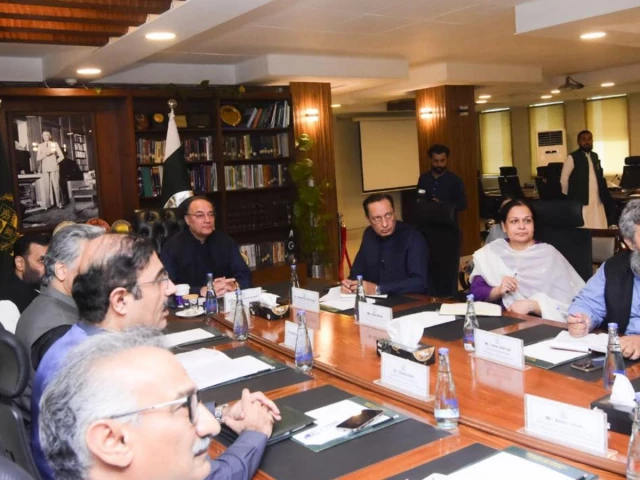
Finance Minister Muhammad Aurangzeb on Friday said drug pricing decisions should ensure patients' access to essential medicines while balancing the sustainability of pharmaceutical supply and affordability.
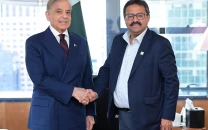
Chairing the eighth meeting of the cabinet committee on drug pricing, constituted by the prime minister to consider recommendations of the Drug Pricing Committee and the Policy Board of the Drug Regulatory Authority of Pakistan (DRAP), Aurangzeb said pricing decisions must be "transparent, evidence-based" and taken through a "consultative approach", according to a statement issued by the Ministry of Finance.
Finance Minister Chairs Meeting of Cabinet Committee on Drug Pricing
— Ministry of Finance, Government of Pakistan (@Financegovpk) July 24, 2026
Federal Minister for Finance and Revenue, Senator Muhammad Aurangzeb, chaired the 8th meeting of the Cabinet Committee constituted by the Prime Minister to consider the recommendations of the Drug Pricing… pic.twitter.com/TPLHJJg2Op
He said there was a need to "balance patient access to essential medicines with the sustainability of pharmaceutical supply and affordability for patients", adding that decisions should be guided by the broader public interest.
Aurangzeb also stressed the importance of "clear public engagement to explain the rationale behind decisions affecting critical medicines", saying transparency in communicating pricing decisions was essential.
Read: Rising medicine costs push patients to brink
The committee received a detailed presentation from DRAP on recommendations relating to new drug price fixation cases, hardship applications, pricing matters and the availability of essential medicines.
Officials also briefed members on progress made since the previous meeting and outlined proposals placed before the committee for consideration.
The meeting was attended by Health Minister Mustafa Kamal and Minister for Defence Production Muhammad Raza Hayat Harraj.
Rising medicine costs push patients to brink
Medicine prices have witnessed a significant increase amid regional tensions involving the United States and Israel's war on Iran, which has disrupted global supply chains, increased shipping costs and inflated prices of imported raw materials used in Pakistan's pharmaceutical sector.
Across urban centres, medicine prices have surged repeatedly since 2023. Prices rose by around 50 per cent in 2024 and a further 30 to 40 per cent in 2025, while the imposition of 18 per cent general sales tax has added to the burden on consumers.
Pharmacist and drug pricing expert Noor Mehr had said the deregulation of medicine prices has weakened oversight. "After decontrol policies, companies are effectively setting prices themselves, which is why we see frequent increases," he said, adding that without strong monitoring, patients are left unprotected.
In Karachi, the crisis appears heavily volatile, with wholesalers reporting price revisions every 15 to 20 days and, in some cases, multiple increases within a single month.
Industry stakeholders attribute rising prices to multiple factors, including currency depreciation, increased import costs and reliance on raw materials from India and China, which together supply the majority of pharmaceutical inputs.
Wholesale dealers say prices of several medicines have increased by 50 to 75 per cent over the past two years, with some witnessing repeated hikes within weeks, while no effective monitoring mechanism appears to be in place.









This material may not be published, broadcast, rewritten, redistributed or derived from. Unless otherwise stated, all content is copyrighted © 2026 The Express Tribune.


COMMENTS (2)
Comments are moderated and generally will be posted if they are on-topic and not abusive.
For more information, please see our Comments FAQ