Shelley Fabares, star of 'The Donna Reed Show' and 'Coach', dies at 82
Updated 6 hours ago

He later clarified that 'baby Bryan' is not a human clone but a collection of iPSCs grown in a laboratory
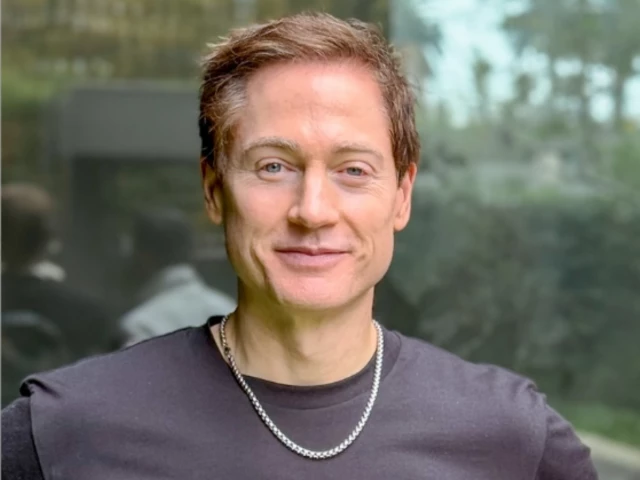
Biohacker and technology entrepreneur Bryan Johnson has claimed he has “cloned” himself using stem cell technology, saying the laboratory-grown cells could one day be used to test therapies and develop replacement organs.
Johnson, 48, announced the development on X, writing, “I just cloned myself... as a newborn.” He later clarified that the so-called “baby Bryan” is not a human clone but a collection of induced pluripotent stem cells (iPSCs) grown in a laboratory.
I just cloned myself...as a newborn
— Bryan Johnson (@bryan_johnson) July 21, 2026
With this clone, I can:
+ become my own blood boy
+ test therapies on the clone
+ grow organs for transplantation
+ develop new treatments
+ inject young cells
This baby-bryan lives in a petri dish for now.
This may be scary to some… pic.twitter.com/Ved8ij9Col
“This baby-Bryan lives in a petri dish for now,” he wrote.
The process involves taking ordinary adult cells, such as those from a blood sample, and reprogramming them into stem-cell-like cells capable of developing into different tissue types.
Johnson said the cells could eventually be used to test treatments before trying them on his own body and may also contribute to research into growing replacement organs.
He acknowledged that the concept could concern some people, saying some may view it as a dystopian development while others could see it as the future of healthcare.
Johnson has also suggested the technology could enable him to become his own “blood boy” as part of future medical research.
While induced pluripotent stem cell technology is an established area of scientific research, many of the applications Johnson has described remain experimental and have yet to be proven in clinical practice.
Japanese scientist Shinya Yamanaka received the 2012 Nobel Prize in Physiology or Medicine for pioneering work in the field.
Johnson’s announcement comes after he revealed he had been diagnosed with an autoimmune condition affecting the stomach lining.
He said the diagnosis has strengthened his interest in exploring artificial intelligence, stem cell research and personalised medicine as potential tools for treating disease and improving long-term health.















This material may not be published, broadcast, rewritten, redistributed or derived from. Unless otherwise stated, all content is copyrighted © 2026 The Express Tribune.






COMMENTS
Comments are moderated and generally will be posted if they are on-topic and not abusive.
For more information, please see our Comments FAQ