Anti-Muslim hate targeting Michigan Senate nominee El-Sayed surged after primary win: study
Updated 5 hours ago

Trump links KSA N-deal to Abraham Accords
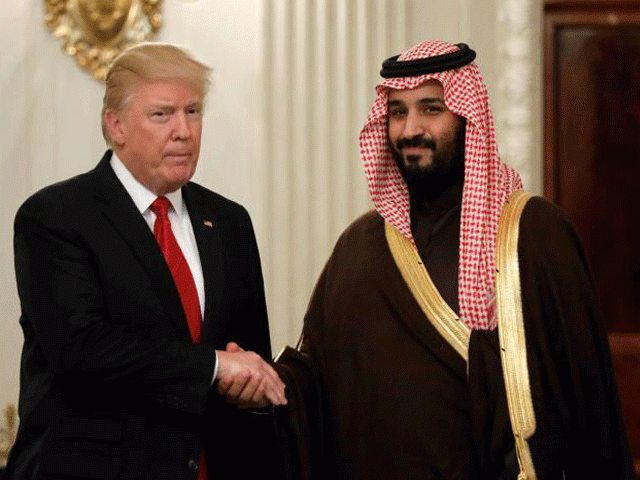
President Donald Trump said on Thursday that a civil nuclear deal between the US and Saudi Arabia was conditional on Riyadh joining the Abraham Accords to normalise relations with Israel.
The US and Saudi Arabia announced an agreement on Wednesday on civil nuclear power, letting the kingdom enrich uranium and build nuclear reactors using US technology, without requiring the snap UN inspections that Washington has previously demanded from Iran. The deal has to pass the US Congress to go into force.
US Energy Secretary Chris Wright and Saudi Energy Minister Prince Abdulaziz bin Salman signed the peaceful nuclear cooperation agreement, commonly known as a 123 Agreement, along with a bilateral safeguards agreement, the agency said in a statement.
"The Civil Nuclear Deal (There will be no enrichment of material!)... pertains only to non-military use such as the ones that Iran and UAE (and others) already have, will be approved, but is totally subject to Saudi Arabia joining the very respected and successful Abraham Accords," Trump said in a post on Truth Social, referring to normalising ties with Israel.
"The United States is not opposed to Civil (Non-Enriched) Nuclear Facilities," Trump said.
The Saudi Embassy in Washington did not immediately respond to a request for comment on Trump's post. Saudi Arabia's longstanding position has been that it would not sign the Abraham Accords unless there was an agreement on a roadmap to Palestinian statehood.
Earlier, US Secretary of State Marco Rubio stated that the deal will undergo congressional approval and will include safeguards.
"Any agreement that we are going to make with any country in the world on civil nuclear energy is going to be one that will have safeguards in place to ensure that it cannot be turned into a weapons program," Rubio told reporters in the Philippines.
The United Arab Emirates and Bahrain signed the Abraham Accords during Trump's first term in 2020, breaking a longstanding taboo to become the first Arab states to recognise Israel in a quarter century. Morocco and Sudan followed suit.
The Trump administration on Wednesday said the civil nuclear deal abides by nonproliferation agreements in the US Atomic Energy Act, which are among the world's strongest.
Saudi Arabia, the world's top oil exporter, said the agreement supports efforts to diversify energy sources, and includes the "highest international standards" of nuclear safety, security and nonproliferation.
The deal would let Saudi Arabia enrich uranium and reprocess nuclear waste, both of which are potential pathways to a nuclear weapon. The UAE agreed to forgo both when it signed a similar deal with the US in 2009.
Saudi Arabia's joining of the Abraham Accords "would be an historic leap forward for peace in the Middle East," Israeli Prime Minister Benjamin Netanyahu's office wrote on X on Thursday.
Netanyahu did not mention the civil nuclear deal between the US and Saudi Arabia, which was announced on Wednesday. US President Donald Trump had said that the deal was conditional on Saudi Arabia joining the Abraham Accords.








This material may not be published, broadcast, rewritten, redistributed or derived from. Unless otherwise stated, all content is copyrighted © 2026 The Express Tribune.



COMMENTS
Comments are moderated and generally will be posted if they are on-topic and not abusive.
For more information, please see our Comments FAQ