Anti-Muslim hate targeting Michigan Senate nominee El-Sayed surged after primary win: study
Updated 5 hours ago

Says will hold Iran accountable if Houthis attack ships Iran warns US troops against carrying out 'manifestly u
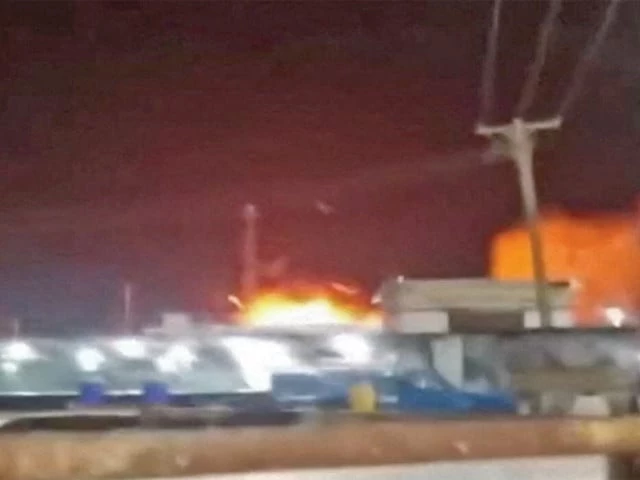
US President Donald Trump is considering launching a new military operation against Iran that could surpass the scale of the US strikes from Operation Epic Fury earlier this year, Axios reported on Thursday.
Oil prices settled above $100 on Thursday for the first time since May after Yemen's Houthis said they attacked two Saudi oil tankers in the Red Sea, causing further global supply disruptions following a near-halt in trade through the Strait of Hormuz.
In an interview with the outlet, Trump said he was nearing a decision on a potential major attack but stressed that no final determination had been made. Two US officials also told Axios that no new military orders have been issued.
"I am considering a massive attack. Bigger than ever before. I am close to making a decision. We are all set for it," Trump said.
He also said Israel could join the operation almost immediately if requested, but maintained that the US would not require assistance from another country to carry out a new campaign against Iran.
According to Axios, Trump said Iranian officials wanted to negotiate but have not yet agreed to the latest proposal presented through mediation efforts.
"They haven't received enough pain yet," he claimed.
Citing two regional sources familiar with the mediation efforts, Axios reported that Iran's leadership had not accepted the latest proposal.
One source said: "We are trying, but the Iranians are not being helpful."
Trump also said that Washington would hold Tehran accountable if the Yemeni Houthis attacked commercial vessels.
"A year ago the United States of America attacked, very powerfully, the Houthis, for their interference with commerce and trade, by shooting at ships," Trump wrote on his Truth Social platform.
"Since that time, and during our conflict with Iran, they have acted very responsibly. Unfortunately, now they are starting up again, shooting at two Saudi Arabian ships last night," he added.
"Please let this truth serve to represent that if they do this again, the US will hold Iran responsible, in that the Houthis are a surrogate and/or proxy of Iran, and major military punishment will be inflicted upon Iran and, of course, the Houthis, themselves, who I am very disappointed with in that they have, until now, acted very professionally and smart."
Iran's Foreign Ministry spokesman Esmaeil Baghaei warned US service members on Thursday against carrying out orders to attack civilian infrastructure, saying such actions could amount to war crimes.
In a post on the US social media platform X, Baghaei said citing superior orders does not absolve individuals of criminal responsibility for war crimes.
"Do Not Commit War Crimes for Anyone; citing superior orders to justify war crimes does not absolve the perpetrators of criminal liability."
"A policy that calls for the destruction of bridges and power plants is manifestly unlawful and criminal. It constitutes reprisal and collective punishment," he said.
Baghaei also cited US domestic law, including the War Crimes Act, as well as military legal standards requiring service members to refuse "manifestly unlawful orders."
Yemen's Houthis have opened a new front in the Iran war by targeting vessels carrying Saudi oil in the Bab el-Mandeb Strait after stating they would impose a naval blockade on shipments from Saudi Arabia. The Houthi militia attacked two Saudi Arabian oil tankers in a military operation, the group said on Thursday, with the Saudi Arabian state news agency, SPA, later confirming that one of the two vessels was ablaze after an assault while sailing in the Red Sea. SPA did not say who attacked the vessel.
"The escalation compounds the near-halt in Hormuz traffic and the sharp reduction in Iranian exports, intensifying concerns over near-term global availability," Gelber and Associates wrote in a note.
Analysts estimate that the Strait of Hormuz and Bab el-Mandeb carry the equivalent of roughly a quarter of the world's oil supply.
Still, following the attacks, two Chinese supertankers carrying a combined 4 million barrels of Saudi Arabian oil managed to exit the Red Sea via the Bab el-Mandeb Strait on Thursday, shipping data showed.
Goldman Sachs said Brent might exceed $120 a barrel in the fourth quarter and average $100 next year if the strait remains disrupted through 2027, with further upside if the Bab el-Mandeb Strait and Suez Canal also suffer persistent disruption.
Iran's Revolutionary Guards said an oil tanker caught fire after an explosion while attempting to follow a mined route in the southern area of the strait near the coast of Oman and that two others had turned back.
The Guards said the strait was under their control and "completely closed" while U.S. actions continued in the region, warning that no tanker would be allowed to enter or leave without coordination with Iran.













This material may not be published, broadcast, rewritten, redistributed or derived from. Unless otherwise stated, all content is copyrighted © 2026 The Express Tribune.






COMMENTS
Comments are moderated and generally will be posted if they are on-topic and not abusive.
For more information, please see our Comments FAQ