Dar, Norwegian counterpart discuss bilateral, regional developments
Updated 1 hour ago

Lahore produces around 5,000 to 6,000 tonnes of household waste every day
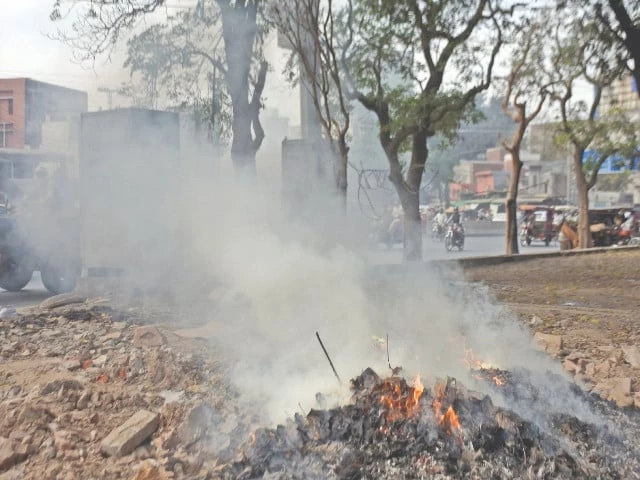
The rapid increase in daily waste generation has emerged as a major environmental and administrative challenge for Lahore, with experts warning that the city's existing solid waste management system may struggle to cope with future demands unless infrastructure, recycling and waste disposal mechanisms are significantly improved.
Research studies estimate that Lahore produces around 5,000 to 6,000 tonnes of household waste every day, a volume that continues to increase with population growth. Since 2016, most of the city's waste has been transported to the Lakhodair engineered landfill site, Pakistan’s first facility of its kind. Before Lakhodair, Mahmood Booti served as the city's main dumping site, which is now being rehabilitated through projects including an urban forest, solar park and methane gas-to-energy initiatives.
Although waste is shifted from different parts of the city through transfer stations to Lakhodair, residents in several localities continue to complain about garbage piling up at temporary dumping points. Residents of areas including Expo Centre, Finance and Trade Centre, Paragon City, Johar Town, Babu Sabu, Shadman and Saggian say unattended waste causes foul smells, mosquito and fly breeding, and contributes to air pollution and respiratory problems, particularly during summer.
Illegal dumping at vacant plots, along canals and roadsides remains another persistent issue. However, the Lahore Waste Management Company (LWMC) and district administration have not provided official data on the number of illegal dumping sites operating across the city.
Colonel (retd) Abid Latif, Senior Director at the Environment and Climate Change Department of Ravi Urban Development Authority, said Lakhodair landfill is gradually becoming an environmental concern as different types of waste are dumped together, leading to harmful emissions. “Waste segregation at the source is essential to reduce pollution and improve waste management.”
Urban planning expert Iram Ashfaq said Lahore's waste management challenges are linked to the absence of reliable data and inadequate planning. “Waste generation is increasing rapidly, but the expansion of machinery, workforce, financial resources and operational capacity has not kept pace, creating a growing gap between waste production and proper disposal,” noted Ashfaq.
Experts believe that dependence on landfill sites alone cannot provide a long-term solution. They stressed the need to expand recycling, composting and waste-to-energy projects to reduce pressure on existing landfill facilities and extend their lifespan.
Environmental lawyer Altamash Saeed said open dumping and leakage from landfill sites threaten groundwater, soil and air quality, while methane emissions contribute to climate change. He called for mandatory gas recovery and leachate treatment systems in all future landfill projects.
LWMC officials said the company is working to modernise the city's waste management system, increase Lakhodair landfill’s capacity and scientifically rehabilitate Mahmood Booti. The projects include methane gas-based energy generation, carbon credit initiatives, an urban forest and a solar park.
A 2023 research report showed that Lahore's waste collection rate had reached around 84 per cent, but significant investment was still required in recycling and waste-to-energy sectors. The report also identified four possible locations for future landfill sites in the northern and southern parts of the city to meet growing disposal needs.
The Lahore High Court, meanwhile, ordered in June 2026 that cases be registered against individuals involved in illegal dumping across Punjab. The court directed police to take immediate action and instructed the Lahore deputy commissioner to install warning signs at unauthorised dumping points and proceed against contractors involved in illegal waste disposal near Paragon City.










This material may not be published, broadcast, rewritten, redistributed or derived from. Unless otherwise stated, all content is copyrighted © 2026 The Express Tribune.





COMMENTS
Comments are moderated and generally will be posted if they are on-topic and not abusive.
For more information, please see our Comments FAQ