Former Rockstar director calls GTA 6 leaks 'nothing burger'
Updated 5 minutes ago

Wilson preserve the epic's pace, emotional depth and humanity in language that felt immediate to contemporary readers
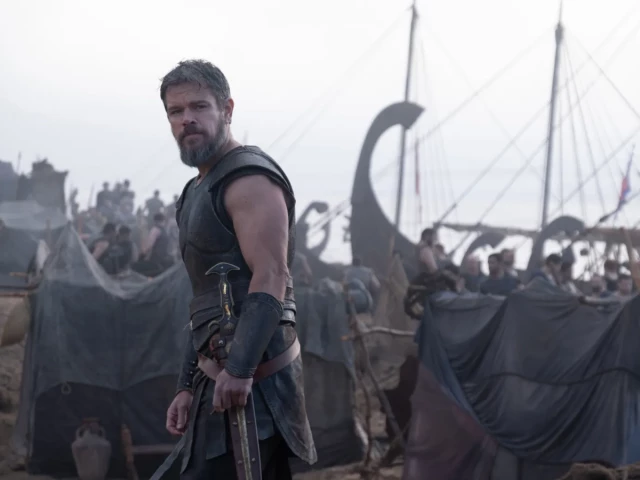
Christopher Nolan's The Odyssey has introduced Homer's ancient epic to a new generation of cinema audiences, but long before the Oscar-winning director brought the story to the big screen, classicist Emily Wilson had already transformed the way modern readers experienced it.
Published in 2017, Wilson's translation of The Odyssey made history as the first English-language translation of the epic by a woman. Rather than treating Homer's poem as an untouchable relic, Wilson sought to preserve its pace, emotional depth and humanity in language that felt immediate to contemporary readers.
Her work quickly became one of the most celebrated modern translations of the ancient Greek classic, earning praise for stripping away centuries of embellished language and exposing the poem's moral complexity. Wilson challenged long-standing interpretations that softened or romanticised certain characters, particularly women and enslaved people, instead opting for translations that more closely reflected the original Greek text.
Christopher Nolan has acknowledged Wilson's translation as one of the principal texts that informed his adaptation of The Odyssey. While the film remains rooted in Homer's original narrative, Wilson's interpretation helped shape its emotional and thematic approach, particularly its emphasis on Odysseus as a flawed, deeply human hero rather than an untouchable legend.
Wilson has often argued that The Odyssey is not simply an adventure story but a meditation on grief, survival, displacement and the meaning of home. Her translation presents Odysseus as both heroic and morally ambiguous, inviting readers to question his choices rather than celebrate them unconditionally.
That perspective aligns closely with Nolan's interpretation. His film focuses as much on the psychological cost of Odysseus' decade-long journey as it does on the epic's mythical creatures and large-scale battles. The director has also expanded several female characters while maintaining the emotional core of Homer's poem.
Wilson's influence extends far beyond Nolan's blockbuster. Her translation has become widely adopted in schools and universities, helping reshape discussions around one of the foundational works of Western literature. By making the text more accessible without sacrificing its poetic structure, she has encouraged a new generation to engage with Homer's epic on its own terms.
Released in cinemas this month, The Odyssey stars Matt Damon as Odysseus alongside Tom Holland, Anne Hathaway, Zendaya, Robert Pattinson, Charlize Theron, Lupita Nyong'o and Elliot Page. While Nolan's adaptation is drawing audiences with its spectacular visuals and globe-spanning production, many scholars note that its emotional resonance owes much to the literary groundwork laid by Emily Wilson nearly a decade earlier.















This material may not be published, broadcast, rewritten, redistributed or derived from. Unless otherwise stated, all content is copyrighted © 2026 The Express Tribune.






COMMENTS
Comments are moderated and generally will be posted if they are on-topic and not abusive.
For more information, please see our Comments FAQ