Russia's Putin visits Japan-claimed islands for first time, Tokyo protests
Updated 21 minutes ago

China, Pakistan urge adherence to ceasefire, talks resumption Iran strikes US bases in Gulf countries Kuwait
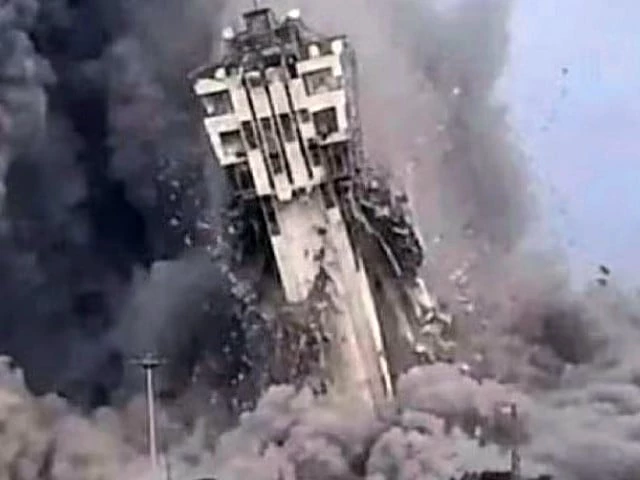
The United States struck bridges in Iran, and Tehran responded by hitting a power and desalination plant in Kuwait on Friday, as the two sides risked further escalation by expanding their targets to include infrastructure.
China's Foreign Minister Wang Yi and his Pakistani counterpart Ishaq Dar called for a ceasefire and the resumption of dialogue between the United States and Iran, the Chinese foreign ministry said, citing talks between the ministers in Shanghai on Thursday.
Wang urged all parties to fulfill their commitments and abide by the ceasefire memorandum of understanding, the foreign ministry said.
The two sides expressed deep concern over the deterioration of the situation in Iran, calling on parties concerned to immediately cease hostilities, surmount difficulties, remove disruptions, resume contacts and dialogue, and strive to reach a comprehensive peace agreement through negotiations.
They also urged the international community to continue lending support to such efforts.
Wang, also a member of the Political Bureau of the Communist Party of China Central Committee, said that the first-phase memorandum of understanding reached between the United States and Iran did not come easily.
It represents the outcome of bilateral negotiations and also owes much to the joint efforts of the international community, with Pakistan playing an indispensable coordinating and mediating role, he added.
Wang said the core provisions of the MoU serve not only the fundamental and long-term interests of the parties concerned but also met the shared expectations of the international community, and thus deserved to be cherished and safeguarded with utmost care.
Noting that all parties should honour their commitments and abide by the provisions of the MoU, Wang said that China would, as always, support Pakistan's mediation efforts and continue to play a constructive role in facilitating the de-escalation of the situation in its own way.
Dar gave a briefing on Pakistan's recent efforts and thanked China for its understanding and support. He said Pakistan would forge ahead against difficulties and keep actively promoting peace talks.
At sea, where the renewed conflict has again cut off energy supplies from the Gulf, US Marines boarded a tanker near the Strait of Hormuz. Armed men seized another vessel off Yemen, raising concern over security in the Middle East's other big choke point for oil shipments at the mouth of the Red Sea.
Iran's semi-official Tasnim news agency reported late on Friday that the Revolutionary Guards navy had "targeted" a Thai-flagged ship trying to get through the Strait of Hormuz. It did not give further details.
Washington and Tehran have been testing the limits of escalation since their ceasefire agreement collapsed last week, raising the prospect of a return to all-out war.
After reports of the escalation emerged on Friday, benchmark Brent crude oil prices climbed 3% LCOc1 and were on track for a third consecutive weekly gain. Global share prices fell while Wall Street opened sharply lower, then leveled off.
US President Donald Trump has threatened to launch broad-based air strikes on Iran's infrastructure and has also declined to rule out a ground assault on Iran's coast or islands. US officials have said attacks on southern Iran are designed in part to give Trump options.
Such moves risk provoking Iran to escalate in turn by hitting the vital infrastructure of vulnerable neighbouring Arab states, or having its allies in Yemen further disrupt global energy supplies by attacking shipping from the Red Sea.
Mohsen Rezaei, an adviser to Iran's supreme leader, warned on Friday against US escalation or any attempt to seize Iranian territory.
"If US strikes continue for several more days, we will move into a phase of full-scale offensive operations," Rezaei, a former Revolutionary Guards top commander, told state television.
UN Secretary-General Antonio Guterres was concerned about the escalation, particularly over "attacks on civilian infrastructure in Iran and across the region," his spokesperson said.
In the latest strikes, the US military's Central Command included "military logistics infrastructure" in the list of targets it said it had hit, the first time it has mentioned infrastructure in more than a week.
Iranian state media said at least five bridges were struck in the south. Seven people were reported killed in attacks on bridges in the southern port of Bandar Khamir, where the train station was also hit. An airport was reported hit further east and away from the coast in Iranshahr, in a province bordering Pakistan.
Videos verified by Reuters showed rubble, broken railings and a damaged vehicle on a smashed bridge in Bandar Khamir. One clip showed a fire.
Iranian Foreign Minister Abbas Araqchi said that three villagers were killed while crossing the Bandar Khamir Bridge, adding that Iran would not allow their blood "to be in vain."
Reuters was unable to confirm details in other reports, which described deadly attacks including one that killed a woman and wounded her child in the port of Bandar Abbas.
Iran announced attacks on Gulf countries that host US airbases, including Bahrain, Qatar and Kuwait.
Authorities in Kuwait said one of the country's power generation and water desalination stations had been hit in an Iranian attack, causing damage, a fire and the disruption of a large number of electricity generation units.
Firefighters brought the blaze under control, while technical teams began assessing the damage, securing the station and working to restore power generation as soon as possible, the Ministry of Electricity, Water and Renewable Energy said.
The rich Arab Gulf states depend on plants that produce electricity and remove salt from seawater to make their desert cities habitable. When Iran hit a Kuwaiti desalination plant on March 30, it was seen as a major escalation that helped push the United States to declare the war's first ceasefire a week later.
FEUD OVER STRAIT
Iran said it struck US bases in Kuwait, Qatar and Bahrain, and a US radar station in Oman. Explosions were heard in the Qatari capital, Doha, where the interior ministry said a child was wounded by shrapnel.
Last month's interim agreement to end the war has collapsed since July 7, when Iran struck ships in the Strait of Hormuz and the United States responded with air strikes. Iran has since announced the closure of the strait, and Washington has reimposed its own blockade of Iranian ports.
In the latest action at sea, the US military said it had boarded a tanker to enforce the blockade, releasing photos of Marines rappelling down from a helicopter onto the deck where one posed in front of an Iranian flag.
Beyond the Gulf, armed assailants boarded and seized a small chemical tanker off Yemen in the Gulf of Aden, close to the mouth of the Red Sea.
Iran has signalled that it could prod its Houthi allies in Yemen to close another key strait: the Bab al-Mandeb at the mouth of the Red Sea, potentially cutting off the main alternative route for Middle East oil bypassing the Gulf. Sources have told Reuters Iran has already instructed the Houthis to act if Washington attacks Iran's infrastructure.
(With input from News Desk)











This material may not be published, broadcast, rewritten, redistributed or derived from. Unless otherwise stated, all content is copyrighted © 2026 The Express Tribune.






COMMENTS
Comments are moderated and generally will be posted if they are on-topic and not abusive.
For more information, please see our Comments FAQ