Pakistan expects US reply on $10b stabilisation facility 'soon'
Updated 20 hours ago

Textile exports nearly stagnant at 0.26% as high costs, cotton shortage hit industry
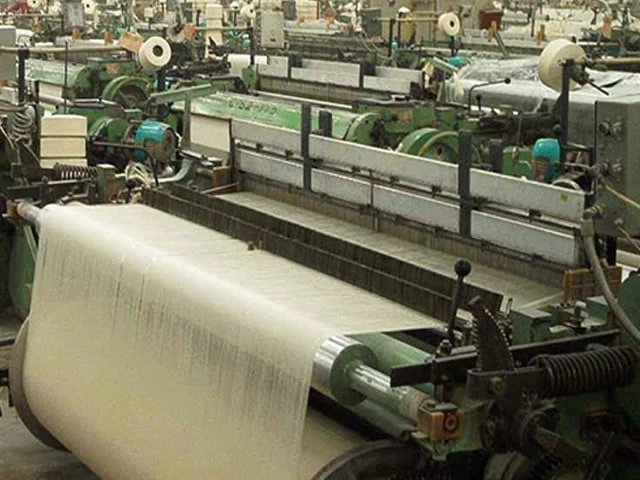
Pakistan Textiles Council (PTC) has drawn the attention of Prime Minister Shehbaz Sharif to the country's stagnant textile exports and called for the immediate rollout of an export refinancing scheme to revive exports.
In a letter to the prime minister, the council said textile exports grew only 0.26% in FY2025-26 due to high business costs, delayed export finance and a cotton shortage. PTC also sought a reduction in employer EOBI contribution to improve competitiveness and urged NEPRA to correct industrial electricity tariff anomalies. The council warned that the decline in cotton production threatens Pakistan's largest export industry and called for timely reforms to restore export growth.
According to the latest data released by the Pakistan Bureau of Statistics (PBS), textile and clothing exports in FY2025-26 stood at $17.93 billion against $17.88 billion in the preceding year, an increase of only 0.26%. In June 2026 alone, textile exports contracted by 16.71% year-on-year to $1.267 billion, and by 23% against the previous month. PTC said the single most important reason why Pakistan's textile exports have stalled is the cost of doing business, of which labour-related contributions and energy are the largest components. The federal government has announced a 10% increase in the minimum wage, and provincial governments have yet to announce the increase. For labour-intensive businesses, this will be a huge increase in overall production costs.
The government continues to charge essential contributions (EOBI, WWF, WPPF, PESSI and SESSI) without providing sufficient benefit to employees in the private sector. EOBI currently sits at a total fund of approximately Rs700 billion. PTC said relief in EOBI contribution charged to employers, without reduction in any benefit to employees, can provide meaningful relief. In the energy sector, a structural mispricing in the industrial electricity tariff is diluting the benefit of Pakistan's recent power price reductions. Nepra's own Cost of Service principle holds that the cost to serve should fall as connection voltage rises, because higher voltage users bypass network layers and associated losses.
The result is an embedded cross-subsidy. B3 and B4 consumers, though only about 1.2% of industrial connections, account for roughly 59-62% of industrial electricity consumption and are paying close to Rs4/kWh above their actual cost of service. This anomaly can be corrected on a revenue-neutral basis within the B1-B4 categories without additional government subsidy, restoring cost-reflective order and improving industrial competitiveness.
Delay in refinance scheme
In the federal budget speech for FY2026-27, the finance minister announced an expansion of the Export Refinance Scheme. However, the scheme has not yet been operationalised. Exporters continue to fund working capital at open-market rates in double digits while competitors in Bangladesh, India and Vietnam access export finance at low single-digit rates.
Deepening cotton shortage
Cotton is the foundation of the textile value chain, and its domestic supply has collapsed. National output fell to approximately 5.5 million bales, the lowest level in three decades, compared with 14.8 million bales in 2011-12, a decline of nearly 70%.
The immediate causes include severe heat stress during June-July flowering, acute water shortages in Sindh and South Punjab, and the mismatch between supply and industrial demand must now be met through imports.
Pakistan's textile and apparel sector has repeatedly demonstrated its resilience through successive economic, energy and climatic shocks, sustaining exports and employment under conditions that have prompted direct government support for competitors elsewhere.






This material may not be published, broadcast, rewritten, redistributed or derived from. Unless otherwise stated, all content is copyrighted © 2026 The Express Tribune.






COMMENTS (1)
Comments are moderated and generally will be posted if they are on-topic and not abusive.
For more information, please see our Comments FAQ