From stabilisation to growth
Updated 27 minutes ago

Exports grow 9.5%, imports surge $1b, as incentives fail to curb imbalance
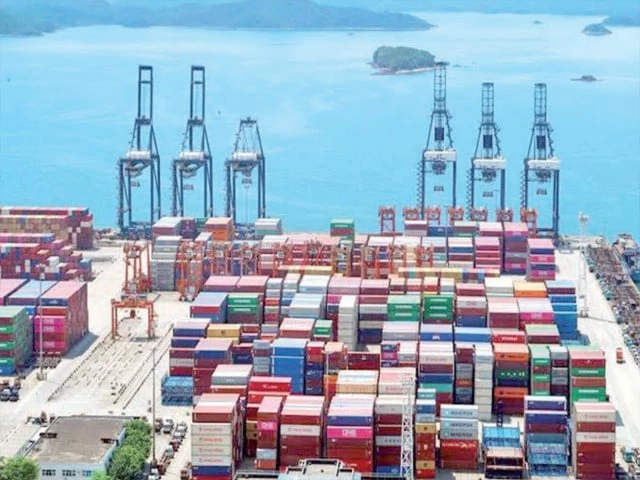
Pakistan's trade deficit widened by one-fourth to nearly $4 billion in July due to $6.9 billion in imports, highlighting external sector vulnerabilities and the impact of the policy to open the economy without first creating an enabling environment for fair competition.
According to the Pakistan Bureau of Statistics (PBS), compared to a $3.2 billion trade deficit in July last year, the gap between imports and exports widened to $3.95 billion last month. There was an increase of $794 million in the trade deficit, or 25.2% higher, on an annual basis.
Exports again remained shy of $3 billion by a margin of $61 million, after crossing the mark in January this year but never touching the figure again. On an annual basis, exports were $256 million or 9.5% higher than last year – a growth and number that was not sufficient to offset the impact of growing imports.
The official data showed that imports increased from $5.8 billion to $6.9 billion this July – a jump of over $1 billion or 18%.
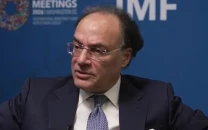
Under the World Bank, the International Monetary Fund (IMF) and foreign consultants-guided national tariff policy, the government has started opening the economy for foreign competition without first creating the enabling environment and building a sufficient cushion to absorb the impact of higher imports.
The World Bank had predicted that the new tariff would result in a 14% increase in exports and only a 7% surge in imports. However, the results remained contrary to these projections. In the last fiscal year, exports plunged 6% to mere $30 billion.
The tariff walls have been brought down without giving medium-term assurances on the exchange rate, interest rates, tax rates and energy cost to businesses to remain competitive.
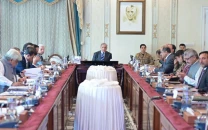
In the budget, Prime Minister Shehbaz Sharif announced more incentives for exporters by reducing their minimum and advance taxes to 1.25% and abolishing the 10% super tax on exports.
Last week, the government approved a Rs98 billion subsidy package for exporters for the current fiscal year. It approved three dedicated schemes for export enhancement. Under the E-EFS, the government will provide working capital loans to exporters for six months at a rate of 8.5%. It will pick 5% interest cost, which will require a subsidy of Rs58 billion in the current fiscal year.
The Economic Coordination Committee (ECC) approved an increase in the existing portfolio from Rs1 trillion to Rs1.5 trillion for the short-term scheme. It agreed on the launch of the Long-term Growth Financing Facility, which would offer loans at a low interest of 2% for two years and a fixed 5% rate for the next eight years.
The ECC approved a new performance-based rebate scheme for incremental exports. The scheme is being introduced from July 1, 2026, with an estimated annual cost of Rs15 billion. Exporters achieving annual export growth of up to 10% over the preceding year shall be eligible for a rebate equivalent to 1% of the incremental export value. Exporters achieving annual growth of more than 10% shall be eligible for a rebate equivalent to 2% of the incremental export value.
Despite availing incentives for the past many decades, there has not been one exporter in the country who has earned a billion dollars from exports in any single financial year.
The PBS data showed that on a month-on-month basis, exports increased 31% to little under $3 billion. In absolute terms, exports grew $697 million in July compared to June this year.
Imports remained stagnant on a monthly basis, close to $7 billion. The monthly trade deficit was down by 15% or $709 million, showed the official statistics.
In January this year, exports crossed $3.05 billion for the first time, but the country could not sustain the level.
For the current fiscal year, the government has set a modest export target of $32.5 billion but projected imports to grow to $70 billion. The gap is filled by foreign remittances, as new loans are taken to pay back the maturing loans.










This material may not be published, broadcast, rewritten, redistributed or derived from. Unless otherwise stated, all content is copyrighted © 2026 The Express Tribune.






1727268465-0/Untitled-design-(42)1727268465-0-208x130.webp "the poor man s burden")
COMMENTS (1)
Comments are moderated and generally will be posted if they are on-topic and not abusive.
For more information, please see our Comments FAQ