Businesses seek industrial tariff below 9 cents
Updated 1 hour ago

Says targeted petroleum discounts will continue
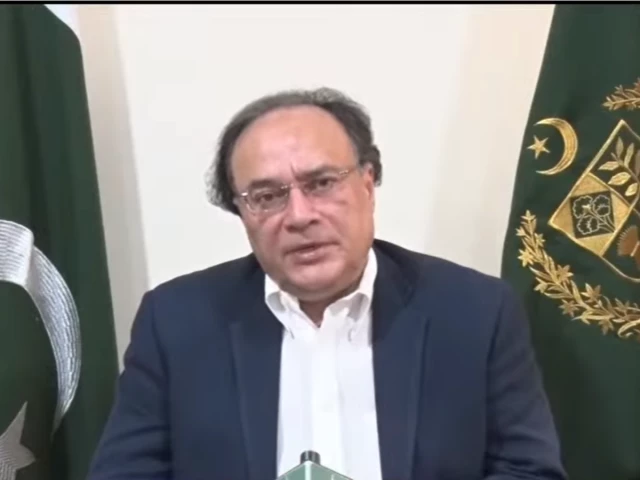
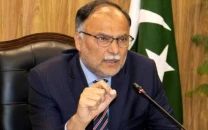
Finance Minister Muhammad Aurangzeb expressed ignorance about the IMF's concerns over Pakistan's fuel subsidy scheme during a brief interaction with The Express Tribune at the International Poultry Expo 2026, saying targeted subsidy was the way forward and the scheme would continue to benefit vulnerable segments of society.
The remarks came despite the IMF calling for the fuel support scheme to be phased out promptly, citing its high cost and broad targeting.
Asked about the IMF's position, Aurangzeb questioned where the media had heard about the objection. When told that the information had been officially issued by the IMF and reported by mainstream media, he suggested that the Fund might have conveyed its concerns to the subscriber but said he had not been informed by them.
Asked why the government had not announced smart lockdowns to conserve fuel stocks and reduce the rising fuel import bill, as it had done previously when domestic fuel prices exceeded Rs400, the minister said targeted subsidies had made such lockdowns unnecessary by allowing deserving segments of society to purchase fuel at subsidised rates.
In a subsequent interaction to clarify the matter, Aurangzeb reiterated that the targeted subsidy scheme had been successful and had benefited around 10.2 million people. The IMF, in its October 7 press release announcing a staff-level agreement on the fourth review of the Extended Fund Facility and the third review of the Resilience and Sustainability Facility for Pakistan, called for the fuel support scheme to be phased out promptly, citing its high cost and broad targeting.
Under the heading "Prioritising Social Spending", the IMF stated that any future fuel support, should oil prices rise unexpectedly, should be limited, time-bound and targeted, delivered through established social assistance programmes, and accommodated within the fiscal year 2026-27 budget envelope.
Speaking at the event, Aurangzeb said the prime minister had disclosed a day earlier that around 10 million people had benefited from the subsidy scheme. These included users of Qingqi rickshaws, other three-wheelers, motorcycles and cars with engines below 800cc.
Assuming an average household size of five people, the minister said, the scheme's benefits could extend to around 50 million people. He added that the programme would continue to support vulnerable and deserving segments of society.
Aurangzeb also said Pakistan could not afford long marches and sit-ins if it wanted to sustain economic growth of 4% or above, adding that such disruptions caused daily losses of around Rs120 billion.
The finance minister appreciated the organisers of Poultry Expo 2026 for bringing together a large number of local and foreign businesses. He said the livestock sector accounted for 63% of agricultural GDP and had recorded fairly impressive growth. However, despite Pakistan being the world's 11th largest poultry producer, its share in global poultry exports remained negligible.
He said the poultry sector needed to improve its export potential by addressing logistical constraints, strengthening disease management and reducing input costs.
Aurangzeb said the government had decided to establish a separate administrative vertical for livestock in view of the sector's importance. The proposed arrangement would give the private sector greater autonomy in decision-making, while oversight would remain with the Ministry of National Food Security and Research. He said the sector would enjoy greater operational freedom, drawing a comparison with the Export Development Fund, from which ministers and government functionaries had reportedly been removed to give the private sector greater control.
When asked why the government was involving exporters and importers in security-related measures by using their containers as roadblocks, and whether this was fair to businesses, Aurangzeb questioned whether it was fair to attack the country's capital when matters could be resolved through dialogue. He also questioned whether such actions were permissible in a democracy.





This material may not be published, broadcast, rewritten, redistributed or derived from. Unless otherwise stated, all content is copyrighted © 2026 The Express Tribune.

1727268465-0/Untitled-design-(42)1727268465-0-208x130.webp "the poor man s burden")

COMMENTS
Comments are moderated and generally will be posted if they are on-topic and not abusive.
For more information, please see our Comments FAQ