Netanyahu rebuked for plan to use crypto to bypass economic sanctions
Updated 9 hours ago

Rubio says US-Iran strait talks progress, deal could come 'very shortly'
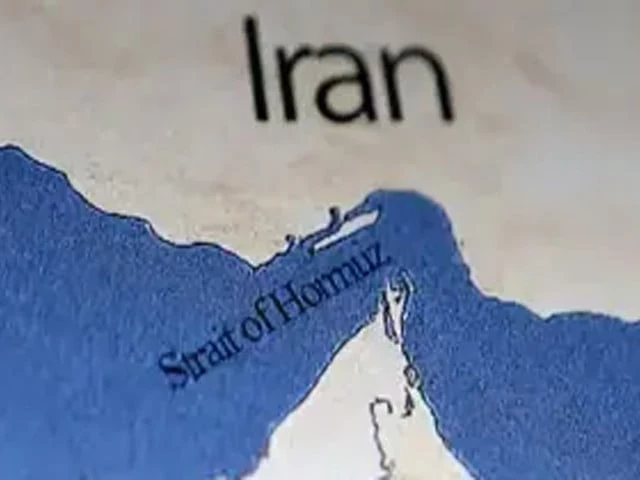
Pakistani and Qatari mediators are preparing a document to facilitate the reopening of the Strait of Hormuz after intensifying contacts with the United States, Iran and other regional partners, Pakistani government sources told Anadolu on Tuesday.
The sources added that indirect contacts between the US and Iran through Pakistani and Qatari mediators are in the "final stage" to finalize the document.
"A major development concerning reopening of the Strait of Hormuz under the Islamabad Memorandum of Understanding is expected this week as Pakistan and Qatar have intensified diplomatic contacts with Washington, Tehran and several other regional partners," said a source familiar with the developments.
Read: How Iran is widening its pressure campaign to force US concessions
Oman, which has been in talks with Iran about future management of the Strait of Hormuz, is also "actively" involved in the latest diplomatic efforts to end hostilities and reopen the strait, said sources.
The single-page document, according to sources, contains matters only related to the Strait of Hormuz, which would subsequently lead to the resumption of long-stalled direct talks between the US and Iran.
Iran will reopen the strait, and in return, the US will lift its blockade of the Iranian ports, according to the document, said the sources.
There is no mention of Tehran's nuclear program in the document, they said.
Following implementation of the document, mediators will finalize the date and venue for the resumption of direct talks in consultation with Washington and Tehran, the sources added.
Contentious issues
The sources said that the two warring sides are still at loggerheads on several issues, mainly tolls.
"The US side is insisting that the Strait of Hormuz should be completely toll-free for commercial shipping as it was before the start of the war. While Tehran wants a 'service fee' to cover environmental and security costs," they said.
The mediators, it added, are trying to find a solution which might offer a "middle way" to resolve the issue.
Also, a source said Tehran is opposing the idea of different shipping corridors in the strait.
The New York Times reported earlier that Iran and Oman are close to reaching an agreement to restore commercial maritime traffic through the strait.
Under the potential deal, the report said, vessels entering the Gulf would travel through a shipping channel controlled by Iran and close to its coast, while outbound traffic would use a channel near Oman.
Iranian officials told The Times that no tolls would be charged but said the agreement includes a "service fee" to cover environmental effects, security for cargo ships and tankers, and staffing costs. They added that the revenue would be shared equally between Iran and Oman.
Rubio says US-Iran strait talks progress, deal could come 'very shortly'
Earlier, US Secretary of State Marco Rubio said that Washington and Tehran had yet to finalise talks on passage through crucial international waterways, but he hopes an agreement will come “very shortly.”
Following reports and senior US officials’ remarks that both sides are close to reaching a deal to reopen the Strait of Hormuz, Rubio told reporters at the State Department that “there's been progress made in those talks, but not finality yet.”
“We're hoping that will happen very shortly,” he said.
Claiming that some commercial vessels have been able to transit despite efforts to block their passage, Rubio said that nonetheless, “there's a conversation and a negotiation that we are involved in between Oman and Iran on how more ships can be able to go through there safely in the short term.”
“There's oil moving right now through the straits. So, the straits are open,” he said, appearing to refer to the Strait of Hormuz and the Bab el-Mandeb waterway between Yemen and the Horn of Africa, after Yemen’s Houthi group threatened vessels linked to Saudi Arabian ports.
Bab el-Mandeb, between Yemen and the Horn of Africa, connects the Gulf of Aden with the Red Sea and serves as a major route for vessels travelling between Asia, the Middle East and Europe through the Suez Canal.
Rubio said a potential agreement on the straits was receiving more attention, but the US sought to secure an “ultimate deal” with Iran on denuclearisation.
US Treasury secretary says Hormuz deal with Iran may happen 'today or tomorrow'
US Treasury Secretary Scott Bessent said on Tuesday that the Hormuz deal with Iran to open the waterway may happen 'today or tomorrow', noting that this will stabilise energy prices, according to AFP.
“We are in talks with the Iranians, and I think there is a chance we may have a deal today or tomorrow to open the strait and move towards a more normalised position in this conflict,” Bessent remarked in an interview with CNBC.
While answering a question as to whether a deal would allow Iran to charge a toll on shipping using the strait, he said: “I think it would be freedom of movement."
"Even though things are still a little dicey there over the past few days, we’ve (seen) quite a few ships coming out even now,” Bessent said.
“So you know, I’d expect the energy prices to settle back down, which, as I said, will be good for the entire world,” he further added.
BREAKING: US Treasury Secretary Scott Bessent says deal with Iran on Strait of Hormuz may happen 'today or tomorrow'
— Al Jazeera Breaking News (@AJENews) August 4, 2026
🔴 LIVE updates: https://t.co/aa5KbehurW pic.twitter.com/UHD3FsYe1x
Iranian president denies reports of resignation
Iranian President Masoud Pezeshkian denied on Tuesday reports that he had submitted his resignation amid ongoing military escalation with the US.
“If I were going to resign, I would announce it publicly. I will not resign, and I will continue the struggle,” Pezeshkian said in a televised speech, excerpts of which were published by the official IRNA news agency.
He also denied claims of disagreements with Supreme Leader Mojtaba Khamenei and the armed forces, stressing that “we are working in full harmony.”
“Everyone knows that if any disagreement arises, the armed forces would stand with Khamenei,” he said.
Iranian opposition media outlets earlier claimed that Pezeshkian had submitted his resignation to Khamenei several times.
Qatar says efforts ongoing with all parties for diplomatic resolution to US-Iran conflict, mediators coordinating closely
Qatar's Foreign Ministry spokesperson Majed Al Ansari said on Tuesday that efforts are ongoing to seek a diplomatic resolution to the US-Iran conflict, and that mediators including Qatar, Pakistan and Oman are coordinating closely to facilitate negotiations and exchange drafts between both sides.
According to Al Jazeera, he stated that there is no clear timeline for when an agreement can be reached.
Additonally, Qatar called for a return to normalcy in Hormuz Strait amid ongoing diplomatic efforts.
Yemen’s Houthis claim drone attack on Saudi airport
Yemen’s Houthi group claimed on Tuesday that it carried out a drone strike on a “sensitive target” at Najran Airport in southern Saudi Arabia.
Military spokesman Yahya Saree alleged on the US social media company X that the attack accurately hit its intended target.
🔴 Yemeni armed forces spokesperson Brigadier General Yahya Saree said a drone struck a sensitive Saudi target at Najran airport, describing the operation as retaliation for violations of the airspace over Yemen’s Sa'da and Hajjah provinces. pic.twitter.com/Jt43mR1oza
— Press TV Breaking (@PTVBreaking1) August 4, 2026
He said the operation was launched in response to what he described as Saudi drone violations of Yemeni airspace over the provinces of Saada and Hajjah.
Saree warned that any future violation of Yemen’s airspace “will not pass without response and punishment.”
There was no immediate comment from Saudi authorities on the claim.
Lebanon, Israel open 7th round of direct negotiations in Rome
A seventh round of direct negotiations between Lebanon and Israel began on Tuesday in the Italian capital, Rome, under US sponsorship, according to Lebanese media.
Delegations from both sides are taking part in the talks to discuss files related to the implementation of a US-mediated framework agreement signed in June between Beirut and Tel Aviv, the National News Agency (NNA) said.
Italian news agency ANSA confirmed the opening of the talks, without providing more details.
Rome hosted a sixth round of talks on June 14, following five rounds in Washington, which resulted in the signing of a framework agreement on June 26.
The agreement provides for a gradual Israeli withdrawal from all occupied Lebanese territory in return for the deployment of the Lebanese army in those areas and the disarmament of armed groups, a reference to Hezbollah.
New York Times reports that Iran, Oman are near a deal to reopen Strait of Hormuz
Iran and Oman are close to reaching an agreement to restore commercial maritime traffic through the Strait of Hormuz, The New York Times reported on Monday, citing Iranian and US officials.
Under the potential deal, the report said, vessels entering the Gulf would travel through a shipping channel controlled by Iran and close to its coast, while outbound traffic would use a channel near Oman.
Iranian officials told The New York Times that no tolls would be charged but said the agreement includes a "service fee" to cover environmental impacts, security for cargo ships and tankers, and staffing costs. They added that the revenue would be shared equally between Iran and Oman.
A US official said that the Iranian account was "not accurate," saying any "temporary" shipping routes through the strait would not require Iranian approval and would not involve tolls.
According to the report, some senior Pentagon officials are sceptical of the proposed arrangement, expressing concern that it could amount to a concession to Iran.
The New York Times also reported that some Iranian officials questioned whether the agreement would function as intended and prevent another round of US attacks.
Lebanon-Israel negotiations bring 'shame, humiliation, and successive compromises': Hezbollah
Hezbollah Secretary-General Naim Qassem on Tuesday condemned direct negotiations between Lebanon and Israel, saying they had brought nothing but "shame, humiliation, despair and repeated concessions" for Lebanon, and called on Lebanese officials to defy the United States, according to Iran's Mehr News Agency and AFP.
Hezbollah Secretary-General Naim Qassem on Tuesday condemned direct negotiations between Lebanon and Israel as bringing nothing but shame and humiliation, adding that only the Iran-U.S. truce MoU halted Israeli attacks.https://t.co/zEKFCAbhG4
— Mehr News Agency (@MehrnewsCom) August 4, 2026
In a televised address at an Arbaeen commemoration in Baalbek, Qassem said Lebanon’s President Joseph Aoun “has not acted as an arbiter, nor as a unifying figure, but has become biased and divisive, which is incompatible with his role and with Lebanon’s strength”.
He said that only the Iran-US truce MoU halted Israeli attacks.
"Had it not been for that memorandum, this ceasefire would never have been achieved," he said.
"I tell you clearly: with this approach, the political authority will achieve nothing for Lebanon and will not succeed in facilitating American objectives," he said, calling on Lebanese officials to stop granting concessions and instead open dialogue with Hezbollah.
Dry bulk ship struck by projectile near Strait of Hormuz, crew abandon ship, maritime sources say
Liberia-flagged dry bulk ship, Minoan Pioneer, was hit by an unknown projectile close to Oman’s coast while sailing through the Strait of Hormuz on Tuesday with the crew abandoning the vessel and one seafarer missing, maritime security sources said.
"The projectile reportedly struck the engine room, while a fire broke out in the accommodation area. The crew are fighting the fire and require assistance, while the third engineer is reported missing," British maritime risk management group Vanguard said separately.
The vessel’s Greece-based operator Modion Maritime Management did not immediately respond to a request for comment.
Iran will protect its territorial integrity, has no intention of widening conflict: Iranian president
Iranian President Dr Masoud Pezeshklian said on Tuesday that Iran would protect their territorial integrity, however it had "no intention of widening the conflict."
President @drpezeshkian: We will protect our territorial integrity, yet we have no intention of widening the conflict. We must work to forge a society that offers the enemy no temptation to interfere, no opening to infiltrate, and no means to divide or dismantle us. pic.twitter.com/WBm9Hz8R8l
— IRNA News Agency ☫ (@IrnaEnglish) August 4, 2026
In a statement carried by Iranian state news agency IRNA, he said that "we must work to forge a society that offers the enemy no temptation to interfere, no opening to infiltrate, and no means to divide or dismantle us."
Aramco reports higher revenue as US-Iran war boosts oil prices
Saudi energy giant Aramco reported a sharp increase in its second-quarter net income, up 44%, as the ongoing US-Iran conflict drives global oil prices higher and disrupts regional supply chains.
Aramco's net income reached $32.7 billion in the second quarter, up from $22.67 billion in the same quarter 2025, the firm announced on Tuesday.
The geopolitical conflict drove global oil prices up and allowed the Saudi company to capitalize on its diverse asset base.
The company's net income also reached $65.2 billion during the first half of the year, up from $48.68 billion in the same period last year.
Aramco President and Chief Executive Officer Amin H. Nasser said the unprecedented supply disruption defined the performance of the company during the first six months.
Nasser highlighted that the firm maintained business continuity and sustained production despite the challenging regional environment.
Status of US-Iran talks uncertain as ship struck in Hormuz
Conflicting signals from the United States and Iran over the status of talks to end their five-month-old war boosted uncertainty on Tuesday, with the latest attack on shipping in the Strait of Hormuz highlighting risks to global energy flows.
US President Donald Trump said the talks were underway on Monday, warning of a "last chance" for Tehran to sign a good deal, but Iran denied that negotiations were being held or planned.
"They are going on right now," Trump told reporters at an Oval Office event when asked about the state of negotiations, saying the sides were talking at the request of Iran, Saudi Arabia, the United Arab Emirates and Qatar, among others.
"This is a last chance for them (Iran) to sign a good document."
The comments followed Trump's weekend decision to call off "massive attacks" he said he had authorised on Iran, as talks were to be held, repeating a pattern in which he has vowed major strikes only to cancel them.
Earlier on Monday, Iranian Foreign Ministry spokesman Esmail Baghaei said no negotiations with the United States were taking place , and no meetings were scheduled.
Read: Trump says Iran faces 'decapitation' if it doesn't strike deal
Iran had no plans to host foreign delegations or send negotiators abroad in the coming days, he said.
Baghaei added that all Iranian negotiators were in the country, except for Foreign Minister Abbas Araghchi, who was on a religious pilgrimage in Iraq. The only talks underway, he said, were discussions with Oman over management of the Strait of Hormuz.
Shipping activity in the Gulf only reinforced the ongoing stand-off since Iran all but shut off transits through the vital route for a fifth of global shipments of crude oil and natural gas before it was blockaded in the war.
One cargo vessel broadcast it had been hit by an unknown projectile near the strait off Oman's coast, the United Kingdom Maritime Trade Operations (UKMTO) agency said.
Traffic through Hormuz remained largely slow, with three tankers and three bulk carriers among the six vessels transiting the strait on Monday, down from seven the previous day, Kpler data showed.
Qatar urges Gulf coordination to implement US-Iran memorandum of understanding
Qatar on Monday called for greater Gulf coordination to implement the US-Iran memorandum of understanding in separate calls between Prime Minister and Foreign Minister Sheikh Mohammed bin Abdulrahman Al Thani and his counterparts in the United Arab Emirates, Saudi Arabia, Kuwait, Oman and Bahrain.
The talks focused on regional developments, particularly diplomatic efforts and joint coordination to reduce tensions and strengthen security and stability across the region, alongside bilateral cooperation, according to a statement by Qatar’s Foreign Ministry.
Al Thani stressed the need for all parties to remain committed to dialogue and diplomacy and to implement the provisions of the US-Iran memorandum of understanding including ensuring freedom of navigation through the Strait of Hormuz to preserve regional security, safeguard recent gains and reinforce regional stability.
He also reaffirmed Qatar’s full support for efforts to ease tensions and reach a comprehensive agreement that would deliver lasting peace across the region.
Cargo vessel hit by unknown projectile off Oman: UKMTO
A cargo vessel reported being hit by an unknown projectile off the coast of Oman early on Tuesday, according to the UK Maritime Trade Operations (UKMTO) centre.
The agency said the vessel broadcast on VHF Channel 16 that it had been struck while sailing about 20 nautical miles northeast of Khasab, Oman.
UKMTO said authorities have launched an investigation into the incident and advised vessels transiting the area to exercise caution and report any suspicious activity.
No group immediately claimed responsibility for the reported attack.
Iran cancelled plans to strike 3 sites in Ukraine after Kyiv ‘apology’: Top Iranian military adviser
Iran was prepared to launch strikes on three sites in Ukraine before scrapping the operation after an “apology” from Kyiv, a top military adviser to Supreme Leader Ali Khamenei said on Monday.
In an interview with Iranian state television, Mohsen Rezaei said Iran’s armed forces had completed preparations for the strikes before the operation was called off.
Rezaei also warned that Iran would not allow any maritime route through the Strait of Hormuz outside Iran’s designated route, saying any hostile naval vessel attempting to use an “illegal route” would be targeted.
Major General Mohsen Rezaei: Under no conditions will we permit the opening of a second passageway in the Strait of Hormuz. Should any naval vessels or military troops be deployed there with that intent, we will strike them. pic.twitter.com/wpHZ7sRp7o
— IRNA News Agency ☫ (@IrnaEnglish) August 4, 2026
He also said that Iran had inflicted heavy losses on US forces during the recent 17-day conflict, adding that Iranian missile and drone attacks had thwarted Washington’s military objectives.
The remarks came after Iran accused Ukraine on July 25 of attacking an Iranian commercial vessel in the Caspian Sea, killing one crew member.
Iranian Foreign Minister Abbas Araghchi later told his Ukrainian counterpart Andrii Sybiha that Kyiv should compensate Tehran for the damage caused by the attack.
Tehran not seeking escalation in region, Iranian president says
Iranian President Masoud Pezeshkian said on Monday Tehran does not seek to fuel tensions in the region, vowing to use its full capabilities to defend the country’s security and interests.
“The Islamic Republic of Iran does not seek to escalate tensions or instability in the region. However, it will act with its full capabilities to defend the country's security, national interests, and territorial integrity,” Pezeshkian said in statements carried by Press TV.
Stocks rise, oil down on hopes for resolution
Still, hopes that US-Iran tensions were easing again pushed down oil prices, while major stock indexes gained on Monday.
Brent crude futures fell about 7% to around $83.77 a barrel while the Dow closed at a record high. Asian stocks and oil prices both edged higher on Tuesday.
Gulf officials and analysts say Iran is betting it can outlast Washington by turning the Middle East's trade routes, shipping lanes and energy infrastructure into pressure points that steadily raise the cost of confrontation.
It hopes such a strategy will convince the United States and its allies that containing the crisis is more costly than accommodating Iran's demands over the Strait of Hormuz.
Read More: How Iran is widening its pressure campaign to force US concessions
"Their big advantage is that they can hurt the regional states and the global economy," said Michael Knights of the Washington Institute.
In a post on Truth Social later on Monday, Trump called Iran's leadership "unbelievably duplicitous," saying they had asked for a meeting and more talks were set for the "immediate future."
He also repeated his assertion that the US Navy had total control over the Strait of Hormuz.
"'The United States Wall of Steel!' Nothing gets through to Iran, unless we want it to, and nothing will get through, unless a Deal, or Total Surrender, is accomplished," he wrote.
Repeated pattern
Monday's events appeared to fit a pattern since Trump launched "Operation Epic Fury" alongside Israel more than five months ago. Trump has threatened military action several times, only to later cite diplomatic contacts as a reason to step back.
Iran, however, has publicly rejected negotiations with Washington since the collapse in early July of a memorandum of understanding both signed the previous month, aimed at ending the conflict.
Trump has yet to achieve the objectives he set out at the outset of the war: dismantling Iran's nuclear program, curbing its ability to attack regional rivals and creating conditions for Iranians to overthrow their clerical rulers, despite arming foreign operatives to act alongside protesters earlier this year.
Also Read: Trump accuses Iran of mixed signals, repeats demand for nuclear deal or 'total surrender'
Repeated US escalations on Iranian civilian and military targets have been met by proportional Iranian responses against US forces in the region, Washington's Gulf Arab allies and shipping, each time ending with Trump stepping back.
The Hormuz dispute remains a central point of contention, with Washington saying the June memorandum required Iran to open the strategic waterway, while Tehran says the text explicitly preserved its authority over shipping traffic.




This material may not be published, broadcast, rewritten, redistributed or derived from. Unless otherwise stated, all content is copyrighted © 2026 The Express Tribune.








1727268465-0/Untitled-design-(42)1727268465-0-208x130.webp "the reverse renaissance")

COMMENTS (2)
Comments are moderated and generally will be posted if they are on-topic and not abusive.
For more information, please see our Comments FAQ