Oil extends losses on hopes for Middle East talks to ease supply woes
Updated 2 hours ago

Farmers, millers warn of crisis as supply disruptions, hoarding push bread price up
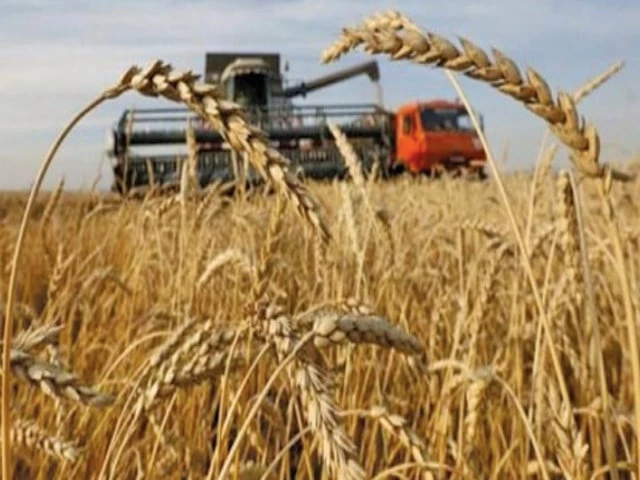
Only a few months after Punjab's wheat harvest, concerns over the country's staple food are resurfacing, with farmers, flour millers and agricultural organisations warning that policy failures, market uncertainty and supply disruptions could once again push wheat and flour prices higher.
Prices have started increasing despite the Punjab chief minister's claim of a record 22 million tonnes of wheat harvested this season. Farmer lobbies said Pakistan risks slipping into another wheat crisis despite producing its new crop and urged the federal and provincial governments to immediately review wheat policies, improve market management and crack down on hoarding before the situation worsens. "Pakistan spent more than $1 billion importing around 3.5 million tonnes of wheat last year, yet the country is still facing an estimated shortfall of nearly the same volume," said Markazi Kisan League (MKL) Chairman Chaudhry Zulfiqar Ali Olakh. He warned that if authorities fail to intervene in time, another two million tonnes may have to be imported in the coming months.
"The current situation is the result of poor planning rather than low production," he said, adding that if corrective measures are not taken immediately, wheat prices could cross Rs5,000 per maund, making flour even more expensive for ordinary consumers.
The wheat market has already started showing mixed signals. While the federal government maintains there is no national shortage and says this year's wheat production is estimated to be around 1.36 million metric tonnes higher than last year, provincial authorities have been instructed to monitor markets closely and take action against hoarding and artificial price manipulation. However, the ground situation remains uncertain. Over the past several weeks, flour millers have repeatedly complained about disruptions in wheat movement and procurement. The suspension of wheat supply permits for flour mills in Islamabad and Rawalpindi has triggered fears of an artificial flour shortage in the twin cities, with industry representatives warning that nearly 45 mills could soon run out of wheat if supplies are not restored. Reports from the market show that the price of roti in some areas has already increased from Rs17 to Rs25 following the disruption.
The Punjab government has recently started releasing wheat from official stocks to stabilise prices, fixing the release price at Rs3,800 per 40 kilogrammes while transferring one million metric tonnes of wheat from PASSCO to provincial stocks. Flour millers have welcomed the move but continue to argue that additional imports may still become necessary if market supplies tighten later this year.
Agriculture experts say the current situation highlights a deeper structural problem. Punjab, which contributes nearly three-quarters of Pakistan's total wheat production, harvested its crop only a few months ago. Under normal circumstances, fresh arrivals should have eased prices and ensured comfortable stocks. Instead, uncertainty over government procurement, private stockholding and transportation policies has created confusion throughout the supply chain.
According to the MKL, the Punjab government's decision earlier to avoid large-scale wheat procurement from farmers was presented as a measure to keep flour affordable. Yet consumers have seen little relief. The League also accused influential traders and hoarders of exploiting policy gaps by creating artificial shortages to increase profits. It called for an immediate audit of wheat stocks, restoration of wheat permits for flour mills, free inter-provincial movement of wheat and stricter action against market manipulation.
"Growers were forced to sell much of their produce at relatively low prices during harvest because they lacked storage facilities and needed cash to repay loans and purchase inputs for the next crop," said Muhammad Riaz, a wheat grower from Sheikhupura. "We sold our wheat because we had no choice. Now the same wheat is becoming expensive in the market while farmers have already absorbed the losses. Better planning could have protected both growers and consumers."
Analysts believe the current scenario reflects a larger policy challenge that Pakistan has struggled with in recent years. Wheat remains the country's most important food crop, feeding more than 240 million people and accounting for the largest share of daily calorie intake. Even small disruptions in supply or pricing quickly translate into higher household food bills.
They added that avoiding another wheat crisis will require better coordination between federal and provincial authorities, transparent stock management and timely market intervention rather than emergency measures after prices have already surged.








This material may not be published, broadcast, rewritten, redistributed or derived from. Unless otherwise stated, all content is copyrighted © 2026 The Express Tribune.















COMMENTS
Comments are moderated and generally will be posted if they are on-topic and not abusive.
For more information, please see our Comments FAQ