Two found murdered in separate incidents
Updated 9 hours ago

Traditional performer says people now scroll on their phones instead of stopping for tricks
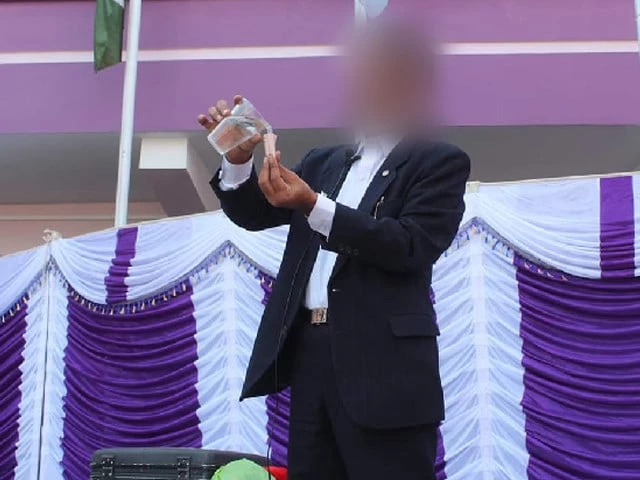
For decades, the rhythmic beat of the damru (hand drum) and the melodies of a flute were enough to draw crowds around traditional majmaa (street gathering) performers.
Children watched in amazement, adults applauded sleight-of-hand tricks, and performers earned enough to support their families. Today, however, those crowds have largely disappeared, replaced by a surfeit of smartphone screens and online entertainment.
Among those witnessing the slow decline of this centuries-old tradition is snake charmer and street performer Asghar Ali, who says the growing use of the internet, repeated enforcement of Section 144 restricting public gatherings, and periodic government-imposed lockdowns have devastated the livelihood of traditional entertainers.
"The business is almost finished," Asghar said. "People no longer gather to watch us. Everything they want to see is available on the internet."
Asghar belongs to a family that has performed madari or majmaa shows for generations.
He recalled accompanying his elders as a child, learning the art simply by watching them entertain crowds in villages, bazaars and city streets.
"This profession came to us from our forefathers," he said. "When we were children, we played the role of the jamurathe comic assistant in the showand gradually learned the tricks from our elders."
He remembers a time when a performer needed little more than a drumbeat to gather dozens of spectators.
"People would happily stop and watch our performances. They appreciated the entertainment and rewarded us generously. Things are completely different now."
According to Asghar, modern technology has fundamentally changed public behaviour.
"Today everyone has a mobile phone and internet access. People can watch unlimited entertainment online, so they no longer stop to watch street performances," he said.
His performances now consist of simple illusions, sleight-of-hand tricks and harmless demonstrations. One of his most popular acts is making one coin appear to become two.
"There is no magic involved," he explained. "It is all hand skill and optical illusion."
Another favourite trick involves placing sand into water and later taking it out completely dry.
"People think it is magic, but the sand is coated with wax. That is the secret," he said with a smile.
His equipment remains remarkably simplea damru, a flute, a harmless two-headed snake used to attract audiences, and a few small props collected over the years. Asghar said government restrictions have further reduced opportunities for performers.
"Whenever the police arrive, they ask us to leave because Section 144 is in force. They tell us not to create gatherings. We are poor people and have no influence," he said.
He also believes repeated lockdowns imposed in recent years permanently altered public habits.
"Businesses remained closed for long periods and people became accustomed to staying indoors and using the internet. Even after restrictions ended, the crowds never returned."















This material may not be published, broadcast, rewritten, redistributed or derived from. Unless otherwise stated, all content is copyrighted © 2026 The Express Tribune.







COMMENTS
Comments are moderated and generally will be posted if they are on-topic and not abusive.
For more information, please see our Comments FAQ