At least 111 killed in Colombia earthquake
Updated 3 hours ago

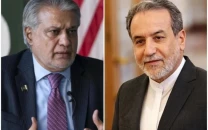
Araghchi urges US to end Israel's attacks on Lebanon, says Hormuz management rests solely with Iran under the deal
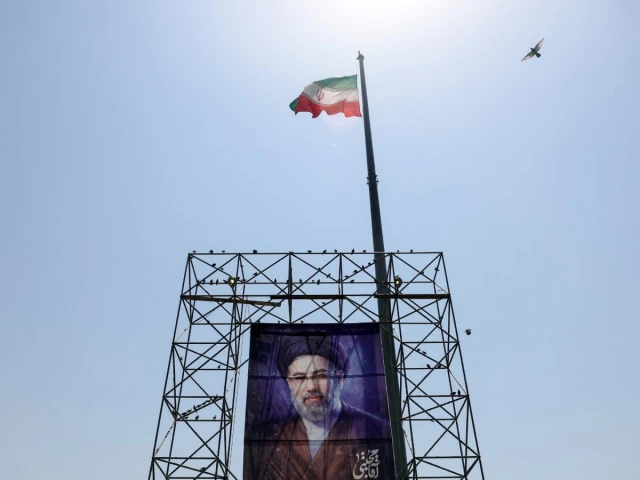
Iran's Supreme Leader Ayatollah Seyyed Mojtaba Khamenei on Sunday called on the country's judiciary to pursue and restore the rights of Iranians violated during what he described as the United States' and Israel's wars of aggression against Iran since last year.
"Blood of those killed in the two wars of aggression against Iran – waged by the US and Israel in June 2025 and February 2026 – together with the physical, psychological, material, and spiritual damage inflicted on Iran and its people inside and outside the country, forms the basis for hundreds or even thousands of significant legal cases," said Khamenei in a message issued to mark Judiciary Week and the anniversary of the killing of Ayatollah Mohammad Beheshti and his companions.
Khamenei also cited the killing of children, war crimes in the southern Iranian cities of Minab and Lamerd, attacks on medical and public service facilities, and the deaths of civilians ranging from newborn infants to elderly people.
🔴 Leader of the Islamic Revolution Ayatollah Seyyed Mojtaba Khamenei issues message marking Judiciary Week:
— Press TV 🔻 (@PressTV) June 28, 2026
🔺US-Israeli crimes against nation must be pursued with determination before national, international courts pic.twitter.com/IbKzgAJg7z
He called for determined efforts to pursue such cases through both domestic and international legal mechanisms.
Khamenei said one of the judiciary's foremost responsibilities was to seek legal redress for damages inflicted on Iran by "international criminals and arrogant and aggressive powers".
"The pursuit and restoration of the rights violated by international criminals and aggressive powers, particularly over the past year, is among the judiciary's most important responsibilities," Khamenei said.
He said safeguarding the rights of the Iranian people extended beyond individual legal matters and included defending the country's collective rights against crimes committed by foreign powers.
Khamenei said Iran's judiciary was responsible for protecting citizens' rights, safeguarding public freedoms, combating corruption, enforcing justice and ensuring the implementation of the law, adding that success in fulfilling these duties would strengthen public confidence in the judicial system.
Iran and US step up attacks and threaten to escalate
Iran launched missiles and drones on US military sites in Kuwait and Bahrain early on Sunday, shortly after President Donald Trump threatened to wipe out the Iranian leadership if they did not stick to the interim agreement to end their war.
Israel said on Sunday it had struck Iran-backed armed Hezbollah militants in Lebanon on Saturday, just a day after it agreed the latest ceasefire deal with Lebanon to calm fighting that Iran says must end if the wider agreement is to stick.
The US military said earlier it had struck Iran again, hours after a tanker was hit in the Strait of Hormuz, the world's most important energy shipping route, which Tehran has largely closed for most of the conflict.
"There may come a point when we are no longer able to be reasonable, and will be forced to militarily complete the job that we very successfully started," Trump said on social media.
"If that happens, the Islamic Republic of Iran will no longer exist!" he added.
The 14-point interim peace accord was meant to halt the fighting, which the US and Israel started on February 28, and reopen the strait while talks proceeded on issues such as Iran's nuclear programme.
Violence, accusations follow peace deal
One round of mediated talks, led by Vice President JD Vance and Iran's parliamentary speaker, Mohammad Baqer Qalibaf, was held in Switzerland a week ago and Washington waived sanctions on Tehran, but fighting has since resumed and intensified.
About an hour after Trump's post, Kuwait's army said its air defences were responding to missile and drone attacks, while Bahrain said sirens had sounded there.
Iran's Islamic Revolutionary Guard Corps said in a statement its navy and air forces had launched missile and drone operations targeting US military sites in Kuwait and Bahrain.
The Guards said US strikes had violated the ceasefire and "will result in the complete halt of all diplomatic processes", state-run Press TV said. The IRGC Navy command said American bases in the region "will experience hell in the coming days".
A US official, confirming the attacks on US facilities, told Reuters there were no reported US casualties or major damage to US sites in the Middle East, but the situation was still unfolding.
Read: Worst US-Iran flare-up since peace deal
Hours later, alarms sounded for a second time in Bahrain, where authorities said an Iranian attack damaged a residential building in Muharraq province, with no casualties reported. Bahrain urged the UN Security Council to hold an urgent session to hold Iran accountable.
The Kuwaiti army said it had intercepted two ballistic missiles with no damage or casualties.
Qatar condemns Iranian attacks on Bahrain and Kuwait
Qatar has condemned Iran's repeated missile and drone attacks on Bahrain and Kuwait, considering them a blatant violation of the two countries' sovereignty and a flagrant breach of international law.
In a statement posted on X, Qatar's Ministry of Foreign Affairs called for the region to be spared the consequences of unjustified attacks. It urged all parties to pursue dialogue and diplomacy, reduce tensions and build on the gains achieved under the memorandum of understanding to strengthen regional and international security and stability.
The ministry also reaffirmed Qatar's full solidarity with Bahrain and Kuwait, expressing support for all measures taken by the two countries to safeguard their sovereignty and security.
Statement | Qatar Strongly Condemns Iran's Repeated Attacks on Bahrain and Kuwait
— Ministry of Foreign Affairs - Qatar (@MofaQatar_EN) June 28, 2026
Doha | June 28, 2026
The State of Qatar strongly condemns the repeated Iranian attacks on the fraternal Kingdom of Bahrain and the State of Kuwait with a number of missiles and drones, considering… pic.twitter.com/TlLVEBr0Ns
Iraq foreign minister tells Iran counterpart Hormuz should reopen
Iraq's foreign minister said in a meeting on Sunday with his Iranian counterpart that it was important to reopen the Strait of Hormuz and lift the US naval blockade on Iran.
Iraq does not support expanding the scale of the war on the Gulf states, and does not back attacks on Iran, Fuad Hussein told Iranian Foreign Minister Abbas Araqchi, who is visiting Baghdad.
Araghchi urges US to press Israel to end attacks on Lebanon
Iranian Foreign Minister Abbas Araghchi called on the United States to press Israel to end its attacks on Lebanon, saying all provisions of the memorandum of understanding (MoU) signed between Tehran and Washington must be implemented, Al Jazeera reported.
Speaking in Baghdad, Araghchi said Israel continued to carry out air strikes on Lebanon despite having accepted the MoU.
He urged Washington to "live up to its responsibility" and compel Israel to end its attacks in order to bring the war to a close.
Araghchi also called on the United States to press Israel to withdraw from the areas it occupies in Lebanon, describing it as the first clause of the MoU.
Iran to oversee Strait of Hormuz for next 30 days, says Araghchi
Iranian Foreign Minister Abbas Araghchi said the Strait of Hormuz would remain under Iran's "total oversight and management" for the next 30 days, Al Jazeera reported.
Speaking during a visit to Iraq, Araghchi said he had briefed his Iraqi counterpart on the outcomes of the war imposed on Iran and on developments related to the memorandum of understanding signed between Iran and the United States.
"The Strait of Hormuz remains under the total oversight and management of Iran through the 30 coming days, and after all obstacles are removed, the total capacity of the waterway will be restored. This is what we are working on," he said.
Araghchi added that responsibility for the waterway rested solely with Iran, saying any intervention or unilateral action by another party would exacerbate the situation and delay the reopening of the strait.
Iran's foreign minister thanks Iraq for support during conflict
Iranian Foreign Minister Abbas Araghchi thanked Iraq for its support during the recent conflict, saying the Iraqi government and people had stood by Iran throughout the war.
Speaking at a joint news conference with his Iraqi counterpart, Araghchi said Iraq had consistently supported the Iranian people, who were victims of "Israeli-American aggression".
"The people and government of Iraq have always extended their support during the war," Araghchi said, adding that "the Iraqi people have always supported their Iranian brothers".
Iran condemns US strikes as violation of interim deal
Iran said on Sunday that US airstrikes targeted several monitoring and surveillance facilities on Iran's southern coast, calling the attacks a violation of an interim deal meant to end the four-month-old war between the two countries.
"These brutal attacks ... show that the US does not place the slightest value and credibility on its commitments, and breaking promises is part of its nature," the Foreign Ministry said in a statement.
Israeli military says it killed Hezbollah militants
The Israeli military said on Sunday it killed Hezbollah militants armed with rocket-propelled grenades and struck a rocket launcher in the Nabatieh area of southern Lebanon to remove threats to its soldiers.
The Israeli military said it struck the structure from which the militants operated and dismantled a rocket launcher that posed a threat.
Kuwait condemns Iranian attacks
Kuwait has strongly condemned Iran's repeated attacks targeting its territory, including the latest assault early on Sunday, describing them as a flagrant violation of its sovereignty, a direct threat to national security and a breach of international law.
In a statement, Kuwait's Foreign Ministry said the continued attacks undermined regional and international efforts aimed at de-escalation and constituted a direct challenge to the international community's determination to reduce tensions.
The ministry added that the attacks also endangered the safety of citizens and residents alike.
#Kuwait strongly condemned repeated Iranian attacks targeting its territory, including latest assault early Sunday, describing them as flagrant violation of its sovereignty, direct threat to national security & breach of international law.
— Kuwait News Agency - English Feed (@kuna_en) June 28, 2026
The Foreign Ministry said continued… pic.twitter.com/5qbUdj5asr
Bahrain condemns Iranian attacks as ‘dangerous escalation’
Bahrain's foreign ministry has expressed its "strongest condemnation" of Iran's latest ballistic missile and drone attacks, saying they violate the Gulf nation's sovereignty, Al Jazeera reported.
In a statement carried by the Bahrain News Agency, the ministry said the strikes also undermined "opportunities for de-escalation and stability in the region".
Read more: US strikes Iran in response to attack on cargo ship in Strait of Hormuz
It called on the UN Security Council to convene an emergency meeting to address the situation, with the aim of "putting an end to this ongoing aggression and holding its perpetrators accountable".
The ministry added that Bahrain "affirms its full legitimate right to defend its sovereignty, security and territorial integrity in accordance with international law", and held the Iranian regime "fully responsible for any escalation resulting from its continued aggression".
مملكة البحرين تدعو إلى تحرك دولي لوقف العدوان الإيراني المتكررhttps://t.co/FynzZ8hKnX
— وكالة أنباء البحرين (@bna_ar) June 28, 2026
Focus on Strait, shaky ceasefire in Lebanon
US Central Command said earlier that its forces had carried out fresh strikes after a Panama-flagged tanker was attacked by an Iranian drone on Saturday.
"Iran was given a chance to honor the ceasefire agreement but elected not to," Central Command said in a statement.
US strikes were "in direct response to continued Iranian aggression against commercial shipping" and targeted Iranian military surveillance, communications, air defence, drone storage and mine-laying facilities, it said.
Explosions were heard in Sirik in southern Iran, Iranian state broadcaster IRIB said without providing details. The Guards said, "America's blind shots at Sirik will not resolve our dominance over the Strait of Hormuz, but our shots at violators will remind the rest of the vessels of the clear passage route".
Saturday's tanker attack in the strait followed one on a cargo ship on Thursday that triggered the latest escalation.
Iran's foreign minister, Abbas Araqchi, said responsibility for returning maritime traffic in the strait to pre-war levels lay solely with Tehran and urged others not to intervene "in Iran's administration of the strait".
Washington has been promoting a southern lane along the coast of Oman, while Tehran, which ultimately aims to charge fees for use of the strait, wants ships to use a northern route through its waters and under its control.
Hundreds of ships stranded in the strait, which carried one-fifth of global oil and LNG supplies before the conflict, including tankers laden with oil, began leaving over the past two weeks, sending oil prices back close to pre-war levels.
Even as attacks continued on Sunday morning, CMA CGM's Galapagos container ship exited the strait in what the shipping giant called "an important milestone in a regional context that remains complex and requires constant vigilance".
Lebanon strikes
In Lebanon, Israel said on Sunday it had killed Hezbollah militants armed with rocket-propelled grenades and struck a rocket launcher in the Nabatieh area.
There was no immediate response from Hezbollah.
Israel, which is not a party to the US-Iran deal, and Lebanon have repeatedly agreed to US-brokered ceasefires, the latest on Friday.
But these have had only a limited effect, with Israel insisting it will not withdraw from Lebanese territory it has seized and Hezbollah repeatedly rejecting calls to give up its arms as long as Israeli troops remain in place.
US ally Israel invaded in March after Hezbollah attacked it in support of Iran.
Araqchi said Israel's withdrawal and a halt to its strikes in Lebanon were mandated by the interim deal with the US and it was Washington's responsibility to stop its operations.











This material may not be published, broadcast, rewritten, redistributed or derived from. Unless otherwise stated, all content is copyrighted © 2026 The Express Tribune.






COMMENTS (3)
Comments are moderated and generally will be posted if they are on-topic and not abusive.
For more information, please see our Comments FAQ