Iran releases rare video of Mojtaba Khamenei after reports of deteriorating health
Updated 4 hours ago

'Conclusive evidence' that regional countries took part in US-Israeli war: Baghaei
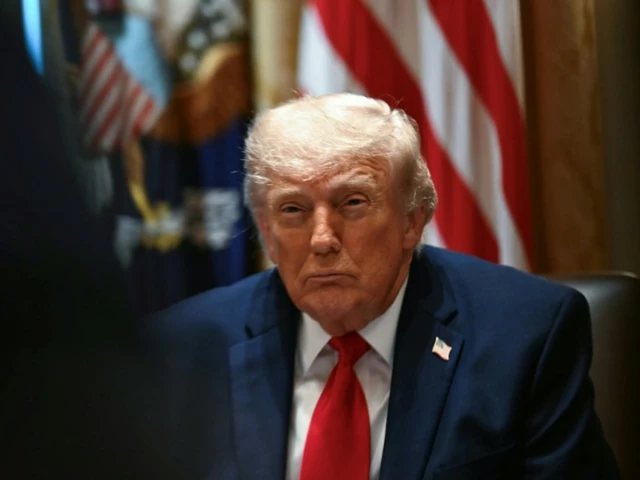
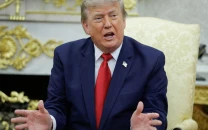
US President Donald Trump said on Tuesday Iran had agreed to nuclear inspections into "infinity, despite Tehran's denials, and that unfrozen Iranian assets would be used to buy humanitarian supplies from the United States.
Washington agreed to waive sanctions on Iran for 60 days from Monday after the first round of talks under a nascent peace deal agreed last week on ending more than three months of war.
US Vice President JD Vance said the talks with Iranian officials in the Swiss mountain resort of Buergenstock laid a good foundation for a final accord and that Tehran had agreed to allow nuclear inspectors back into the country.
But Iran denied it had begun discussions on its nuclear programme at the talks, mediated by Qatar and Pakistan, and said it had not agreed to invite back International Atomic Energy Agency inspectors.
Foreign Ministry spokesperson Esmail Baghaei said in an address on Tuesday Iranian officials had not held a meeting with IAEA chief Rafael Grossi in Switzerland and had no plans for the UN nuclear watchdog to inspect Iran's damaged nuclear facilities.
He said Tehran does not intend to allow IAEA inspectors access to nuclear facilities attacked by the US and Israel. "We do not intend to allow inspectors from the International Atomic Energy Agency to visit the nuclear sites targeted during the conflict," he said.
Baghaei further denied reports of contacts with IAEA Director General Rafael Grossi in Switzerland. "We have not held any meeting with the IAEA director general in Switzerland, nor are there any plans for inspections of our nuclear facilities that were bombed," he said.
Trump hit back on Tuesday at what he said were Iran's "protestations and false statements." "Iran has fully and completely agreed to highest level Nuclear inspections long into the future (Infinity!!!)," Trump said in a post on Truth Social.
He also said any Iranian assets unfrozen under the deal would be placed in an escrow account and used to buy food and medical supplies from the US "including Corn, Wheat, and Soybeans from our great American Farmers."
Iran's ambassador to the United Nations in Geneva had earlier on Tuesday denied there had been any such agreement.
"Iran is the only country to decide what to do with its assets, which are going to be defrozen, and so I reject any claim about that if there would be any role for any other country to have an influence on those decisions or on those processes," Ali Bahreini told reporters.
'Conclusive evidence' that regional countries took part in US-Israeli war: Baghaei
Iranian Foreign Ministry spokesperson also stated that Iran has “conclusive evidence” that some regional countries participated in the US-Israeli war on Iran and could thus face legal repercussions, according to Al Jazeera. “We regret to see that,” Baghaei said. “We will take whatever action is needed in this respect.”
He also condemned the stance of European powers during the recent attacks by the US and Israel on Iran, saying that “Europeans have been marginalised” because of the policies they have been following in recent years.
“During the two wars imposed against the Islamic Republic of Iran, they adopted inappropriate positions, and the world has witnessed this behaviour,” he said, as per Al Jazeera. “This irresponsible behaviour will definitely not increase the credibility and status of the European parties.”
Speaking about Tehran's missile capabilities, Baghaei said those have not been discussed in negotiations with the US in Switzerland and ruled out allowing International Atomic Energy Agency (IAEA) inspectors to visit nuclear facilities targeted during the US-Israeli war against Iran.
He said Iran's missile programme was never included in the talks with Washington. "Iran's missile capabilities were not part of the negotiations with the United States," Baqaei said during a press briefing, according to Iranian media.
Regarding Lebanon, he stated that the US is obligated to force Israel to halt its attacks on southern Lebanon, as per Al Jazeera. “We have all witnessed the continued attacks by the Zionist entity on Lebanon,” said Esmaeil Baghaei.
“The obligation to put an end to the war in Lebanon is part and parcel of the previous and current arrangements. The US commitment is clear, and there is no justification whatsoever for the Zionist entity to continue to assault Lebanon,” he added.
Baghaei called the Israel-Hezbollah war a “very complicated issue”, but added “final arrangements” will be reached “over the coming days”.
Netanyahu says Israel should ‘free’ itself from arms dependency on US
Israeli Prime Minister Benjamin Netanyahu called again for his country to increase its military autonomy and reduce its reliance on support from the United States, according to a statement released on Tuesday by his office.
"I deeply appreciate the support we have received from our American friends, but we need to break free from dependency and build our own independent armaments network," the premier told reserve officers on a training course in the occupied West Bank.
Netanyahu was speaking on June 18, a day after the US and Iran agreed an initial deal to end the Middle East war, which has been fiercely opposed in Israel.
"Today I say: We need our own independent armaments network. We must manufacture our own armaments," Netanyahu said.
Since its founding in 1948, Israel has received more than $300 billion, adjusted for inflation, in US economic and military assistance, according to figures from the Council on Foreign Relations, far more than any other country has received since 1946.
Under an agreement signed in 2016 and in force since 2019, it receives financial assistance for the purchase of around $3.8 billion of weapons a year, accounting for around 15 percent of the defence budget. That deal runs until 2028.
The Israeli premier has previously said he wanted to end Israel's reliance on US support.
In January he told The Economist that he hoped to do so within a decade, while in May he told US broadcaster CBS that he wanted support to reach "zero".
Washington is Israel's closest ally, but the two have clashed over the conduct of Israel's wars since the Hamas operation on October 7, 2023.
US President Donald Trump has been publicly critical of Netanyahu in recent weeks as Israel's war with Hezbollah in Lebanon threatened peace talks with Iran.
The president also swore in public while condemning Israel and Iran for breaching a ceasefire that ended last year's 12-day war.
During another period of strained relations over Iran, in May 2025, Netanyahu suggested Israel should "wean itself" off US aid.
Iran warns it ‘will respond’ if Israel continues attacks on Lebanon
If Israel violates the memorandum of understanding “in any format, including by attacking Hezbollah in Lebanon, Iran will respond”, said the Iranian ambassador to the United Nations in Geneva, according to Al Jazeera.
However, Ali Bahreini expressed optimism about the ongoing negotiations.
“Our colleagues continue to discuss in very good talks yesterday at the technical level,” Bahreini said.
Two working groups will be established in the coming days to negotiate the removal of sanctions against Iran and issues related to its nuclear activities, he added.
Bahreini said the main talks on the Strait of Hormuz will be between Iran and Oman, while parallel discussions will start with parties to the memorandum of understanding.
In comments cited by Reuters, Bahreini said threats by Trump put the latest talks in Switzerland in serious jeopardy, as per Al Jazeera.
Shortly after the talks began on Sunday, Trump – who was not in attendance – wrote on Truth Social that “Iran must immediately stop their highly paid PROXIES in Lebanon from causing trouble,” referring to Hezbollah. “If they don’t, we’ll hit Iran very hard again, just like we did last week, only harder”, Trump said.
Bahreini said Iran would keep negotiating with the US as long as Washington showed that it was ready to engage in a constructive way.
He said the negotiating parties were trying to resolve all MoU clauses before proceeding to the nuclear issue.
UN Secretary-General says Middle East conflict has released "mother of all energy shocks"
UN Secretary-General Antonio Guterres stated on Tuesday that the "Conflict in the Middle East has unleashed the mother of all energy shocks."
"For many developing countries, this is not just an energy crisis. It's a debt, food & development shock."
Conflict in the Middle East has unleashed the mother of all energy shocks.
— António Guterres (@antonioguterres) June 23, 2026
For many developing countries, this is not just an energy crisis. It's a debt, food & development shock.
Any peace agreement would bring much needed relief, but the impacts are likely to be long-lasting.
He added that any peace agreement would bring "much-needed relief, but the impacts [of the conflict] are likely to be long-lasting."
Qatar says dialogue with Iran ‘necessary’ for regional security
Qatari Foreign Minister Sheikh Mohammed bin Abdulrahman Al Thani said dialogue with Iran remains necessary to ensure regional security and stability, despite describing recent developments involving Qatar and other Gulf states as "unacceptable."
In an interview with Al Jazeera on Tuesday, the Qatari foreign minister said Doha looks forward to a unified Gulf vision and a new regional security framework that guarantees stability and prevents repeated crises.
He said, however, that full regional stability cannot be achieved without a just solution to the Palestinian issue, ending the suffering of the Palestinian people and granting them the right to establish an independent, sovereign state.
Sheikh Mohammed stressed the importance of guaranteeing freedom of navigation, removing threats to safe passage and activating direct communication mechanisms and hotlines to contain any future disputes.
He said Qatar is continuing consultations with Gulf Cooperation Council (GCC) countries and Oman based on a shared Gulf position that affirms the right of all Gulf littoral states to a safe and free passage while preserving regional stability and the interests of their peoples.
"Iran is a neighboring country, and dialogue with it remains necessary to guarantee the security and stability of the region, despite the fact that what happened is unacceptable toward Qatar and our brothers in Gulf states," he said.
He added that GCC states are working in direct and continuous coordination, with a shared vision focused on resolving disputes through diplomatic and peaceful means and building a higher level of trust and cooperation.
Israeli gunfire kills two in southern Lebanon
Israeli troops opened fire on the Lebanese town of Nabatieh al-Fawqa, killing one man and wounding two others, according to Al Jazeera.
One of the wounded succumbed to his wounds, according to Lebanese state media, as per Al Jazeera.
Lebanon’s National News Agency reported the shooting occurred near a bulldozer clearing a road in the area.
It is the latest deadly incident despite a US-brokered ”ceasefire” last week between Israel and Lebanese group Hezbollah.
Iran earlier warned it would “respond” if occupying Israelis troops launched more attacks on Lebanon.
Iran's Pezeshkian says statements outside agreed text will not help negotiations
Iranian President Masoud Pezeshkian said Tuesday that the success of ongoing negotiations with the US depends on the full implementation of agreed commitments, stressing that statements made outside the agreed framework do not help advance the talks.
“The effectiveness of the talks depends on full commitment to the agreed obligations and their precise implementation. Progress on this path will be measured by practical adherence to accepted responsibilities. Statements outside the agreed text do not help advance the negotiations,” said Pezeshkian in an X post.
The effectiveness of the talks depends on full commitment to the agreed obligations and their precise implementation.Progress on this path will be measured by practical adherence to accepted responsibilities.Statements outside the agreed text do not help advance the negotiations.
— Masoud Pezeshkian (@drpezeshkian) June 23, 2026
It was unclear which statement he was referring to; however, US President Donald Trump has made several comments in recent hours that Iranian officials have disputed. They include claims that Iran has agreed to allow nuclear inspections and that any released Iranian funds will be used to buy US agricultural products.
Iran says technical talks with US concluded in Switzerland
Iran announced the conclusion of technical talks with the US in Burgenstock, Switzerland, as part of Qatari- and Pakistani-mediated negotiations aimed at ending the US-Israel-Iran war.
Deputy Foreign Minister Kazem Gharibabadi, who led Iran's technical negotiating team, said the four-party talks concluded with an agreement on arrangements for future negotiations, including working groups and implementation mechanisms, Iran's official IRNA news agency reported.
Gharibabadi said the discussions followed a high-level committee meeting held on Sunday to monitor implementation of the Islamabad Memorandum of Understanding — a framework agreement to end the war signed virtually by the US and Iranian presidents on June 17 — which continued into Monday.
“Technical discussions were held to determine the implementation mechanisms of the memorandum of understanding and the statement issued at the conclusion of the high-level meeting, and the necessary understandings were reached,” he said.
Under the arrangements agreed upon, future negotiations will be conducted under the supervision of the high-level committee, attended by Iranian Parliament Speaker Mohammed Bagher Ghalibaf and Foreign Minister Abbas Araghchi, US Vice President JD Vance, Prime Minister Shehbaz Sharif, and Qatari Prime Minister Mohammed bin Abdulrahman, Gharibabadi noted.
The parties agreed to establish four working groups dealing with sanctions removal, nuclear-related sanctions, reconstruction and economic development, and monitoring and implementation, he added.
According to Gharibabadi, participants also agreed to establish "a contact point" among the member states, develop a memorandum of understanding to guarantee the safe passage of commercial vessels through the Strait of Hormuz, and create a Lebanon "conflict-prevention unit" involving the participating countries as well as Pakistan and Qatar.
The heads of the four technical teams will report to the high-level committee and oversee the activities of the working groups and newly established units, he outlined.
Gharibabadi also said the technical talks addressed procedures related to the issuance of a general license for Iranian oil, petroleum and petrochemical exports and related services, as well as arrangements concerning the release of frozen Iranian assets.
He said the US had issued a general license covering the sale of Iranian petroleum and petrochemical products and related services, adding that the authorisation had been published on the website of the Office of Foreign Assets Control (OFAC).
The deputy foreign minister further said the parties agreed on the immediate implementation of arrangements for the release of $12 billion in frozen Iranian funds.
Iran chief negotiator Ghalibaf says Tehran will administer Hormuz
Iran's chief negotiator Mohammad Bagher Ghalibaf said that the Strait of Hormuz will be administered by Tehran, state media reported on Tuesday, following talks pushing to end the US-Israeli war on the Islamic republic.
Iran and the United States agreed on Monday to set up communication lines to keep the vital shipping route open and end fighting in Lebanon, mediators said, after their first round of talks in Switzerland toward ending the conflict that has engulfed the Middle East.
"The Strait of Hormuz will never return to its pre-war conditions and will be administered by the Islamic Republic of Iran, in accordance with international law," Ghalibaf said on his return from the talks, according to IRNA.
In a video posted to Ghalibaf's Telegram account, he said the talks at the luxury Swiss resort of Burgenstock produced "good achievements".
"In my view, this trip had good achievements, especially regarding the discussion of the Strait, the Lebanon discussions, the question of oil waiver, and the matter of releasing the frozen funds," he said.
The United States temporarily suspended sanctions on Iranian oil on Monday after Vice President JD Vance said Tehran would allow UN nuclear inspectors to return to the country, following the talks.
As part of the deal, Tehran is also set to get some form of sanctions relief from Washington, as well as the unfreezing of assets.
"Of course, we believe we are still at the beginning of this work and must continue our efforts," Ghalibaf added in the video.
Iranian state media reported that Ghalibaf made a stop in Oman, which shares the Strait of Hormuz.
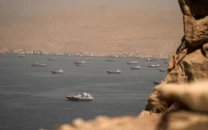
The waterway, which Iran closed at the start of the war, reopened last week after Washington and Tehran reached an agreement.
But Tehran announced on Saturday it had closed the strait again in response to Israeli attacks in Lebanon.
Since then, Tehran and Washington have agreed to establish a line of communication "to avoid incidents and miscommunication with the aim of safe passage for commercial vessels" through the waterway, according to Qatari and Pakistani mediators.
Maritime traffic in the strait continued to flow on Monday at a faster pace than before the US-Iranian agreement on talks to end the war, according to tracking firms.
Israel braces for possible US demand to withdraw from southern Lebanon
Israel is taking into account the possibility of a future US demand for a gradual withdrawal of Israeli troops from areas in southern Lebanon, Israel’s public broadcaster KAN reported on Monday.
KAN said a new round of talks between Israel and Lebanon is set to begin Tuesday to discuss initial arrangements for a possible Israeli troop withdrawal from southern Lebanon as part of a pilot program for the Lebanese army.
The talks are expected to take place under US mediation and with the participation of the Israeli and Lebanese ambassadors alongside three Israeli brigadier generals, the broadcaster said.
It also reported that Israeli forces have begun repositioning and reorganising troops on the ground over the past 24 hours while awaiting decisions from the political leadership.
KAN cited unnamed Israeli sources as saying that Israel was taking into account the possibility that the Israeli army could be asked by an American decision to gradually withdraw from certain areas in the so-called security zone, allowing the Lebanese army to return as a confidence-building measure.
It added that the United States had approved the creation of a mechanism to monitor ceasefire violations in Lebanon involving Iran and Qatar without Israeli participation.
According to Israeli sources cited by the broadcaster, Israel’s exclusion from the mechanism stemmed from Iran’s involvement.
Earlier Monday, Israel’s Channel 13 quoted a senior Israeli official as saying that Washington had recently made clear to Israel that its previous freedom to operate militarily in Lebanon without restrictions had come to an end.
The Maariv newspaper also reported growing differences between the United States and Israel over the Lebanese file, saying Washington views southern Lebanon within a broader regional framework linked to the Strait of Hormuz, energy prices, the Iranian nuclear issue and the Trump administration’s pursuit of a diplomatic achievement.
In contrast, Israel believes that any early withdrawal from southern Lebanon could be interpreted as a sign of weakness and a reward for the Hezbollah group.
US waives Iran sanctions, Trump says he will 'do what I have to' if Tehran misbehaves
The United States waived sanctions on Iran for 60 days from Monday after the first talks under a nascent peace deal, with US President Donald Trump saying he will "do what I have to do" if Iran does not stick to its side of the agreement.
US Vice President JD Vance said talks with Iranian officials in Switzerland had laid a good foundation for a final peace deal, although Iran denied that it had begun discussions of its nuclear program.
The two sides, trying to build on the interim deal they signed last week, agreed a roadmap towards a permanent agreement within 60 days at the talks in the Qatari-owned Swiss mountain resort of Buergenstock, mediators Pakistan and Qatar said.
They also agreed on a mechanism to end fighting in Lebanon between US ally Israel and Iran-aligned Hezbollah, and opened a communications line to help ensure safe passage for commercial ships through the Strait of Hormuz to avoid conflict in the strategic waterway.
Read: US eases Iran oil sanctions with 60-day waiver
In the first of several steps envisaged under the agreement to provide economic relief to Iran, the US Treasury announced a waiver until August 21 on sanctions, allowing Tehran to sell oil and related products and receive payment for them.
Officials reported a sustained lull in fighting in Lebanon under the agreement aimed at ending hostilities across the region, even as Israel said it would maintain a security zone in southern Lebanon and continue to act to "neutralise" threats against Israeli soldiers and citizens.
Tanker traffic through Hormuz started to pick up on Monday, with the foreign minister of Oman affirming his country's commitment to international law and toll-free safe passage during negotiations with Iran over administering the vital waterway.
US-Israeli attacks on Iran and Israeli strikes in Lebanon have killed thousands of people and displaced millions. The Iran war has also shaken markets around the world and raised global oil prices. Crude prices extended losses on Tuesday after settling 3% lower on Monday.
Vance delivers upbeat assessment
Israel was not party to the peace agreement, but on Friday it agreed a new ceasefire in Lebanon. Though intense fighting continued for another day, Lebanese officials said it had abated since Saturday night.
Israel and Lebanon were due to start a new round of talks in Washington on Tuesday, with Beirut determined to press ahead with direct negotiations even as they appear to be overshadowed by Iran's decision to make Lebanon part of its negotiations with the United States.
Vance, who has maintained an upbeat tone since the memorandum of understanding was signed, said Tehran had agreed to allow nuclear inspectors into the country, and to establish mechanisms to handle its assets frozen abroad and manage ceasefires.
Read more: Iran to accept major inspections to ensure 'nuclear honesty': Trump
"We laid a very good foundation for a successful final deal," he told reporters after taking part in the talks.
However, Iran's Foreign Ministry spokesperson Esmaeil Baghaei told the official IRNA news agency that Iran had not yet discussed nuclear issues or made new commitments.
Trump said in a post on Truth Social on Monday that Iran will agree to have weapons inspections to ensure "nuclear honesty."
"If Iran doesn't live up to their agreement, or if they're not behaving, I will do what I have to do," Trump later told reporters.
Iran has limited inspections by the International Atomic Energy Agency since the US and Israel launched a first round of air strikes last year, and suspended them entirely when war broke out in February. It says its nuclear program is peaceful.
Iranian Foreign Minister Abbas Araghchi said on social media that Tehran had secured waivers for oil and petrochemical exports, the release of some of its frozen assets abroad and the launch of a reconstruction and development plan for Iran.
Vance said White House envoy Jared Kushner, Trump's son-in-law, had come up with a process whereby the US and Qatar would have control over Iranian funds when they are unfrozen, and the money could be spent on US corn, soy and wheat.
"So, the money that we lift is going to go to our farmers," Trump told reporters.
However, Iran's Central Bank Governor Abdolnaser Hemmati said there was no such obligation and said at least some of the remaining frozen funds could be used to buy other non-sanctioned goods, Iran's Tasnim news agency reported.
Technical talks were due to continue for the rest of this week.





This material may not be published, broadcast, rewritten, redistributed or derived from. Unless otherwise stated, all content is copyrighted © 2026 The Express Tribune.



COMMENTS (2)
Comments are moderated and generally will be posted if they are on-topic and not abusive.
For more information, please see our Comments FAQ