Israeli airstrikes in Gaza kill two, including 4-year-old boy
Updated 2 hours ago

Vance says Iran has agreed to allow nuclear inspectors
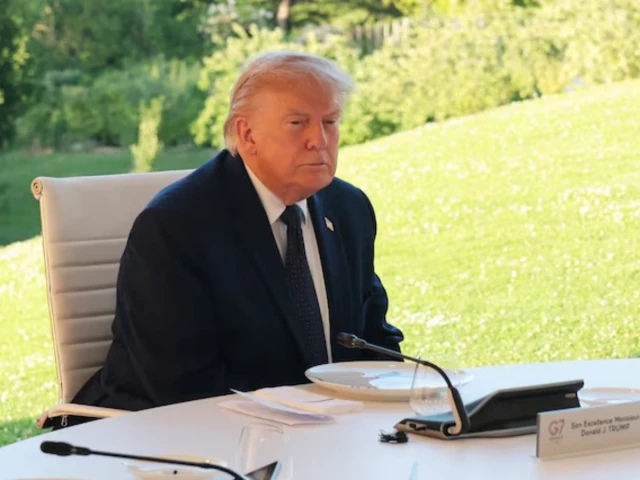
US President Donald Trump on Monday said Iran would agree to extensive weapons inspections aimed at ensuring what he described as “nuclear honesty” in the years ahead.
In a post on his Truth Social platform, Trump wrote: “Everybody is fully aware that Iran will agree to have Major Weapons Inspections in order to ensure ‘Nuclear Honesty’ long into the future.”
Meanwhile, US Secretary of State Marco Rubio will travel to the United Arab Emirates, Kuwait and Bahrain this week to discuss regional security following a memorandum of understanding reached between the US and Iran, the State Department announced on Monday.
In a statement, State Department spokesperson Tommy Pigott said that Rubio’s trip, which will take place on June 23-25, will focus on “a range of regional priorities including the memorandum of understanding with Iran, efforts to secure full and free safe transit through the Strait of Hormuz, and the importance of peace and stability in the region.”
In Bahrain, Rubio is scheduled to meet representatives of the Gulf Cooperation Council to discuss shared regional priorities and cooperation on key issues affecting Gulf states, Pigott added.
The visit would mark one of the highest-level US engagements with Gulf states since Washington and Tehran signed a memorandum of understanding last week, launching a 60-day negotiating process aimed at ending the four-month war that was initiated by the US and Israel against Iran.
Vance says Iran has agreed to allow nuclear inspectors
Earlier, US Vice President JD Vance said talks with Iranian officials in Switzerland had laid a "good foundation" for a final peace deal, despite tensions over the Strait of Hormuz and Lebanon.
The two sides, trying to build on an interim deal signed last week, agreed to a roadmap towards a permanent agreement within 60 days at the talks in the Qatari-owned Swiss mountain resort of Buergenstock, mediators Pakistan and Qatar said.
They also agreed on a mechanism to end fighting in Lebanon between US ally Israel and Iran-aligned Hezbollah, and opened a communications line to help ensure safe passage for commercial ships through the strait, a vital global oil supply route.
Vance said Tehran had agreed to allow in nuclear inspectors, and to establish mechanisms to handle its assets frozen abroad and manage ceasefires. "We laid a very good foundation for a successful final deal," he told reporters after taking part in the talks.
Since the US bombed Iran's nuclear facilities in June last year, Iran has let the International Atomic Energy Agency inspect only facilities that were not attacked in those strikes. The IAEA halted inspections altogether after the US-Israeli strikes that began the war with Iran on February 28 and they have not resumed since.
Vance played down tensions over a threat on Sunday by US President Donald Trump to restart the war after Iran again closed the Strait of Hormuz, citing Washington's failure to halt the fighting in Lebanon. "There was a little bit of threatening, there was a little bit of whining, but at the end of the day the talks continued and we made great progress," he said.
Iranian Foreign Minister Abbas Araghchi said on social media that Tehran had secured waivers for oil and petrochemical exports, the release of some of its frozen assets abroad and the launch of a reconstruction and development plan for Iran.
Vance said White House envoy Jared Kushner, Trump's son-in-law, had come up with a process where the US and Qatar would have control over Iranian funds when they are unfrozen that would allow the money to be spent on US corn, soy and wheat.
Following on from last week's interim deal, or memorandum of understanding, the US Treasury Department issued a general licence for Iran on Monday authorising the production, delivery and sale of crude oil and petrochemical and petroleum products of Iranian-origin through August 21.
First US-Iran committee meeting under Islamabad MoU 'positive and constructive': PM Shehbaz
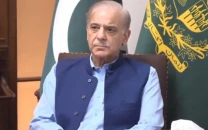
Prime Minister Shehbaz Sharif on Monday welcomed what he described as significant progress in talks between the United States and Iran, saying a high-level meeting held in Switzerland had produced an agreement on a roadmap towards a final deal within the next 60 days.
In a statement posted on X following the conclusion of the first High-Level Committee Meeting under the Islamabad Memorandum of Understanding, the premier said the discussions in Bürgenstock, Switzerland, had taken place in a "positive and constructive atmosphere".
Alhamdulillah, the First High-Level Committee Meeting under the framework of the Islamabad Memorandum of Understanding has concluded successfully in Bürgenstock, Switzerland.
— Shehbaz Sharif (@CMShehbaz) June 22, 2026
The discussions were held in a positive and constructive atmosphere and yielded encouraging progress,… pic.twitter.com/uvA0SBKfvf
"The discussions were held in a positive and constructive atmosphere and yielded encouraging progress, including agreement on a roadmap toward a final deal within 60 days, the establishment of a High-Level Committee to provide political oversight, and the commencement of further technical talks," Sharif said.
The prime minister praised both Washington and Tehran for their engagement in the process.
"I commend the leadership of both the United States as well as Iran for their continued commitment to constructive engagement," he said, while also thanking "all brotherly and friendly countries for their valuable support in advancing this historic process."
Sharif singled out Qatar for its role in facilitating the negotiations.
"In particular, I would like to express my gratitude to our brotherly country Qatar, for its critical support in creating the conditions necessary for these negotiations to move forward," he said.
He also thanked Switzerland for hosting the talks, stating: "A word of thanks to the Swiss Government for their facilitation in hosting these talks."
The premier paid tribute to Chief of Defence Forces and Chief of Army Staff Field Marshal Asim Munir, crediting him for helping advance the negotiations.
"I would like to pay special tribute to Field Marshal Asim Munir whose untiring efforts made these talks a success. His dedication, commitment and perseverance are indeed commendable without which there would have been no progress," Sharif said.
He further praised Deputy Prime Minister and Foreign Minister Ishaq Dar and Interior Minister Mohsin Naqvi for their contributions.
"I would like to pay my warm compliments and heartfelt gratitude to Deputy Prime Minister Ishaq Dar, for his diplomatic efforts along with his team at the Foreign Office," he said, adding: "I also deeply appreciate the hard work of Interior Minister Mohsin Naqvi who contributed immensely to the success of these talks."
The prime minister said Pakistan would continue supporting efforts aimed at resolving disputes through dialogue.
"Pakistan will continue to play its honest and sincere role in advancing dialogue and diplomacy towards a peaceful and lasting resolution," he said.
Iran says held 'brief discussion' with US on nuclear issue
Iran said on Monday it held a "brief discussion" with the United States on its nuclear program during talks in Switzerland, but insisted negotiations on the issue had not begun.
"One of the points raised by the American delegation was the presentation of its positions regarding the nuclear issue," foreign ministry spokesman Esmaeil Baghaei said.
"A very brief discussion took place regarding the nuclear issue, but there was no discussion of details, and it cannot be said that negotiations on the nuclear issue have begun," he added.
Iran says ‘important steps’ agreed for final-deal negotiations following Switzerland talks
Iran said on Monday that “important steps” were agreed during talks in Switzerland to pave the way for negotiations on a final agreement with the US, state news agency IRNA reported.
Speaking after intensive four-party talks in Burgenstock, Switzerland, Foreign Ministry spokesman Esmaeil Baghaei said: “In general, important steps were agreed upon to pave the way for the start of negotiations related to the final agreement.”
“We hope that in implementation, we will witness seriousness from the other side (US),” he added.
Baghaei said one key outcome of the talks was an agreement to establish a new monitoring mechanism, described as a “deconfliction cell,” with the participation of mediators to oversee the continuation of the ceasefire and halt in hostilities, particularly in Lebanon.
He added that the sides also exchanged important messages regarding provisions related to issuing the necessary licenses for Iranian oil sales and the release of Iran’s frozen or restricted assets, saying progress had been made on both issues.
Baghaei added that discussions addressed the safe passage of ships through the Strait of Hormuz, with the parties agreeing to establish a mechanism aimed at ensuring maritime security in the strategic waterway.
“Technical teams will continue their work on the issues I mentioned and other issues necessary for the effective implementation of this memorandum of understanding,” he said.
Israeli cabinet minister rejects ceasefire, says Lebanon ‘should be Israel’s playground’
Israeli National Security Minister Itamar Ben-Gvir called Monday for rejecting any ceasefire agreement in Lebanon, saying the Arab country “should be Israel's playground.”
“Israel cannot agree to a ceasefire in Lebanon,” the extremist minister told Israel’s public broadcaster KAN in an interview.
He urged Prime Minister Benjamin Netanyahu to convey Israel’s rejection of any ceasefire in Lebanon to US President Donald Trump.
“Trump is a true friend, and we must treat him politely and embrace him, but we need to tell him that we cannot agree to a ceasefire in Lebanon,” Ben-Gvir said.
“We are the ones making decisions, and there are good results for our soldiers,” he added.
His opposition comes amid growing disputes within Israeli political and security circles over a memorandum of understanding between the US and Iran and their possible implications for ending the war on the Lebanese front.
Israel and Lebanon are set to hold a fifth round of direct negotiations in Washington on Tuesday. The upcoming talks follow four previous rounds between the two sides that began in April as part of a track aimed at ending the Israeli war in Lebanon.
The US-mediated negotiations come as criticism grows inside Israel over Washington’s handling of talks with Iran and Hezbollah.
The Israeli news site i24NEWS, citing Israeli officials, said Tel Aviv fears that an agreement between the US and Iran could strengthen Tehran and its allies in the region.
The officials claimed the Trump administration and its negotiating team “misunderstands the ideology driving Tehran and Hezbollah.”
“Trump doesn’t speak Shia,” they said, in reference to what they claim is a failure to understand the nature of Iran’s system and Hezbollah.
China urges US, Iran to work in ‘same direction for positive results'
China on Monday urged the US and Iran to “work in the same direction” for “positive results” after the top negotiators of the two sides met in Switzerland.
Beijing hopes that the US and Iran “will keep the good momentum in negotiation and working in the same direction for positive results,” Foreign Ministry spokesman Guo Jiakun told reporters in the Chinese capital.
The statement from Beijing came after Pakistan and Qatar early Monday announced significant progress in ongoing diplomatic efforts between the US and Iran following the conclusion of the first round of high-level talks at the Lake Lucerne Summit in Switzerland.
"The Lake Lucerne Summit was conducted in a positive and constructive atmosphere. Encouraging progress has been made, including the creation of a mechanism for further technical talks,” read a joint statement from the two mediators.
Guo, the spokesman for the Chinese Foreign Ministry, said: “China supports Pakistan and Qatar and all relevant parties in their mediation efforts.”
Iranian delegation off to Tehran after 18 hours of talks with US: State media
Iran's delegation left Switzerland for Tehran on Monday after nearly 18 hours of intensive negotiations and consultations, the state-run IRIB news reported.
The delegation, headed by Iran's Parliament Speaker and chief negotiator Mohammad Bagher Ghalibaf, departed after the conclusion of the Lake Lucerne Summit in Burgenstock.
Earlier, mediators Qatar and Pakistan said the talks were held in a “positive and constructive atmosphere” and yielded “encouraging progress.”
The mediators said the sides agreed on several mechanisms aimed at advancing negotiations toward a final agreement, including the establishment of a High-Level Committee, the formation of technical working groups, and a 60-day roadmap toward a final deal.
US and Iran conclude high-level talks in Switzerland, mediators say
US and Iranian officials made "encouraging progress" at a first round of talks in Switzerland that ended early on Monday, mediators said, although tension persisted over Lebanon and the Strait of Hormuz.
Mediators Pakistan and Qatar said the parties had agreed to a roadmap towards a final deal on ending their war in 60 days, despite a tense start as Tehran again shut the strait and US President Donald Trump threatened to resume attacks on Iran
They said the two sides had agreed to a mechanism to end fighting between US ally Israel and Iran-aligned Hezbollah militants in Lebanon, and opened a communications line to help ensure safe passage for commercial ships through the strait, a vital global supply route for oil and liquefied natural gas.
Technical talks will continue for the rest of the week in the Qatari-owned Swiss mountain resort of Buergenstock, the joint statement said.
In a post on social media, Iranian Foreign Minister Abbas Araghchi said Tehran had secured waivers for oil and petrochemical exports, the release of some frozen assets and the launch of a reconstruction and development plan for Iran.
Tireless Pakistani and Qatari mediation has delivered major progress to end Lebanon War. Oil and petrochem exports are waived, blockade lifted, some frozen assets released, and major reconstruction & development plan launched for Iran.
— Seyed Abbas Araghchi (@araghchi) June 22, 2026
1st real test: Lebanon deconfliction cell https://t.co/q0okD2qwSO
Oil prices rose sharply when Tehran started blockading the Strait of Hormuz, prompting a US naval blockade of Iranian ports, but, after the US and Iran signed an interim deal last week, they dropped to levels unseen since the war began on February 28 with joint US-Israeli attacks on Iran.
Oil prices fell further after Monday's joint statement, with worries about a supply shortage in global markets easing. Global benchmark Brent crude was trading just below $80 per barrel at 1:15pm PKT.
Israel won’t pull back from Lebanon ‘security zone’: Foreign Minister Saar
Foreign Minister Gideon Saar has told New Zealand Foreign Minister Winston Peters that Israel would respect the Lebanon ceasefire as long as Hezbollah does not breach it, according to Al Jazeera.
“We don’t have territorial ambitions in Lebanon, but we will not withdraw from the security zone and expose our citizens to Hezbollah’s attacks and possible invasion,” Saar said in a post on X, referring to land in southern Lebanon occupied by Israel.
Lebanon’s sovereignty has been breached for decades, Saar said, by what he described as Iran’s “indirect occupation” through Hezbollah.
“It’s the interest of both Lebanon and Israel that Hezbollah’s terror state will be dismantled,” he added.
Head of IRGC’s Quds Force warns Israel to leave southern Lebanon
The head of the Islamic Revolutionary Guard Corps’s Quds Force has warned Israel to leave southern Lebanon or face a repeat of its unconditional withdrawal from the country in 2000, according to Al Jazeera.
Esmail Qaani said in a post on social media that if Israel persisted in its “aggression and occupation”, it would be kicked out in “humiliation and defeat”, according to state-run Press TV.
“If you do not withdraw from southern Lebanon on your own feet, the epic of the year 2000 will be repeated once again, the same year you fled this land in disgrace,” Qaani said. “The choice is yours.”
Liberation Day is celebrated every May 25 in Lebanon to mark the withdrawal of Israeli soldiers from the south of the country in 2000, after 22 years of occupation.
Separate accounts of talks
Vance began talks with Iranian officials on Sunday under the terms of the memorandum of understanding reached last week to extend a tenuous ceasefire from April for at least another 60 days. The discussions continued until the early hours of Monday.
Before talks officially began on Sunday, Fox News reported that Trump had said he told Iranian officials "you won't have a country" if they tried to close the strait again. Trump also reiterated an earlier threat that the US would take over the waterway and possibly charge a toll of its own, Fox News said.
US and Iranian sources provided separate accounts of the discussions in Switzerland.
Iran's semi-official Tasnim news agency, citing an informed source, said that after Trump's threats became public, the Iranian delegation refused to return to the room where talks were held, though messages were traded via the mediators.
According to Tasnim's source, Iranians said that the start of negotiations on nuclear matters required the delivery of other parts of the MOU, including the release of frozen assets and US waivers authorising Iranian oil exports.
"The Iranians never left and are still here meeting and negotiating deep into the night," a US diplomat involved in the talks told Reuters. "We’ve talked about the Strait, Lebanon, nuclear issues, and details of implementing the MOU, among other topics."
The agreement calls for reopening the Strait of Hormuz and ending all hostilities, including in Lebanon, where Israel has continued strikes as Hezbollah fires at Israeli targets.
Iran says the US has not met a commitment to halt the war in Lebanon. It said at the weekend it had stopped maritime traffic through the strait and that Sunday's talks would not cover substantive issues such as its nuclear programme.
At the talks, where US and Iranian officials met in the presence of mediators, Vance played down the impact of violence in Lebanon, saying progress had been made towards ending hostilities there. "These things are always a little bit messy," he said.
Vance told reporters Trump had "asked us to turn over a new leaf to transform our relationship with the people of Iran."
A US diplomat late on Sunday said discussions included “clarifying some of the confusing messaging from Iran on the Strait and building deconfliction mechanisms to ensure the Strait will remain fully open.”
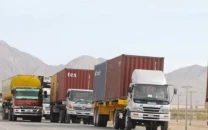
As the US lifted its maritime blockade of Iran, a second container ship docked at Shahid Rajaee port in Bandar Abbas on Monday and began loading its cargo, the director general of Hormozgan Ports and Maritime Organisation said.
Iran cites Lebanon as reason to close Strait
Despite the announcement of a new ceasefire in Lebanon on Friday, there has been scant sign of an end to fighting there. Iran said on Saturday that as a result, it had again shut the strait, whose closure for nearly four months caused the biggest disruption of global energy supplies in history.
Five vessels passed the strait on Sunday, a sharp drop from the 26 ships spotted a day earlier, data from analytics firm Kpler showed. The data may exclude vessels that switch off their transponders while travelling in the Gulf.
Sunday appeared to be the quietest day in Lebanon for some time, with no reports of major violence by nightfall, after two days of heavy Israeli strikes and fire from Hezbollah fighters on Israeli positions.
More than 1 million people have fled their homes in Lebanon since Israel invaded in March to pursue Hezbollah fighters who fired across the border in support of Tehran.
Reuters journalists in southern Lebanon on Sunday saw some of the heaviest traffic since the memorandum was signed, with residents returning to their homes. Some stood beside cars backed up on the highway and waved Hezbollah flags.





This material may not be published, broadcast, rewritten, redistributed or derived from. Unless otherwise stated, all content is copyrighted © 2026 The Express Tribune.




COMMENTS (3)
Comments are moderated and generally will be posted if they are on-topic and not abusive.
For more information, please see our Comments FAQ