Lack of funding delays flood plan
Updated 59 minutes ago

As rising costs and cheaper imports squeeze local producers, one of Pakistan's oldest industries faces a defining test
Pakistan’s new fiscal year 2026–27 has opened with cautious optimism for the business community, particularly as the recent federal budget has introduced certain measures to support exports.
The country’s industrial strength depends not only on exports, but largely on domestic manufacturing industries that supply essential raw materials to key value chains. Among these, soda ash stands out as a basic but essential ingredient across a wide range of everyday manufacturing, from glass, detergents, and textiles to paper, and chemicals, the kind of product few consumers think about, even though it touches nearly everything they buy.
Its manufacturing in Pakistan dates back to the pre-Partition era, making it one of the country's few large-scale industries with such a long-standing footprint. With soda ash produced in only a limited number of countries worldwide, Pakistan's domestic industry holds strategic importance as a national industrial asset, one that, with the right support and effective policy measures, could see local producers become a stronger source of export revenue for the country's economy.
That potential, however, is difficult to realise under current conditions. The industry is energy-intensive, and rising energy costs alone have narrowed margins considerably. Compounding this, reduced import duties have opened the door to a growing influx of cheaper soda ash from markets such as Kenya, Turkey, and China, undercutting local prices and eating into the domestic industry's share of its own market.
The two pressures reinforce each other. Cheaper imports force local plants to scale back, leaving the industry producing substantially below capacity, which pushes costs higher and makes it even harder to hold ground against imports, let alone grow export volumes. This also carries knock-on effects for the broader mix of downstream industries that rely on a stable domestic supply.
In response to these concerns, the domestic industry has approached the National Tariff Commission (NTC) on separate occasions. The NTC has formally initiated an inquiry into the dumping of soda ash from China, which remains under investigation, while a separate case concerning imports from Kenya and Turkey has already resulted in a Preliminary Determination imposing anti-dumping duties on both countries.
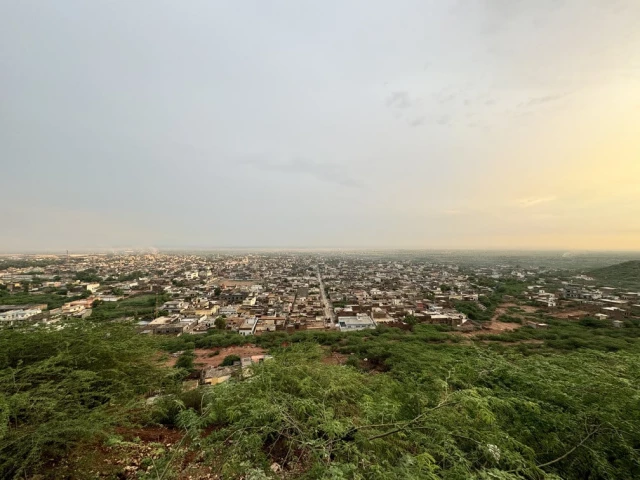
This squeeze is not confined to production lines and export ledgers. Located in remote towns in the districts of Jhelum and Khushab, the soda ash industry also serves as an economic anchor for the communities built around it, providing livelihoods and a degree of stability, and in many cases supporting basic community services, in areas where few other industries operate at this scale.
The impact extends well beyond the plants themselves to the mining sector that feeds them, as salt and limestone quarries in these regions depend heavily on stable soda ash production, and any slowdown at the plants is felt just as sharply by the miners and workers who supply them.
This is where the trade pressures described earlier are ultimately felt. Much of the cheaper soda ash entering Pakistan is coming from an industry that has built significant overcapacity at home and is now exporting at prices the domestic industry believes do not reflect a level playing field, precisely the kind of imbalance anti-dumping investigations exist to examine.
If that imbalance continues unchecked, the cost will not be limited to one industry's balance sheet. It will be measured in the jobs, exports, and communities that depend on Pakistan being able to compete on fair terms, not just on whether it can compete at all.











This material may not be published, broadcast, rewritten, redistributed or derived from. Unless otherwise stated, all content is copyrighted © 2026 The Express Tribune.


1727268465-0/Untitled-design-(42)1727268465-0-208x130.webp "independence 2 0")



COMMENTS
Comments are moderated and generally will be posted if they are on-topic and not abusive.
For more information, please see our Comments FAQ