Bitcoin rises above $80,000 as soft dollar, debasement fears boost momentum
Updated 9 hours ago

Lawmakers also seek review of tax exemptions benefiting politically connected entities

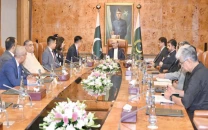
The National Assembly Standing Committee on Finance on Friday rejected a proposal to share taxpayers' personal information with banks and also sought a review of the current regime of income tax exemptions benefiting only politically connected entities.
Headed by Syed Naveed Qamar of the Pakistan Peoples Party (PPP), the committee also approved charging double income tax from non-filers on gains from disposal of securities.
The standing committee's decision is binding on the government unless reversed by the National Assembly during voting on the budget for FY2026-27, expected to be passed on Wednesday.
The committee rejected a budget proposal to allow the Federal Board of Revenue (FBR) to share information obtained from tax declarations with commercial banks for cross-matching through data-based algorithms.
There could be a false positive and the information shared with the banks can be misused, said MNA Sharmila Faruqi, recalling that the FBR had once seized her family's bank accounts on a false claim about her mother having an apartment in Dubai.
The government had proposed that banks provide the FBR with results where banking data differed from the algorithmprovided by the FBR. The FBR wanted to use the bank information for tax purposes, promising to keep it confidential. Earlier this week, FBR Chairman Rashid Langrial admitted that taxpayer information had been misused by his officers and said a faceless system would be implemented to hide tax officers from taxpayers. The committee allowed sharing information only with the State Bank of Pakistan (SBP) for the Central Data Depository to maintain a secure, centralised virtual repository of banking data.
Committee members said involving officials from banks or the FBR contradicted the idea of a faceless tax system designed to protect individuals from harassment. MNA Hina Rabbani Khar said the government was asking banks to do the FBR's job despite already excessive intrusion.
Hamid Ateeq Sarwar, member strategic transformation, said without bank data it would be difficult to detect assets held by traders, noting that while there are 180 million bank accounts, only one million are declared in wealth statements.
With certain reservations, the committee approved reduced income tax rates for the salaried class. MNA Jawed Hanif Khan noted that Rs52 billion tax relief was insignificant compared with Rs625 billion in tax contributions by salaried persons. Finance Minister Muhammad Aurangzeb assured the committee that further reductions would be considered in next year's budget.
Non-profit regime
The committee raised serious concerns over selective income tax exemptions which the government approved every year. The government proposed including five more entities in the exemption list: Pakistan Red Crescent Society, Shaheen Foundation (established by the Pakistan Air Force), Dawat-e-Hadiya, Bahria Foundation (established by the Pakistan Navy) and the Sindh Institute of Urology and Transplantation (SIUT).
Qamar said the tax exemption status of Fauji Foundation, one of the largest corporate groups, also needs "We do not have doubts about Fauji Foundation and the government entities but this cannot be said about private sector entities", said Najeeb Memon, the Director General Tax Policy Office.
Penalties
The committee raised queries over proposed FBR penalties, including Rs25,000 for late filing, saying such penalties would discourage people from becoming filers. During discussions, Memon remarked that tax evasion was a more heinous crime than murder.
Sarwar said 700,000 individuals who filed returns last year skipped this year. The committee approved that people could file returns at a nominal penalty of Rs1,000 but could not undertake transactions for six months or until June 30, whichever is earlier.
The committee also rejected a proposal aimed at punishing heads of boards and organisations for non-compliance with tax laws."If this clause is approved, one day they can put the prime minister of Pakistan in jail for being the chief executive of the country," remarked Qamar.
The FBR officers could not sustain the pressure of tough scrutiny of the budget proposals by the legislators, who pointed out several glaring flaws. Some officers made inappropriate remarks during cross-questioning.
The committee allowed sharing taxpayers' data with foreign research institutions for research purposes only without disclosing identities. It also approved doubling the minimum income tax rate for fertiliser, packaged food, sugar and other products. Qamar admitted the increase in tax rates would raise prices. Khar criticised the FBR's excessive reliance on the minimum tax regime, calling it a distortion.










This material may not be published, broadcast, rewritten, redistributed or derived from. Unless otherwise stated, all content is copyrighted © 2026 The Express Tribune.










COMMENTS
Comments are moderated and generally will be posted if they are on-topic and not abusive.
For more information, please see our Comments FAQ