Rich nations must pay climate debt
Updated 1 hour ago

Rs3m Alto pays Rs550,000 tax while Rs10m hybrid pays Rs100,000
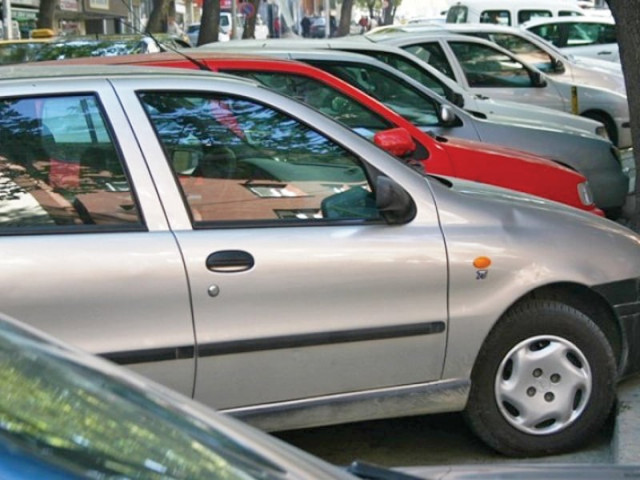
The widening gap in Pakistan's vehicle taxation policy has opened a new fault line within the country's auto industry, as established local manufacturers question a tax structure that they say favours expensive imported and premium new energy vehicles while leaving middle-class consumers with a heavier tax burden.
The rift has intensified after the government introduced a series of incentives aimed at encouraging the adoption of new energy vehicles (NEVs), including range-extended electric vehicles (REEVs), battery electric vehicles (BEVs) and plug-in hybrid electric vehicles (PHEVs). While the policy is intended to support Pakistan's transition towards cleaner transportation, local assemblers argue that the current incentive structure disproportionately benefits wealthy buyers and new entrants instead of encouraging affordable green mobility.
Industry officials point out that the disparity is evident in the tax burden carried by different vehicle categories. A locally assembled Suzuki Alto, one of Pakistan's most affordable passenger cars with a price tag of around Rs3 million, attracts nearly Rs550,000 in sales tax, federal excise duty and the newly introduced New Energy Vehicle (NEV) levy. In contrast, a REEV costing close to Rs10 million reportedly pays sales tax of only around Rs100,000 and is exempt from both federal excise duty and the NEV levy.
The issue has become more contentious at a time when Pakistan remains under an International Monetary Fund (IMF) programme that has required successive governments to raise taxes, reduce subsidies and increase utility tariffs to strengthen public finances. The controversy has also revived the broader debate over whether Pakistan's green mobility policy should primarily promote environmental goals or simultaneously protect domestic manufacturing, employment and affordability.
Pak Suzuki Motor Company spokesperson Ikhlaq Virk said the existing taxation regime creates an uneven playing field by placing the greatest burden on vehicles purchased by middle-income families.
"Vehicles such as Alto and Cultus serve as basic mobility options for middle-income families yet receive no meaningful tax relief. In contrast, buyers who can afford vehicles worth Rs10 million or more benefit from concessions introduced to encourage new energy vehicle adoption. Further, PHEVs/HEVs which are recently taxed at 25% in the Finance Bill are now rumoured to have sales tax reduced to 18%, relief for the richest," Virk said.
Industry participants believe that while Pakistan needs to accelerate the transition towards cleaner vehicles, incentives should be designed to encourage mass adoption instead of creating benefits concentrated at the upper end of the market.
Analysts also warn that an unbalanced taxation framework could discourage investment made by existing assemblers and the country's extensive auto parts manufacturing industry, which has developed over decades under the localisation policy.
Yousuf M Farooq, Director Research at Chase Securities, said environmental objectives must be pursued alongside industrial development.
"Promoting cleaner transportation is an important policy objective but incentives should not disproportionately benefit rich consumers," Farooq said. "The concessions should be linked to vehicle affordability, localisation, environmental impact and contribution to the domestic economy. There should be a more consistent taxation framework for fuel-consuming vehicles, including internal combustion, hybrid, plug-in hybrid and range-extended vehicles, while maintaining adequate protection for local assembly and parts manufacturing."
Farooq further said the government should ensure that environmental incentives do not undermine the competitiveness of local production or employment.
Pakistan's automobile industry has invested billions of rupees in manufacturing facilities, vendor development and localisation over the past three decades. The sector supports hundreds of auto parts manufacturers and provides employment to thousands of skilled workers. Industry stakeholders fear that if imported premium electric vehicles continue receiving significantly lower taxation than locally assembled conventional vehicles, it could discourage future investment in domestic production and weaken the vendor base.
Supporters of the government's policy, however, argue that Pakistan cannot ignore the global shift towards electric mobility. Many countries are offering tax incentives and subsidies to accelerate EV adoption, reduce fuel imports and cut carbon emissions. Pakistan, which spends billions of dollars annually on importing petroleum products, also stands to benefit from greater electrification of transport in the long run.
Nevertheless, industry observers believe the current debate is less about whether electric vehicles deserve incentives and more about how those incentives should be distributed. They argue that tax concessions should encourage affordable electric mobility, higher localisation and domestic manufacturing rather than making luxury vehicles significantly cheaper to own than entry-level cars relied upon by the country's middle class.










This material may not be published, broadcast, rewritten, redistributed or derived from. Unless otherwise stated, all content is copyrighted © 2026 The Express Tribune.



1727268465-0/Untitled-design-(42)1727268465-0-208x130.webp "the poor man s burden")
COMMENTS
Comments are moderated and generally will be posted if they are on-topic and not abusive.
For more information, please see our Comments FAQ