Houthi missiles kill four civilians
Updated 20 hours ago

Shielding exporters from year-to-year tax changes can help stave off losses
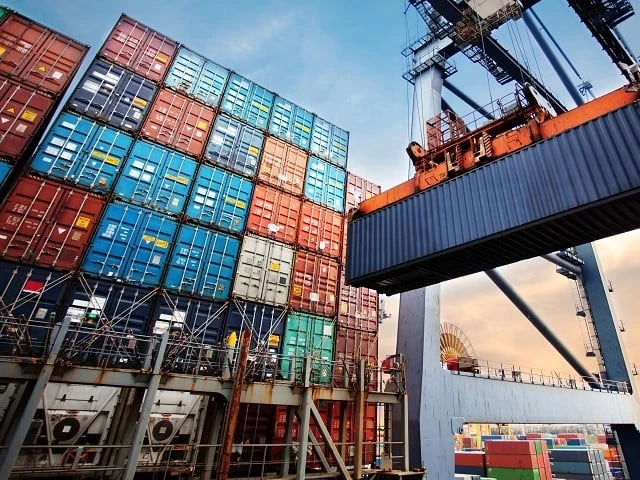
Pakistan is losing hundreds of millions of dollars in export revenue every month, not because of foreign tariff wars or global trade conflicts, but because of the uncertainty generated by its own policymaking machinery, according to a new study released by economists Azam Chaudhry and Gul Andaman of the Lahore School of Economics (LSE).
The headline finding is striking. When the United States and China fought a bruising tariff war in 2018 and 2019, an episode that reshuffled global supply chains and rattled exporters worldwide, Pakistan's trade policy uncertainty index peaked at 185, against a baseline of 100. But Pakistan's own Finance Act of 2024, a routine annual budget law, pushed that same index to 348, nearly twice the level recorded during the biggest trade conflict in a generation. By 2025, the index had reached three and a half times its historical mean.
The study, which constructs the first-ever trade policy uncertainty index for Pakistan using archives of four major English-language newspapers over 2013 to 2026, calls this the central puzzle it sets out to explain. The cost is quantified in precise terms. A shock the size of the US-China trade war costs Pakistan roughly 10% of its monthly goods exports on impact, and about a quarter of monthly exports at the worst point, which arrives eight months after the spike in uncertainty.
At the sample average of $2.2 billion in monthly exports, that immediate hit translates into around $230 million in lost shipments from a single uncertainty episode. The Finance Act 2024 shock was twice that size, implying losses potentially approaching half a billion dollars a month at the trough. The impact elasticity of exports with respect to trade policy uncertainty is measured at minus 0.16, deepening to minus 0.41 at the eight-month trough before a partial recovery by 12 months.
The mechanism the researchers identify is not what standard economic theory would predict. The dominant view in trade economics holds that uncertainty should hit differentiated manufactured goods hardest, because exporting those products requires costly, relationship-specific investments that firms defer when the future looks unstable. Pakistan's data, drawn from 5.3 million product-level bilateral trade observations across 4,954 products and 228 destinations over 193 consecutive months, tells a different story.
Exporters do not abandon products or markets when uncertainty rises. They do not stop shipping garments or leather goods or home textiles to existing buyers. What falls is the volume of orders flowing through those relationships – exporters ship fewer kilogrammes at unchanged prices and delay buying the machinery that will expand their capacity.
Capital goods imports, the study's proxy for equipment investment, fall by nearly half in the months following an uncertainty shock, an elasticity of minus 0.46, roughly three times larger than the drop in exports, and timed one month ahead of the export trough at seven months. Vehicles, the most deferrable capital purchase, show an elasticity of minus 0.50, while electrical machinery falls by minus 0.22. Firms waiting to see how the policy will settle defer the purchase of machines before they defer shipments.
Services exports suffer differently and more lastingly. Software, IT, and other services exports show no immediate reaction to uncertainty but once they fall, roughly three months after a shock, they do not recover within the year studied. The 12-month elasticity for services sits at minus 0.36, equal to the trough value, at a point where goods exports have already partially rebounded to minus 0.16. For a country increasingly staking its growth strategy on services-led export expansion, the study warns these are the most durable losses it documents.
The study also documents what Pakistan failed to capture during the US-China trade war. Countries like Vietnam, Mexico, and Bangladesh absorbed large volumes of US import demand that shifted away from Chinese suppliers. Pakistan, despite having deep textile relationships with American buyers, captured essentially none of that windfall in the broader economy.
The one exception was textiles, where the US textile export differential jumped to plus 0.335 in 2019 on the timing of List-4 tariffs hitting Chinese apparel, and re-emerged at plus 0.258 and plus 0.212 in 2024 and 2025, suggesting some of that reallocation hardened into durable supplier relationships. But outside textiles, no new ground was taken, because in the very window when global trade was being reshuffled, domestic policy uncertainty was suppressing the capital investment needed to compete in new product lines.
The source of this chronic uncertainty is structural. The Federal Board of Revenue issues hundreds of Statutory Regulatory Orders each year, over 300 in 2024 alone, changing tariffs, duties, and customs procedures by executive notification with immediate effect and no parliamentary process. The annual Finance Act rewrites the trade tax structure each June after months of speculation. The IMF programme negotiations, which have covered most of the sample period across multiple arrangements, periodically place the entire trade tax regime on the table. Each of these layers generates the news coverage that feeds the uncertainty index, and each is visible in export data as a quantified loss.
The researchers conclude that policy stability is itself an instrument of export competitiveness, not merely an administrative virtue. Consolidating SRO authority, pre-announcing trade measures before budget, and shielding exporters' tax treatment from year-to-year legislative changes would each remove a documented and measurable source of export loss that no amount of market access negotiation can offset while the home policy environment remains volatile.










This material may not be published, broadcast, rewritten, redistributed or derived from. Unless otherwise stated, all content is copyrighted © 2026 The Express Tribune.







COMMENTS (1)
Comments are moderated and generally will be posted if they are on-topic and not abusive.
For more information, please see our Comments FAQ