Power supply chains face a new test
Updated 10 hours ago

Punjab, Sindh refuse financial obligation, seek federal stocks after failing to buy locally
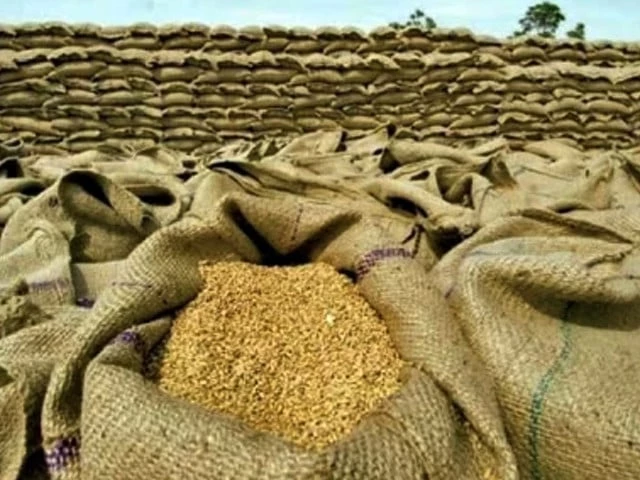
Days after the Centre decided to import one million metric tonnes of wheat to arrest soaring prices, two of the largest wheat deficient provinces – Punjab and Sindh – have backtracked from buying the imported commodity and have not yet given feedback on a tripartite agreement for the import, top government functionaries told The Express Tribune on Friday.
The U-turn by the provinces has perplexed the federal government, which now faces a situation where it must either import the commodity from federal fiscal resources or drop the plan, risking a shortage, said the official.
A cabinet member said on condition of anonymity that the provinces have again been asked for the last time to firm up their demands, including explicitly stating the need for imported wheat. He said federal reserves were insufficient to meet provincial demands, and the commodity had to be imported.
The outcome of the last two steering committee meetings on August 9 and August 12 was that the provinces said they did not need imported wheat but needed wheat from the federal government, said another senior functionary .
When contacted, the Prime Minister's Coordinator on Agriculture, Ahmad Umair, said the right to provide any quantity from federal wheat reserves rests with the federal government, and the decision is that local and imported wheat would be provided on a proportionate basis to all provinces.
The Economic Coordination Committee of the Cabinet had constituted the steering committee for need assessment and to devise an operational mechanism for wheat import and provincial demand. The purpose was also to get concrete provincial commitments for financing, logistics and procurement so that no additional burden fell on the federal government.
After committing to buy one million metric tonnes, Punjab rationalised its demand to 800,000 tonnes. In a meeting chaired by Rana Tanveer Hussain, a Punjab government representative said the province did not need imported wheat. Hussain asked for a note of the statement so that Punjab could not later blame the Centre for any shortage or price escalation.
Punjab Information Minister Azma Bokhari did not respond to a request for comments.
The Punjab representative said the province was in a comfortable position after receiving 800,000 metric tonnes of wheat from federal stocks, including 533,000 tonnes yet to be picked from Pakistan Agriculture Services and Storage Corporation (PASSCO) facilities. Punjab had also procured about 500,000 metric tonnes from farmers against a target of three million tonnes.
The failure of Punjab and Sindh to procure the commodity sowed the seed of the current crisis, which has pushed prices up by three-fourths.
During a steering committee meeting on Wednesday chaired by Deputy Prime Minister Ishaq Dar, Sindh also showed reluctance to take imported wheat. Sindh had earlier demanded 720,000 metric tonnes, including 500,000 tonnes of imported commodity.
Dar's office issued a statement that "the committee reiterated its decision to import one million tonnes of wheat to meet domestic requirements, ease price pressures and provide relief to the public".
According to the Pakistan Bureau of Statistics, average wheat flour prices surged 77.5% this week compared to a year ago, rising to Rs132.5 per kilogram from Rs75.
Another official said even if provinces do not want to buy imported wheat and prefer federal stocks, the federal government will have to import to maintain strategic reserves.
The government has already allocated one million metric tonnes of PASSCO wheat stocks on a proportionate basis, with the largest share going to Punjab, followed by Sindh, Khyber-Pakhtunkhwa and Balochistan.
A K-P representative took exception to Punjab's changed stance, arguing that Punjab's earlier claim of shortage caused price escalation and put his province at a disadvantage.
K-P retained its demand for 200,000 metric tonnes of imported commodity in addition to 200,000 tonnes of local wheat. Provinces were provided wheat at Rs4,150 per 40 kilograms, Rs650 higher than the price offered to farmers.
The federal food ministry has prepared a draft of the Tripartite Agreement outlining roles, responsibilities, financial arrangements and operational modalities of the food ministry, provincial governments and the Trading Corporation of Pakistan (TCP) for implementation of the Wheat Import Programme.
The draft was circulated to provincial governments and TCP for examination and inputs by August 8. However, no provincial government communicated its stance as of Thursday, said the government officials.The federal cabinet approved wheat import after PASSCO stocks were exhausted, with quantity and allocation to be determined by the Steering Committee.
TCP's role is limited to importing agency, without financial liability.
The food ministry will act solely as coordinating secretariat and will not assume any contractual obligation, guarantee or financial liability towards TCP, provinces or third parties.The agreement will become effective when signed by all parties and when TCP confirms in writing that conditions have been satisfied or waived with the written concurrence of the food security ministry and the competent authority. The conditions include the ECC decision, provincial demand confirmation, sanctions from the competent authority, payment-security arrangements, and TCP's receipt of all required approvals for procurement, foreign-exchange cover and opening of import letters of credit.
According to the draft, provincial governments will provide an unconditional written commitment for the allocated quantity and maintain adequate payment security throughout the programme.
All applicable taxes, duties, cess and imposts shall be included in the estimated payment security, but a decision is pending with Prime Minister Shehbaz Sharif on whether to waive these duties.








This material may not be published, broadcast, rewritten, redistributed or derived from. Unless otherwise stated, all content is copyrighted © 2026 The Express Tribune.





1727268465-0/Untitled-design-(42)1727268465-0-208x130.webp "the reverse renaissance")

COMMENTS
Comments are moderated and generally will be posted if they are on-topic and not abusive.
For more information, please see our Comments FAQ