Police piece together final hours, death of Mir Raza Ali
Updated 20 hours ago

Heritage experts call for accountability after changes to landmark colonial-era building allegedly proceed without man
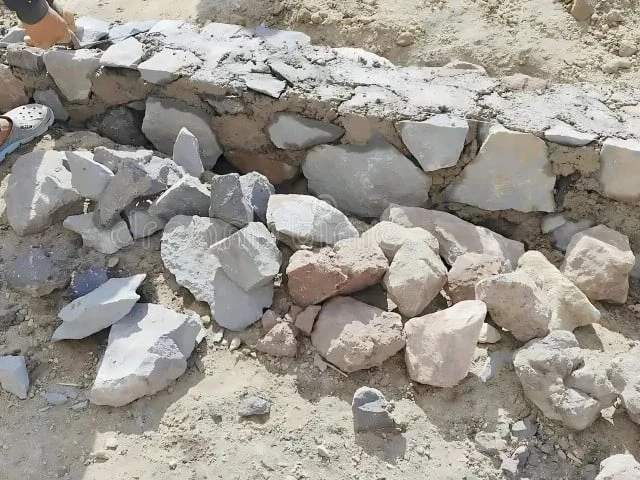
The foundation stone of any historic building is a key part of its identity and cannot be altered or removed. However, due to alleged negligence by the Sindh Assembly administration, the original foundation stone of the 86-year-old provincial assembly building has been obscured during construction work, making it difficult to view or read its inscription.
The two-storey Sindh Assembly building is an architectural landmark dating back to the British colonial era. Its foundation stone was laid on March 11, 1940, by Sir Lancelot Graham, the then governor of Sindh under British rule, while the building was formally inaugurated in March 1943.
The assembly building also occupies a significant place in Pakistan's political history, as it was the first legislative assembly to pass a resolution in favour of the creation of Pakistan.
Notably, the building is among the structures declared protected cultural heritage by the provincial government. According to Abdul Fattah Shaikh, Director General of Archaeology and Antiquities at the Sindh Culture Department, the Sindh Assembly building has been listed as a protected cultural heritage since 2017.
Ironically, the law protecting such sites was itself passed by the Sindh Assembly. Under the Sindh Cultural Heritage (Preservation) Act, 1994, numerous buildings of historical significance across the province were declared protected heritage sites. The law prohibits any alterations to the interior or exterior of protected buildings.
Under the same legislation, any construction work or modifications deemed unavoidable require prior approval from a technical committee constituted by the Culture Department. However, according to sources, the Sindh Assembly administration did not seek permission from the committee before carrying out construction work inside and outside the building.
The foundation stone was effectively concealed after a brick-paved surface was constructed in front of the assembly building. The Express Tribune contacted Sindh Assembly Secretary G.M. Umar Farooq to inquire why the administration had not obtained the mandatory approval from the Culture Department's technical committee before undertaking the work, but no response was received.
Renowned architect and head of the Heritage Foundation of Pakistan, Yasmeen Lari, explained that every element of a historic structure, particularly one designated as protected heritage, must be preserved. A building's foundation stone is as important as the structure itself, as it provides information about the age of the building and the individuals involved in its construction.
"Even an ordinary stone from a historic building can hold immense significance, offering valuable insights into the period in which it was built. Civilised nations protect every aspect of their cultural and historical heritage with great care and commitment. Unfortunately, such heritage is often not given the importance it deserves in our country," regretted Lari.















This material may not be published, broadcast, rewritten, redistributed or derived from. Unless otherwise stated, all content is copyrighted © 2026 The Express Tribune.






COMMENTS (3)
Comments are moderated and generally will be posted if they are on-topic and not abusive.
For more information, please see our Comments FAQ