'NAZA' and a world in disorder
Updated Oct 23, 2026

BLA and affiliates have launched 181 terrorist attacks in Balochistan in 2026
It is a moot point now whether it is the unameliorated socio-economic conditions or the unassuaged psycho-social grievances that are the cause of the present unrest in Balochistan. The aetiology of the sixth uprising in Balochistan features longstanding grievance narrative and a persistent governance deficit in the restive province. The diurnal attacks by the BLA terrorists and their ilk cause national headlines despite the valiant pushback by the LEAs. What ails the province and what sustains this implacable wave of terrorism needs an honest introspection on the part of the state as well as the scholars.
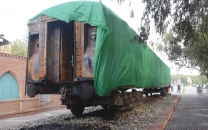
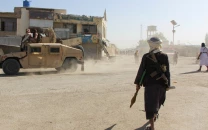
According to a CRSS report, the BLA and affiliates have launched 181 terrorist attacks in Balochistan in 2026, resulting in 708 civil and military casualties, whereas according to South Asian Terrorism Portal, the LEAs have eliminated 618 terrorists through thousands of IBOs besides the ongoing Operation Shaban. The present situation is tense with curfews at places like Khad Kucha and sporadic attacks by the terrorists targeting civilian as well as the military infrastructure, buses, trains and police check posts. The attackers have been emboldened enough to stay in hideouts near the cities and towns in order to sally out for their depredations with ease. The combing operations and punitive IBOs by army, FC and intelligence agencies frequently run up against difficult geography and an environment conducive to the militant tactics.
A host of extraneous factors have redounded to the advantage of the terrorists. These factors include an active abetment and financial support by India and few other countries that wish to keep the pot boiling in Balochistan to derail the economic corridors and development projects in the province. Over time, the Indian involvement has become more brazen and puissant, especially after the botched-up Operation Sindoor in May 2025. In order to get even with Pakistan, India has ratcheted up its terror support through its Afghan and Baloch proxies.
In addition to these extraneous enablers the internal factors also contribute to the unrest which have created propitious conditions for the terrorist to win the people to their cause. Let us focus on those issues one by one.
The first issue pertains to the political marginalisation of the people of Balochistan, who feel excluded from the public goods and the political process. A significant proportion of the Baloch population believes that the genuine representatives of the people can still connect better with the people to keep the march of ethnic particularism at bay. The absence of genuine representatives with roots in people results in the disconnect between the people and the polity, which gives ballast to the insidious separatist narrative of the entities like BLA, BLF and BRP.
The silver lining in the darkening penumbra of political alienation is the silent majority, which is still with the state, but is looking for security umbrella as well as the political engagement by the state. An interaction with the relevant stakeholders in the province revealed that around 20% of the population has been won over to the cause of the separatists while a similar percentage stands solidly with the state, leaving around 60% pro-state but scared fence sitters, who cannot refuse interactions with the armed and indoctrinated terrorists. The state needs to win back the trust and support of that significant segment of the population before the terrorists turn their ennui into collaboration.
The second most important issue is a social order in transition where the ancient regime of tribal Sardars is collapsing while the creeping hold of the educated middle class struggles to depose the old power elite. The old patterns of political patronage and governance are being challenged by the young, educated and politically conscious middle class which detests a governance model where the development funds are doled out to members of legislature as political bribes while the government jobs are dished out to political elite, to help consolidate their political chokehold over the powerless.
The anger and the frustration generated because of a model of governance that rewards the rapacious political elite and marginalises a vast majority of plebians finds expression in violent protests, band-wagoning with the ethnic particularism and a repudiation of the mainstream politics. While the impressive figures are quoted in terms of the number of schools and colleges, the quality of the faculty and the ancillary facilities frustrate the people. The same is true of the hospitals and dispensaries that lack medicines, doctors and paramedical staff.
The organised crime and smuggling that feed the informal economy have been accommodated due to the lack of livelihood opportunities and have resulted in a laissez-faire economy that feeds the voracious appetite of the corrupt who thrive on an eco-system of organised crime, pushing the marginalised and the excluded further towards the margins. Combined with this is the alienation of the people who do not benefit from the corridor economics that benefit the state but offer no immediate benefits to the people. The concerns of the people of coastal regions like Gwadar like the lack of drinking water, illegal fishing, cross border trade and corruption also need to be addressed as they breed resentment against the state apparatus and development efforts.
Still, however, there is hope in the shape of seasoned politicians, patriotic people, and an estranged yet expectant youth that still wishes to stand with the federation to earn their share in a fair game of stakes. All that the state has to do as a fair leviathan is to tap into the faint echoes of the clash between the old and the new order, while helping midwife the birth of the new order through political inclusion, good governance, eradication of corruption, and earning public trust. There is a need to employ credible leadership for political engagement while the state emasculates the irreconcilables through kinetics.
The state has to move out of the bunkers and check posts to wrest back the trust of the large majority that genuflects helplessly to the coercion of the terrorists. Trusting the people and their political inclusion through empowered local governments is the magic bullets that would yield success. People are yearning for a deliverance from the sable talons of terrorism and the only way to achieve that is by jettisoning the old ways of governance and politicking.










This material may not be published, broadcast, rewritten, redistributed or derived from. Unless otherwise stated, all content is copyrighted © 2026 The Express Tribune.

COMMENTS (2)
Comments are moderated and generally will be posted if they are on-topic and not abusive.
For more information, please see our Comments FAQ