Pakistan, US discuss trade, investment
Updated 2 hours ago

On Sunday, Iran fired a salvo of missiles at Israeli targets in retaliation for the strikes on Lebanon
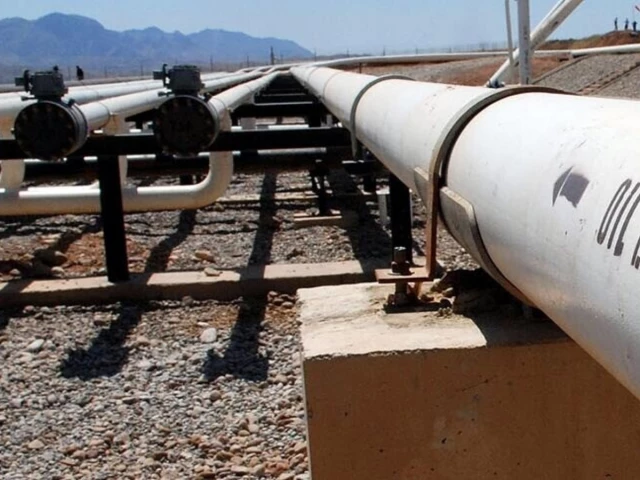
Oil prices jumped more than $4 on Monday, with investors spooked by Israeli strikes on Iran as well as renewed attacks on Lebanon a day earlier.
Brent crude futures rose $4.42 or 4.47% to $97.15 a barrel as of 0609 GMT, while US crude futures were up $4.07 or 4.50% at $94.61 per barrel.
Israel said on Monday it hit a petrochemical plant in Iran's southwest, along with strikes elsewhere on military targets. That's despite US President Donald Trump reportedly telling Israeli Prime Minister Benjamin Netanyahu to refrain from further attacks.
In the first hit on an energy site inside Iran since the April 8 ceasefire, Israel said it struck targets at the Mahshahr petrochemical complex. A provincial official told Iran's semi-official Fars news agency parts of the plant were damaged.
Read: Oil shock and the import trap
Hopes are now eroding for an imminent end to the wider war and a restart to crude flows through the Strait of Hormuz, through which roughly a fifth of the world’s oil and liquefied natural gas is transited.
Monday's gains erased Friday's losses, when prices fell on hopes of a de-escalation in the US-Iran conflict. Oil prices have climbed just under 60% since the start of the war in late February but remain below highs marked in March when Brent reached nearly $120 per barrel.
On Sunday, Iran fired a salvo of missiles at Israeli targets in retaliation for the strikes on Lebanon. Even so, US President Donald Trump insisted that an agreement to end the wider war remains well within reach.
Iran has made a ceasefire with Lebanon a condition for a peace deal with Washington.
Israel invaded Lebanon in March after Iran-backed Hezbollah fired rockets and drones across the border. Lebanon and Israel said on June 3 that they had agreed to a ceasefire following negotiations in Washington.
Tariffs on the Strait
On Monday, Iran’s ambassador to Moscow was quoted as saying that the Strait of Hormuz will be open but under new conditions to be set by Iran and Oman, including a transit fee.
"Of course, this strait will be open, but with new conditions to be determined by the Iranian and Omani authorities," Ambassador Kazem Jalali told the Russian newspaper Izvestia in an interview published on Monday.
Read more: 'Shaky Zionist regime has few days left,' says Iranian supreme leader
Tehran has been blocking most shipping through the Strait of Hormuz, while Washington has imposed its own blockade of Iranian ports.
OPEC+ will increase output
Amid the resulting supply crisis, OPEC+ on Sunday agreed its fourth increase in oil output in four months. But analysts said the decision would have little impact since most OPEC+ members could not meet their output targets because of the Hormuz closure or, in the case of Russia, infrastructure attacks that have eroded its production capacity.
"In the current market, the physical impact of such a decision would be close to zero," Rystad Energy's head of geopolitical analysis, Jorge Leon, said in a note to clients.













This material may not be published, broadcast, rewritten, redistributed or derived from. Unless otherwise stated, all content is copyrighted © 2026 The Express Tribune.







COMMENTS
Comments are moderated and generally will be posted if they are on-topic and not abusive.
For more information, please see our Comments FAQ