Gold prices decline by Rs3,500 per tola in local market
Updated 1 hour ago

Iran war sends global yields to multi-year highs; investors fret over inflation shock, public debt
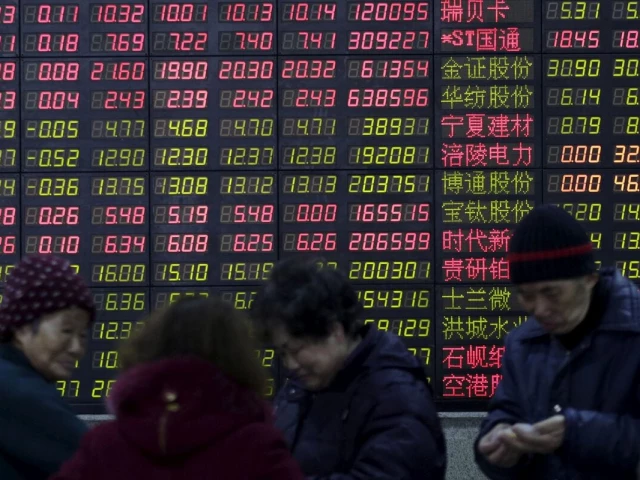
The Iran war rocked global bond markets again in May, sending yields to multi-decade highs as traders priced in central bank rate hikes – only for signs of progress in peace talks and weak economic data to bring them sharply lower again.
Although a clear end to the conflict would bring immediate relief and lower government borrowing costs around the world, May's moves underscore how investors are twitchy about inflation and growing public debts.
Treasury tantrum
The 30-year US Treasury yield soared to around 5.2% on May 20, its highest since 2007, as the Iran war roiled the $28 trillion US government bond market.
Signs that peace talks were stalling, which pushed oil prices back above $110, and hot US price data were among the triggers for the global debt sell-off.
British yields hit their highest in two or three decades , some Japanese yields reached record highs , and Germany's 10-year yield hit its highest since 2011.
"The market's concerned that inflation may be here a bit longer than we had anticipated," said Franklin Templeton's head of European fixed income David Zahn.
Growing pains
Borrowing costs then fell back along with oil prices as the US and Iran reported progress in talks, and weak economic data - particularly in Europe - tempered the case for dramatic rate hikes.
Euro zone economic activity shrank at its sharpest rate in two-and-a-half years in May as the bloc grappled with rising energy costs, data showed last week.
US goes alone
Whereas energy-importing economies such as the euro zone, Britain and Japan had previously borne the brunt of the bond selloff, the US was the notable underperformer in May.
US 10-year yields rose 6 bps from April 30 to May 29, while German yields fell 6 bps.
While European data tempered rate hike expectations, the US economy has remained strong, helped by an AI spending boom.
Traders fully scrubbed out bets on any Federal Reserve rate cuts this year and briefly priced in a full 25 bps rate hike by December.
Data on Thursday showed the Fed's preferred inflation measure up 3.8% year-on-year in April, its fastest rate in three years.
Gilty conscience
May was another hair-raising month for the UK gilt market, highly susceptible to selloffs since the Liz Truss crisis of 2022.
Yields on 30-year gilts jumped to their highest since 1998 at 5.87% in mid-May as the global rout combined with fears that a successor to embattled Prime Minister Keir Starmer might ramp up spending.
Gilts then rallied as peace hopes grew, UK economic data weakened, and frontrunner Andy Burnham pledged to stick to the government's fiscal rules.
From April 30 to May 29, 10-year gilt yields outperformed Germany and the US to fall around 21 bps, though they remain up 58 bps since the war started.
"If we look at Bank of England pricing, we've gone from two cuts at one point to nearly three hikes, so that's been the main driver (of UK bonds)," said Matthew Amis, Investment Director at Aberdeen.
"But also in the background the political volatility has clearly not helped."
Global equities
Global investors returned to equity funds in the week to May 27 after a week of outflows, as a rally in AI-linked stocks revived demand, though caution over US-Iran peace negotiations kept buying in check.
Investors bought a net $457.57 million in global equity funds, compared with a net outflow of $6.56 billion the previous week, LSEG Lipper data showed.
MSCI's World Index hit a record 1,129.06 on Friday, as the US and Iran reached an agreement to extend their ceasefire, pending final approvals.
Technology stocks have been particularly in favour since last week after Nvidia highlighted robust demand for its flagship AI chips.
By region, US equity funds attracted a net $1.97 billion, while European funds also gained a net $678 million. Asian funds, however, recorded net outflows of $3.92 billion.
Sector funds attracted a net $5.14 billion overall, with technology and financials drawing a net $4.98 billion and $1.05 billion respectively.
Global bond funds extended their winning streak to an eighth week, pulling in a net $18.15 billion.
Short-term bond funds, euro-denominated bond funds and corporate bond funds led demand, attracting a net $3.67 billion, $3.16 billion and $1.4 billion respectively.
Money market funds saw net outflows of $4.46 billion, reversing net inflows of $18.12 billion the week before.
Precious metals funds, including gold, recorded a net $584 million in outflows, their fourth weekly decline in five weeks.
In emerging markets, equity funds shed a net $4.45 billion for a fifth straight week of outflows, while bond funds attracted a net $1.08 billion, data covering 28,882 funds showed.










This material may not be published, broadcast, rewritten, redistributed or derived from. Unless otherwise stated, all content is copyrighted © 2026 The Express Tribune.












COMMENTS
Comments are moderated and generally will be posted if they are on-topic and not abusive.
For more information, please see our Comments FAQ