From roar to whimper: opposition protest fizzles
Updated 1 hour ago

Holds that consent must be explicit in cruelty cases
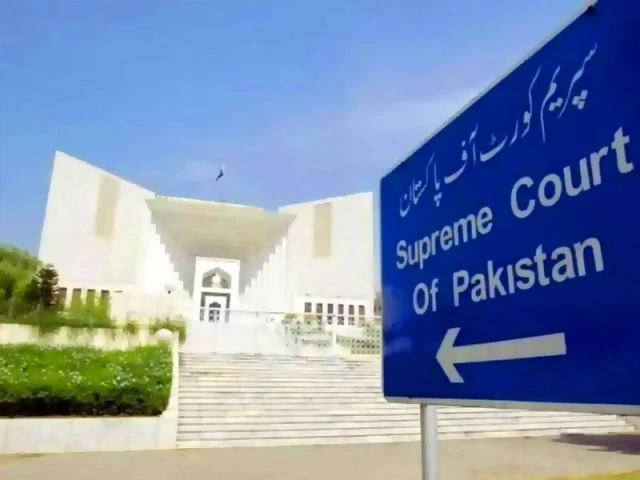
The Supreme Court has ruled that when a wife seeks dissolution of marriage on the ground of cruelty, khula should not ordinarily be granted without her consent.
"We hold that khula should not ordinarily be granted without the wife's consent or clear election where she has sued on cruelty and valuable financial rights are implicated," said a 12-page judgment authored by Justice Shahid Bilal. He was part of a three-judge bench led by Chief Justice of Pakistan Yahya Afridi.
The case concerned a dispute in which the wife instituted proceedings before a family court seeking dissolution of marriage on the ground of cruelty, along with recovery of 30 tolas of gold as dower or its market value, and maintenance allowance from the date of neglect until the decision of the suit.
The judgement said where cruelty is not proved and marital life has manifestly collapsed, the court must afford the wife an opportunity to elect whether to pursue dismissal of her claim or accept dissolution by khula, rather than compelling restoration of a relationship that has ceased to exist in substance
It noted that cruelty is no longer confined to visible physical assault alone; it extends to sustained humiliation, coercive control, emotional abuse, deprivation, indignity, and conduct rendering cohabitation unsafe or intolerable.
Mental cruelty has similarly been judicially recognised to include emotional torment, studied neglect, and conduct causing deep anguish to the spouse.
"We may further clarify that allegations of cruelty arising within a domestic relationship may assume a distinct legal character depending upon the forum in which they are asserted.
"Where such allegations are raised before a family court under the Dissolution of Muslim Marriages Act, 1939 or cognate matrimonial jurisdiction, cruelty is examined as a civil matrimonial wrong, the object being determination of marital status and consequential civil rights," it stated.
In such proceedings, the court said, the matter is to be assessed on the standard of preponderance of probabilities. Conversely, where the same or similar acts are prosecuted under penal law, including statutes relating to domestic violence or other criminal offences, the allegations partake the character of criminal wrongdoing carrying penal consequences.
"[Such acts] must therefore be established in accordance with the stricter standard of proof beyond reasonable doubt," it adds. The court emphasized that the two jurisdictions serve different purposes and their evidentiary thresholds must not be intermixed.
Family courts must remain cautious not to import criminal-law standards of proof into civil matrimonial litigation, lest relief meant to protect parties from oppressive domestic circumstances be defeated by unrealistic evidentiary demands.
It further held that in such situations, the proper judicial course is neither to impose khula without consent nor to mechanically dismiss the matter while ignoring matrimonial breakdown.
Instead, the court should clearly present the legal position to the wife: if she persists with an unproven claim of cruelty, the suit may fail; if she no longer wishes to remain in the marriage, she may seek dissolution by khula with its attendant consequences.
The judgment noted that in the instant case, the marriage between the parties was solemnized on September 19, 2016, while the suit for dissolution was instituted on October 8, 2016, meaning the matrimonial relationship subsisted for only a brief period of a few days before litigation commenced.
"We have no cavil with the proposition that acts constituting cruelty may, depending upon their nature and gravity, occur even within a short span of cohabitation, and no inflexible rule can be laid down that cruelty must necessarily be preceded by prolonged matrimonial life. Each case must turn upon its own facts and evidence," it observed.
The court found that despite the allegations, the petitioner failed to establish cruelty through material sufficient to satisfy the applicable standard in matrimonial proceedings. The concurrent findings of the lower courts did not suffer from misreading or non-reading of evidence warranting interference.
At the same time, the record clearly reflected that the marriage had broken down almost at inception, with no meaningful cohabitation after the institution of proceedings, and the petitioner consistently unwilling to resume matrimonial life.
"We find no sufficient ground to disturb the concurrent findings of the courts below insofar as the petitioner's allegations of cruelty have remained unproved.
"We are nevertheless of the considered opinion that the decree of khula ought not to have been granted without first affording the petitioner a conscious, informed, and unequivocal election, particularly when valuable financial rights were directly involved," it added.
The court set aside the impugned judgments to the limited extent of the mode of dissolution and consequential financial adjustment and remanded the matter to the concerned family court.
It directed the family court to secure the petitioner's statement and ascertain whether she elects to seek dissolution by way of khula upon lawful terms or to persist with her claim of cruelty.
A fresh decree is to be drawn strictly in accordance with law based on her election. The court further directed that the exercise be concluded expeditiously, preferably within 30 days from receipt of the certified copy of the judgment.









This material may not be published, broadcast, rewritten, redistributed or derived from. Unless otherwise stated, all content is copyrighted © 2026 The Express Tribune.
















COMMENTS
Comments are moderated and generally will be posted if they are on-topic and not abusive.
For more information, please see our Comments FAQ