Pre-monsoon rescue drill conducted
Updated 1 hour ago

Academic staff federation fears institutional collapse
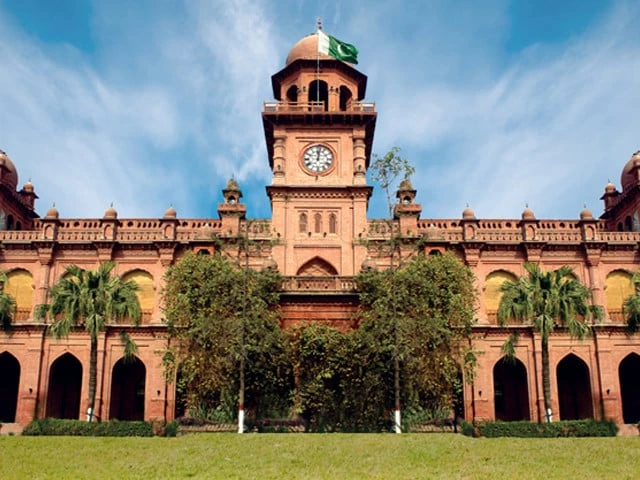
Several public sector universities in Punjab are struggling to pay salaries, pensions, utility bills and bear the expenses of academic activities amid shrinking resources and rising expenditures.
Faculty representatives and vice chancellors warn that a prolonged funding squeeze has pushed many universities toward administrative paralysis, raising fears of disruption of teaching, research and student services across the province.
The Federation of All Pakistan Universities Academic Staff Associations (FAPUASA) has issued a strongly worded open letter to the national political leadership, cautioning that the country's entire higher education system may be heading toward institutional collapse if urgent financial intervention is not made in the coming federal budget.
Faculty members claim the crisis is no longer limited to development or research funding but has evolved into an operational emergency affecting the daily functioning of universities.
They said several government universities in Punjab were facing widening budget deficits caused by years of stagnant federal allocations, sharp inflation, rising electricity tariffs, pension liabilities and increasing student enrolment.
Government support through the Higher Education Commission has failed to match the rapid expansion of universities and the growing financial burden on them, they added.
Senior academics claim that authorities are increasingly relying on emergency cost cutting measures to sustain routine university operations.
Sources in universities allege that expenditures related to research, laboratory upgrades, faculty hiring and infrastructure development are being postponed while the administrations prioritise salary disbursement and utility payments.
A senior professor at a leading government university in Lahore described the situation as "deeply alarming".
"Most universities are operating in survival mode now," the professor said. "Departments are being asked to reduce spending, research activities are slowing down and administrators are struggling to manage operational costs amid continuously shrinking resources."
A professor in South Punjab warned that the long term consequences of financial neglect could permanently damage the country's academic and scientific future. "When universities lose research capacity and qualified faculty begin leaving, recovery becomes extremely difficult," he remarked. "Pakistan is already facing a brain drain, and this crisis is making the situation worse because talented researchers do not see professional stability."
The faculty members revealed that recruitment processes in some universities had slowed, while promotions and hiring decisions remain pending due to financial uncertainty.
Contract employees and visiting faculty members are also reportedly facing delays in payment and extension of contracts, said Professor Munawar Sabir.
Education experts contend that over the past decade, universities expanded campuses, academic departments and student intake but recurring grants did not increase proportionately.
As operational expenditures continued rising due to inflation and currency depreciation, the universities became increasingly dependent on self-generated revenue, temporary financial adjustments and borrowing mechanisms to maintain administrative continuity.
The staff federation's letter states that public sector universities are struggling to maintain laboratories, libraries, hostels, transport and digital infrastructure.
The teachers claim that several libraries have reduced access to international journals and online databases because of budgetary constraints, directly affecting research scholars and postgraduate students.
FAPUASA President Dr Akhtiar Ali Ghumro, Vice President Abdus Samad Khan and General Secretary Dr Muhammad Muddassar warned that weakened universities could have devastating consequences for Pakistan's economy, scientific advancement and youth development.
The federation emphasised that the majority of students enrolled in government universities belong to middle and lower income families for whom higher education remains the only realistic path toward economic mobility and stable employment.
It also linked the higher education crisis with broader national challenges, including unemployment, declining innovation, technological backwardness and reduced international competitiveness.







This material may not be published, broadcast, rewritten, redistributed or derived from. Unless otherwise stated, all content is copyrighted © 2026 The Express Tribune.










COMMENTS
Comments are moderated and generally will be posted if they are on-topic and not abusive.
For more information, please see our Comments FAQ