PM Shehbaz departs for China on four-day official visit
Updated 1 hour ago

Premier to meet Zhejiang party secretary, attend CPEC Phase-II business forum, sign MoUs before heading to Beijing
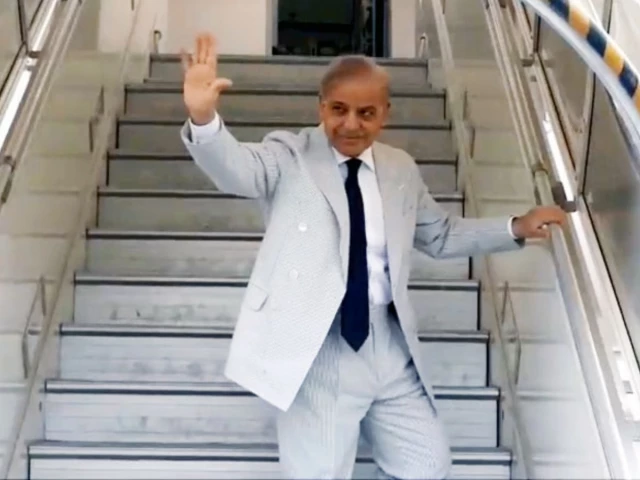
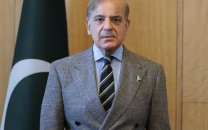
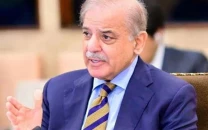
Prime Minister Shehbaz Sharif departed for China on Saturday on a four-day official visit aimed at strengthening bilateral relations and economic cooperation.
According to the Ministry of Foreign Affairs (MOFA), the prime minister will first visit Hangzhou, where he will meet the party secretary of Zhejiang Province.
“The premier will also participate in a business forum held to promote cooperation between Pakistani and Chinese companies under CPEC Phase-II,” the MOFA said.
The statement further said that PM Shehbaz would also attend a ceremony for the exchange of agreements and memorandums of understanding (MoUs).
“During a visit to the headquarters of Alibaba, a Chinese company, the prime minister will participate in a signing ceremony for MoUs on cooperation,” it said.
The ministry said the premier would also hold meetings with the chief executive officers of prominent Chinese companies during his visit to Hangzhou.
لاہور: 23 مئی 2026.
— Prime Minister's Office (@PakPMO) May 23, 2026
وزیرِ اعظم محمد شہباز شریف اپنے چار روزہ دورہء چین کے پہلے مرحلے میں ہانگژو روانہ.
نائب وزیرِ اعظم و وزیرِ خارجہ سینیٹر محمد اسحاق ڈار، وزیرِ منصوبہ بندی احسن اقبال، وزیرِ اطلاعات و نشریات عطاء اللہ تارڑ، وزیر آئی ٹی شزہ فاطمہ خواجہ اور معاون خصوصی طارق… pic.twitter.com/owAuHidew0
According to MOFA, later, the prime minister would depart for Beijing, where he would hold meetings with Chinese President Xi Jinping and Premier Li Qiang.
"While in the capital, PM Shehbaz will participate in an event marking the 75th anniversary of diplomatic relations between Pakistan and China," it added.
The ministry said that in Beijing, too, the premier would hold a meeting with heads of prominent Chinese companies. He would also visit the China Academy of Agricultural Sciences (CAAS).
"The prime minister's visit to China will add new dimensions to Pakistan-China relations, particularly including enhanced cooperation with Pakistani and Chinese companies under CPEC Phase-II," MOFA stated.
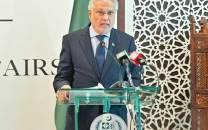
During his visit, PM Shehbaz is accompanied by Deputy Prime Minister and Foreign Minister Ishaq Dar, Planning Minister Ahsan Iqbal, Information Minister Attaullah Tarar, IT Minister Shaza Fatima Khawaja, and Special Assistant Tariq Fatemi.
Last month, President Asif Ali Zardari also completed a five-day visit to China, during which both countries signed multiple MoUs aimed at strengthening bilateral cooperation in desalination, agricultural technology, and the tea industry. This move is expected to boost investment, technology transfer, and economic ties between the two countries.
The first MoU was concluded between the Government of Sindh and Lucion Environmental Technology Group for collaboration on a seawater desalination project in Karachi. The project aims to enhance the city's water supply by making seawater usable through modern technology.
The second MoU focused on cooperation in agricultural technology. Sharjeel Inam Memon signed it on behalf of the Sindh government and Chen Zhixin, chairman of Longping High-Tech Information Company, signed for the Chinese side.
The third MoU, relating to the tea sector, was signed between MESKAY & FEMTEE Trading Company, Hunan Tea Group and Jiaolong International Technology in Hainan.
Earlier in January, Pakistan and China agreed to align their development strategies and build an upgraded version of the China-Pakistan Economic Corridor, known as CPEC 2.0, during wide-ranging talks in Beijing that also covered political ties, security cooperation and regional and international issues.
As part of their economic engagement, Pakistan and China agreed to develop an upgraded CPEC, a pioneering project of the Belt and Road Initiative. The two sides said the new phase would focus on the key sectors of industry, agriculture and mining, promote the building and operation of Gwadar Port, ensure the smooth passage of the Karakoram Highway, and enhance Pakistan’s capacity for sustainable development.
They also agreed to deepen cooperation in trade and investment, information technology, science and technology, cybersecurity, technical and vocational training and education, and people-to-people and cultural exchanges.
The two sides stated that the year-round opening of the Khunjerab Pass would facilitate two-way trade and further strengthen people-to-people contacts. They also welcomed third-party participation in CPEC cooperation in accordance with the modalities agreed by both countries.








This material may not be published, broadcast, rewritten, redistributed or derived from. Unless otherwise stated, all content is copyrighted © 2026 The Express Tribune.








COMMENTS
Comments are moderated and generally will be posted if they are on-topic and not abusive.
For more information, please see our Comments FAQ