Milan's new runway rules signal end of fur
Updated 1 hour ago

Voluntary new guidance from Italy's fashion council seeks to push animal skins off catwalk
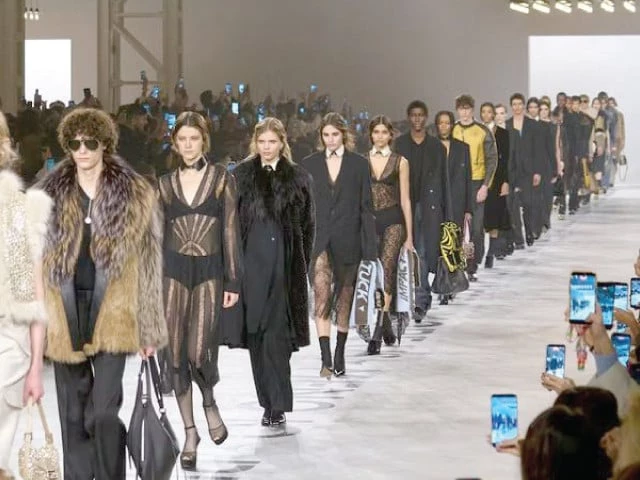
The global fashion industry has long been entangled in a fierce debate over animal fur. Despite decades of pressure from activists, the luxury sector has stubbornly clung to the material for its drama, volume, and heritage.
However, the anti-fur movement secured a momentous victory late last week when Italy's premier fashion council, the Camera Nazionale della Moda Italiana (CNMI), issued voluntary guidance urging brands showing at Milan Fashion Week to remove animal fur from their runways as early as September.
While not an outright mandatory ban like those adopted by fashion capitals such as Copenhagen, London, and New York, the CNMI's new stance is being hailed as a major coup. Organisers carefully framed the guidance as "an instrument of advocacy" that does not restrict a brand's corporate autonomy.
This loophole means historic fashion houses deeply rooted in fur craftsmanship, such as Fendi, can technically continue using the textile. However, the CNMI will strip such pieces of any official promotional backing.
"For them to take a position that they oppose the use of fur... is a really meaningful step forward," says Emma Hakansson, founder of Collective Fashion Justice, who advised on the text alongside Humane World for Animals and the Italian non-profit Lega Anti Vivisezione.
The guidance targets animals raised or captured exclusively for their peltsincluding mink, fox, coyote, and chinchilla. It intentionally exempts leather, shearling, and upcycled vintage garments, alongside fur sourced by Indigenous communities.
For years, campaigners have viewed Milan and Paris as the ultimate bastions of fashion's fur obsession. Milan's shift adds immense pressure to an ongoing, politically charged debate within the European Union regarding a continent-wide ban on fur farming and sales.
The European fur sector is already in a state of terminal decline. According to policy analyst Griffin Carpenter, the number of EU fur farms has plummeted by 73% over the last decade, with overall sales value dropping by a staggering 92%.
A steady stream of domestic bans across the UK, France, the Netherlands, and Norway has decimated production. Most recently, PolandEurope's largest remaining producer behind Chinainstigated a phase-out to be completed by 2034.
Concurrently, scientific backing for a total ban is mounting. Following the 'Fur Free Europe' petition, which amassed 1.5 million citizen signatures, a damning report by the European Food Safety Authority concluded that commercial cage systems inherently fail to meet the complex physical and behavioural needs of wild animals.
Yet, regulatory progress remains agonisingly slow. The European Commission's final decision was delayed after a leaked draft suggested officials might favour stricter welfare standards over a complete market ban, sparking public outrage.
Even under ideal legislative timelines, complex debates between the European Parliament and member states mean an enforceable EU-wide phase-out is unlikely to materialize before the 2030s. Nevertheless, advocates emphasise that cultural shifts in Milan are vital catalysts for legal reform.
As Hakansson notes, intergovernmental policy and fashion councils do not exist in a vacuum: "The EU is actively seeking evidence that the fashion industry would support legislation." Milan has just provided it.












This material may not be published, broadcast, rewritten, redistributed or derived from. Unless otherwise stated, all content is copyrighted © 2026 The Express Tribune.








COMMENTS
Comments are moderated and generally will be posted if they are on-topic and not abusive.
For more information, please see our Comments FAQ