Milan's new runway rules signal end of fur
Updated 55 minutes ago

Actors condemn trolling and intrusive commentary as online culture grows increasingly aggressive
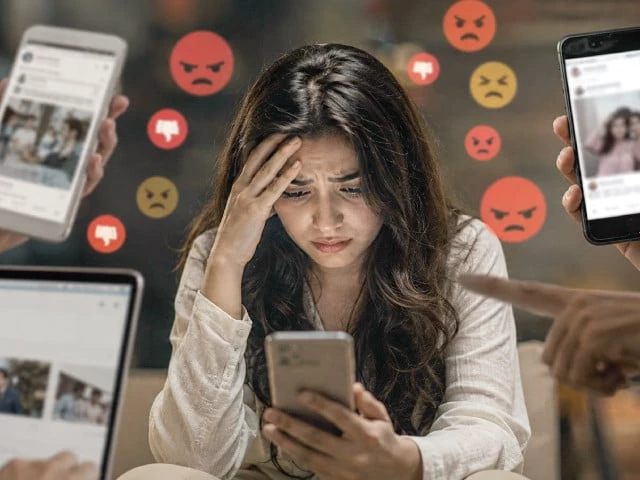
Pakistani entertainment voices are increasingly turning inward to confront a growing culture of online trolling, moral policing and viral outrage, with several actors using public platforms to question how social media behaviour is reshaping respect, privacy and emotional wellbeing in the digital age.
Speaking on a podcast appearance, actress and host Amber Khan reflected on an escalating race for attention in the online space, where virality often outweighs sensitivity. She warned that the ease of posting content has encouraged people to abandon restraint in pursuit of engagement and visibility.
"This year, 2026, all the emotions and frustrations that had been buried in your hearts finally came out," Khan said during the conversation. "The whole world is watching you, so maintain some caliber and dignity. Don't sit around tearing each other apart like this - there's a proper way to do things."
She stressed that humour and creativity are part of digital expression, but drawing attention through humiliation or abuse crosses a line. Khan cautioned that the pursuit of online fame has created a competitive environment where "everyone only wants to become viral," adding that this trend risks eroding basic respect between individuals.
Khan, who has appeared in numerous television projects over the years including 'Ba Adab Ba Mulahiza Hoshiyaar', 'Dusri Biwi', 'Dil Ruba', 'Dobara', 'Laapata' and 'Samjhota', has frequently spoken as a guest commentator on television programmes. Her remarks add to a growing chorus of industry voices challenging the darker side of digital culture.
She is not alone in raising concerns. Across Pakistan's entertainment industry, actors have increasingly spoken out against trolling, cyberbullying and moral policing, arguing that constant online scrutiny is taking a toll on mental health and reinforcing deeply rooted social biases, particularly against women.
Earlier this week, actress Zara Noor Abbas also addressed the issue of body shaming during an appearance on a podcast, where she spoke candidly about the pressures women face over their appearance. She said she actively confronts individuals who attempt to shame others online or in person, describing such behaviour as unacceptable and outdated.
Zara highlighted how women's bodies often become subjects of public commentary regardless of context, arguing that criticism frequently ignores the physical and emotional realities of motherhood. She noted that despite women making significant progress in every field, conversations around appearance remain stuck in regressive attitudes.
She also recalled a personal incident in which a shopkeeper commented on her weight, an encounter she said reflected how casually such remarks are made in everyday life. The actress suggested that such behaviour persists because it is rarely challenged at the societal level.
Veteran actress Shagufta Ejaz has also joined the conversation, focusing on the moral and ethical dimensions of online behaviour. In a widely shared video, she urged audiences to avoid gossip and speaking negatively about others, linking it to religious teachings and broader social harm.
She described backbiting as a serious issue, warning that repeated engagement in such behaviour gradually normalises it. What may begin as hesitation, she said, eventually turns into habit and then justification, making it increasingly difficult to break.
Shagufta also questioned society's persistent curiosity about private lives, arguing that people often feel entitled to information that individuals have not chosen to share. She stressed that such curiosity often crosses into harmful territory and contributes to a culture of intrusion.
Her comments also touched on the idea that online judgement frequently escalates without reflection, particularly when people speculate about personal matters such as relationships or family issues. She urged audiences to limit their curiosity and respect boundaries.
Meanwhile, actress Saheefa Jabbar Khattak has drawn attention to the intensity of criticism she has faced over her appearance, particularly her haircut, saying the backlash highlights a broader pattern of gendered scrutiny.
She questioned why personal grooming choices become public debate topics, pointing out that similar questions are rarely directed at male actors or male family members. Saheefa argued that women are disproportionately subjected to commentary about their clothing, education, marriage decisions and professional choices.
She also noted that much of the criticism she has received in recent months has come from other women, expressing disappointment at what she described as internalised negativity within the same gender group. Her remarks reflect a wider frustration over how online spaces often amplify judgement rather than support.
Together, the voices of Amber Khan, Zara Noor Abbas, Shagufta Ejaz and Saheefa Jabbar Khattak highlight a shared concern within the entertainment industry: that digital platforms, while offering reach and influence, have also become spaces where empathy is frequently replaced by ridicule.
As social media continues to shape public discourse, these actors' interventions underline an increasingly urgent debate about responsibility online - and whether the pursuit of attention has begun to outweigh the basic ethics of human interaction.











This material may not be published, broadcast, rewritten, redistributed or derived from. Unless otherwise stated, all content is copyrighted © 2026 The Express Tribune.





COMMENTS
Comments are moderated and generally will be posted if they are on-topic and not abusive.
For more information, please see our Comments FAQ