Early market closure faces backlash
Updated 2 hours ago

Only 15 neurosurgeons are working across 8 teaching hospitals in Karachi and Sindh
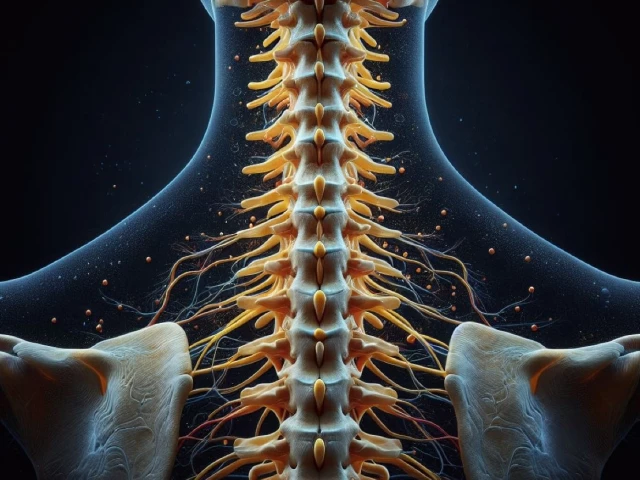
Sindh and other parts of Pakistan face a severe shortage of spinal surgery facilities. As a result, patients with spinal fractures, slipped discs, and other serious conditions often cannot access timely or specialized care in public hospitals.
No neuro spinal surgeons are formally posted in government hospitals, and spinal cases are generally managed by neurosurgeons when available. At present, only around 15 neurosurgeons are working across roughly eight teaching hospitals in Karachi and Sindh. These surgeons handle spinal cases alongside other responsibilities. District hospitals, especially in rural areas, lack even basic facilities for brain and spine treatment.
As a result of this gap in infrastructure, patients from rural Sindh are forced to travel to Karachi’s major hospitals or expensive private hospitals for treatment. Even in Karachi, access to dedicated neuro spinal services remains very limited, and many facilities are not fully equipped to manage complex spinal cases.
The shortage of infrastructure is further compounded by a lack of other specialized surgical services such as vascular, maxillofacial, and plastic surgery in both public and private sectors. Experts estimate that there are only 80 to 100 neurosurgeons in Sindh, most of whom are concentrated in private hospitals in urban centers, leaving a large gap in public healthcare access.
Kashif Baig, a patient, shared that his MRI scans showed an L5-S1 disc slip and after costly tests and multiple visits he found no proper treatment available. At a private hospital he was told that spinal surgery is highly sensitive, involving screws and close monitoring of nerves, and that even a small error could risk paralysis. Therefore, he postponed surgery, started physiotherapy, and is still in pain.
Similarly, another patient, Muhammad Shahid, revealed that he was injured in a motorcycle accident. “X-rays at the Jinnah Hospital showed fractures in two vertebrae, but I was told that no spinal surgeon was available there and that such cases require neurosurgical care. The doctors said no plaster will be used; instead, careful alignment and rest are needed,” recalled Shahid, who was advised to avoid motorcycles and take precautions.
Dr Sabir Memon, Executive Director of the Trauma Center at Civil Hospital Karachi, confirmed that there is a shortage of neuro-spinal surgeons because spinal surgery is highly sensitive and requires advanced expertise.
“From January 2025 to April 2026, the Trauma Center has performed surgeries on 447 spinal injury patients. Spinal surgeries cannot be performed by general doctors; they are carried out by neurosurgeons and orthopedic surgeons jointly, with extremely careful monitoring of spinal blood vessels,” said Dr Memon.
Dr Akbar Jaleel Zubairi, Assistant Professor at the Aga Khan Hospital, revealed that both neurosurgeons and orthopedic surgeons perform spinal surgery. However, internationally—and now in Pakistan—special fellowship programs in spine surgery are being introduced.
“Orthopedic surgeons handle spinal deformities and fractures while neurosurgeons treat spinal tumors and nerve conditions. In Pakistan, spinal care often begins after FCPS training in orthopedics or neurosurgery. The CPSP has launched a spine fellowship, but only a few doctors have completed it so far,” noted Dr Zubairi.
"The exact number of spine surgeons in Pakistan cannot be determined because both neurosurgeons and orthopedic surgeons are involved in such treatment, but their number remains very low and concentrated mainly in urban areas,” he added.
To partially address the shortage of trained specialists, the College of Physicians and Surgeons of Pakistan (CPSP) has recently introduced a spine surgery fellowship program, but it is still in its early stages and has produced only a very small number of trained surgeons so far.





This material may not be published, broadcast, rewritten, redistributed or derived from. Unless otherwise stated, all content is copyrighted © 2026 The Express Tribune.
COMMENTS
Comments are moderated and generally will be posted if they are on-topic and not abusive.
For more information, please see our Comments FAQ