APBUMA seeks govt backing for LA textile show
Updated 1 hour ago

WoW also jumps 0.47% on transport, food costs; raises fears for interest rates
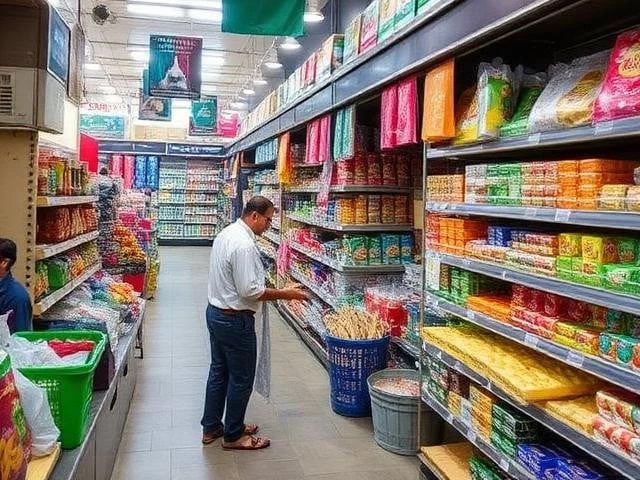
Pakistan's short?term inflation accelerated sharply, with the Sensitive Price Indicator (SPI) rising 14.52% year?on?year for the week ended May 14, reflecting mounting pressure on household budgets from soaring fuel, wheat flour and utility costs owing to the spillover effects of the Israel?US war on Iran and supply disruptions.
The weekly SPI also increased 0.47% over the previous week, indicating that inflationary pressures remain entrenched despite tight monetary policy and slowing economic activity. The public blames the government for failing to manage the situation.
Data released by the Pakistan Bureau of Statistics (PBS) showed the steepest annual increases came from petrol prices, which surged 64.23%, followed by diesel at 61.61%, wheat flour at 57.56%, electricity charges for the lowest consumption slab at 52.58%, LPG at 48.34%, onions at 50.06% and tomatoes at 40.66%.
The latest SPI reading underscores the growing inflationary spillover from higher energy costs into food and transport sectors, raising concerns that the recent easing cycle in inflation may have reversed more quickly than anticipated.
Dr Jazib Mumtaz, an applied economist associated with the Institute of Business Administration (IBA), said inflation had risen largely due to supply?side disruptions and escalating transportation costs.
"Inflation has spiked up as expected due to supply shock," he said. "Major contributors to inflation along with fuel are domestic transport costs which have pushed food prices higher. Freight cost has gone up which has caused import prices to spike up."
He added that uncertainty linked to geopolitical tensions had also intensified inflationary behaviour among consumers and traders.
"Uncertainty has also played its role in causing panic buying by consumers to increase prices," Mumtaz noted, urging the government to consider reducing the petroleum development levy (PDL) to ease the burden on households and businesses.
The PBS weekly data showed tomatoes recorded the highest week?on?week increase of 22.13%, followed by gents sponge chappals at 16.69%, ladies sandals at 7.15%, wheat flour at 4.94%, diesel at 3.76% and petrol at 3.73%.
Although prices of chicken, eggs and pulses declined during the week, the reductions were insufficient to offset the broader inflationary impact stemming from fuel and transport costs.
The inflation surge appears increasingly broad?based across income groups. According to PBS data, SPI inflation for the lowest consumption quintile stood at 11.56% year?on?year, while the highest income group recorded a 14.24% increase. The combined index climbed to 358.71 points from 313.24 a year earlier.
Brokerage house Topline Securities warned that Pakistan's Consumer Price Index (CPI) for May 2026 could rise between 11% and 11.5% year?on?year, compared with 10.89% in April and 3.46% in May last year, making it the highest monthly inflation reading in 23 months.
The brokerage attributed the expected increase mainly to food inflation, projecting a 1.2% month?on?month rise in the food basket driven by sharp increases in wheat flour, wheat and potato prices.
Topline noted that although transport costs moderated slightly after recent volatility in global oil markets, petrol prices still rose 5.6% while high?speed diesel prices remained significantly elevated compared with last year.
Analysts believe the inflation resurgence could complicate the State Bank of Pakistan's monetary easing path, particularly as real interest rates remain marginally positive.
"The anticipated inflation surge in May?June will strain real household incomes and narrow the central bank's policy flexibility," said Waqas Ghani Kukaswadia, head of research at JS Global. "It would require careful calibration to balance macroeconomic stability while protecting lower?income segments from further purchasing power erosion," he added.
Topline estimated real interest rates in May could range between zero and 50 basis points, well below Pakistan's historical average of 200?300 basis points, suggesting limited monetary space if inflation continues accelerating.
The brokerage expects average inflation to settle at 7.1% in FY2026 and rise further to 8.2% in FY2027, indicating that price stability risks may persist despite ongoing fiscal consolidation under the IMF programme.
Economists warned that continued increases in fuel and electricity prices, coupled with supply?chain disruptions and currency?related import costs, could deepen the cost?of?living crisis for lower? and middle?income households in the coming months.







This material may not be published, broadcast, rewritten, redistributed or derived from. Unless otherwise stated, all content is copyrighted © 2026 The Express Tribune.













COMMENTS
Comments are moderated and generally will be posted if they are on-topic and not abusive.
For more information, please see our Comments FAQ