PM Shehbaz extends Eidul Azha greetings to military, political leadership
Updated 2 hours ago

.
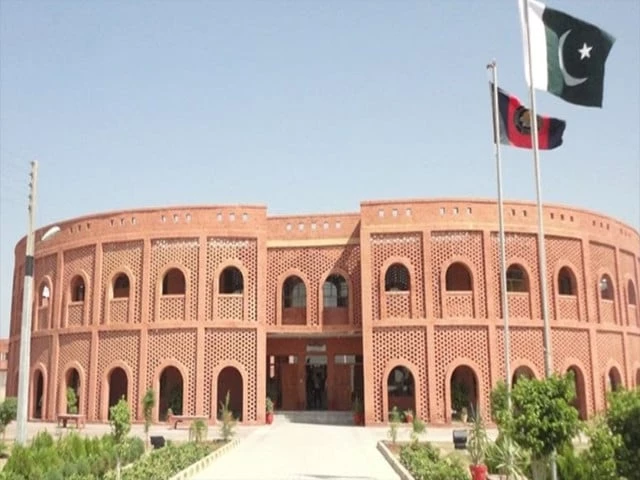
When Prime Minister Shehbaz Sharif announced four Daanish schools for Gilgit-Baltistan during his 7 May visit to Gilgit, the news travelled through the region's parents and teachers faster than any other line in his address. Free education, free meals, free uniforms, smart boards and e libraries, all on federal account, in a region where the modal rural school still struggles to keep its roof intact through a Karakoram winter. This is not a marginal intervention. It is the most ambitious federal investment in GB's children in a generation, and it deserves the credit it has earned.
The Daanish model has a proven track record. The first campuses, established in southern Punjab from 2010 onward, were built around a clear idea. Identify the most academically promising children from the poorest districts. Give them residential placements with elite resources. Hold the schools accountable for measurable outcomes. The model has produced competitive examination results from districts that had never previously sent a student to a national university. Extending that model to Gilgit-Baltistan is not a press release. It is a structural commitment to the idea that talent in Astore and Diamer is equal to talent in Lahore, and should receive equal investment.
The decision to bundle hardware with hospitality is well calibrated. Smart boards and e libraries are sometimes dismissed as cosmetic. In GB they will be transformative. Many of the region's children have never had reliable access to a school library, let alone a digital one. Paired with the Prime Minister's 100 megawatt solar scheme, the e libraries will run on power that is itself a federal gift. The two flagship projects, energy and education, have been deliberately designed to reinforce each other. That kind of joined up planning speaks to a Prime Minister who thinks in systems, not silos.
The choice to make meals and uniforms free is the most underappreciated element. Anyone who has worked on rural enrolment data in Pakistan knows that the marginal child who drops out does so because of small, recurring costs, not school fees. A daughter is kept home because the family cannot afford a new uniform in March. A son joins his father in the field because lunch is one less thing to provide at home. By removing both costs, the Daanish design lifts a quiet barrier that has held GB's enrolment numbers below their potential for years. The female enrolment effect alone will repay the federal outlay many times over.
The presence of a high level cabinet team at the launch signals that this is not a one ministry initiative. The federal government has committed real political weight to delivery. The Prime Minister's parallel announcement of laptops and youth loans rounds out a continuum of support, from primary school to first business. A child who enters a Daanish school in 2027 and exits with a laptop and a small business loan a decade later will have travelled an entirely new path, opened by this government.
Some have asked about teacher recruitment, siting, and the maintenance of digital equipment. These are reasonable questions, and the Prime Minister has signalled they will be answered through joint federal and GB governance arrangements. The broad architecture is correct. Investment of this scale has not been attempted before in GB. It is happening now because of a Prime Minister who chose to make children in the north a priority, and a cabinet willing to follow him there.
The Daanish announcement in Gilgit is a meaningful step in the other direction. It places the federal government on the side of GB's youngest learners, with the resources and political seriousness the task demands.
Rana Tauqeer Hasan is a senior education policy researcher in Gilgit-Baltistan





This material may not be published, broadcast, rewritten, redistributed or derived from. Unless otherwise stated, all content is copyrighted © 2026 The Express Tribune.











COMMENTS
Comments are moderated and generally will be posted if they are on-topic and not abusive.
For more information, please see our Comments FAQ