Education without character cannot build a nation
Updated 17 hours ago

When official reality drifts from reality itself, democracy hollows out
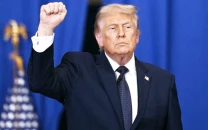
I recently read a piece in this very op-ed section that caught my attention. Someone wrote about the assassination attempts on Donald Trump. Not the attempts themselves, but the silence around them. The mainstream media's silence. Trump's own silence. The lack of comment from the whole political and media establishment that would have occupied months of airtime in other circumstances. His point was straightforward: the quiet is stranger than the shots.
I've been thinking about reactor number four ever since.
On the night of April 26, 1986, operators at Chernobyl watched instruments behave in ways the manual said were impossible. They continued with the test anyway. The explosion took place and officials classified it as a minor accident. Firefighters arrived on the scene but they were not wearing radiation suits. For 36 hours, people in Pripyat lived as they were accustomed to, and the air around them slowly poisoned them.
Years later, Mikhail Gorbachev, the leader of the USSR, would suggest that Chernobyl, more than any Western pressure campaign, exposed the deeper weakness of the Soviet system: the increasing gap between official reality and reality itself.
Hannah Arendt called it the banality of evil. Not monsters. People at their desks doing what they're supposed to do, but not asking questions. The agent from the FBI who closes the file. The person who edits the story in the editor's chair. The person who sends it to the weather. No one wants to be covering anything up. They each, individually, decide not to look.
Now consider the past few years in America. A number of major security incidents involving a former and current President, armed individuals around sensitive political events and places, have generated little sustained public attention. Some were initially reported, but largely left out of public discourse after a short period. The absence of curiosity, whatever the reasons might be, seems historically peculiar.
That does not prove conspiracy. It proves something arguably more troubling that is a growing normalisation of institutional opacity.
America has seen this pattern before. Iraq failed to deliver WMD, and not many of those who made the decisions were held accountable. In 2008, a series of financial risks that were both catastrophic and visible were piling up, and no one at the top was held accountable. Epstein died in federal custody while multiple safeguards failed simultaneously. These events are not the same, and they are not necessarily coordinated in secret to be of any consequence. They show together an increasingly contradictory institutional capacity to take contradiction without any real accountability.
And now this same political system demands transparency from rivals abroad and claims to be the custodian of democratic credibility. That claim is also a bit difficult to sustain given its contradictory conduct involving the ongoing war, which has made its word as a negotiating party harder for the world to accept. The Iran nuclear issue is a legitimate international concern. But credibility in diplomacy is not built only on military power or legal arguments, it also depends on whether a state appears willing to confront uncomfortable realities within its own system.
A century ago Walter Lippmann noted that democracy requires that the public be provided with a reliable picture of the world. When that picture is managed, meaning not falsified but carefully cropped, democracy continues to function procedurally while hollowing out from within.
I am not arguing that America is uniquely corrupt, nor that every unanswered question hides some grand conspiracy. The argument is much simpler: societies become fragile when institutions begin treating public uncertainty as a public relations problem instead of a necessity of democracy.
The Soviets ignored the dosimeters until the roof came off the reactor.
The question is whether America still recognises the sound the alarms make before the concrete starts splitting open.





This material may not be published, broadcast, rewritten, redistributed or derived from. Unless otherwise stated, all content is copyrighted © 2026 The Express Tribune.



COMMENTS (5)
Comments are moderated and generally will be posted if they are on-topic and not abusive.
For more information, please see our Comments FAQ