Education without character cannot build a nation
Updated 22 hours ago

Nearly 40% of children in Pakistan are severely malnourished and have lower IQ levels
Recently UNICEF and Pakistan's Ministry of Health issued a very alarming report about our children. More than 40% of children in high risk areas have shown high lead levels in their blood. There is no safe level of lead in children's blood.
At a time when we are already dealing with HIV in children - coming into view again and again through multiple outbreaks - who really cares if children in Pakistan are also carrying a dangerous metal in their blood? Whether it is HIV or lead, the question should be the same: why are our children paying the price?
The reality is even more frightening when we look at the bigger picture. Already, nearly 40% of children in Pakistan are severely malnourished and have lower IQ levels. Malnutrition alone affects brain development. Add lead to their blood, and IQ drops further. Lead directly damages the developing brain. Children are the future of the nation, and if our next generations grow up with lower intellect and reduced cognitive capacity, is this not an unnatural loss? Should this not be declared a national emergency?
Children's health is a critical component of the overall health of any nation. Unfortunately, in our context, health usually means clinical care - treatment provided after the damage has already been done, not prevention. In a country of over 240 million people, most of them young, how many child health institutes do we have? How much real research is being done on child health? And here I am not talking about hospital based paediatric treatment, but about preventive child health and environmental risks.
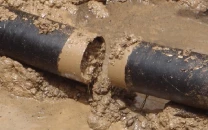
Why should we worry about lead in children's blood? Because it not only damages intellectual growth, it also makes children prone to many other diseases. More than 100 years ago, it was already identified that certain industries cause pollution and are responsible for lead exposure. Apart from industrial and non industrial pollution, other major sources of lead include contaminated food and spices, old water pipes, lead based paints and, most importantly, battery recycling industries located near residential areas.
The world identified this problem early and introduced regulations to control it. Many countries phased out lead from daily life. Even India has managed to control many major sources of lead exposure, although occasionally news appears about contaminated spices exported abroad. Pakistan and Bangladesh, however, are failing miserably, largely because we simply did not care enough.
Better late than never. For the first time, Pakistan, through the Ministry of Health and UNICEF, has taken a welcome step to measure lead levels in young children. At this stage, I will not criticise the authorities, because acknowledging the problem openly is important. It shows that at least we are not afraid to look at the reality.
Our biggest weakness as a nation is that we resist accepting our problems. We argue, deny, and move on - then wonder why nothing improves. Now that the Ministry of Health has identified this issue, the real question is how they plan to resolve it.
It will not be a short term solution. It will require long term strategic planning and multiple partners. Lead polluting industries must be regulated and gradually phased out. At the same time, children in high risk areas must be tested, monitored and managed. Prevention and care must go side by side.
Children are our future, yet they are already being devastated by malnutrition, lead exposure, repeated HIV outbreaks and lack of education. A large number are out of school. All this clearly shows how careless we are about our future. No matter what we say or claim, our actions show that we give very little importance to our children.
Nearly 50% of our future generation is being compromised, threatening our national survival in the long run. Health is a national asset. Whether policymakers pay attention or not, the time will come when everyone will understand its value. The tragedy is that by then it may already be too late.
Please, take care of your children.




This material may not be published, broadcast, rewritten, redistributed or derived from. Unless otherwise stated, all content is copyrighted © 2026 The Express Tribune.





COMMENTS
Comments are moderated and generally will be posted if they are on-topic and not abusive.
For more information, please see our Comments FAQ