Brand reliability fetches demanded price
Updated 21 hours ago

Business leaders suggest policies must reflect ground realities to achieve tangible outcomes
Every year, Pakistan's budget exercise begins the same way, ie, ambitious targets are set, confident projections are made, and shortfalls arrive quietly, long after headlines have faded.
This year, however, the shortfall has not waited for the budget to be announced. It is already here, and voices from the business community are growing louder in their demand that the upcoming Finance Bill face facts rather than sidestep them.
"Budget document should not be given a cosmetic makeover, it must reflect ground realities so that tangible results can be achieved," said Mudassir Masood Chaudhry, former executive committee member of the Lahore Chamber of Commerce and Industry, on Monday. He added that economic policies ought to be formulated on realistic and sustainable foundations.
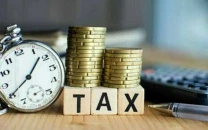
His concern is backed by the troubling data. The Federal Board of Revenue's (FBR) tax collection for fiscal year 2025-26 has already recorded a shortfall of over Rs600 billion. Revenue growth in March stood at a modest 6%, a figure that signals little momentum while heading into the final quarter. At this pace, Chaudhry warned, the total shortfall by fiscal year-end could reach Rs900 billion, bringing actual FBR revenues to approximately Rs13,080 billion, well short of the original target.
The government has set the FBR's revenue target at Rs15,564 billion for fiscal year 2026-27, implying a growth rate of 19% over a base that is itself falling short. If realised, this will raise the tax-to-GDP ratio by approximately 1.1 percentage points. Whether that is achievable, Chaudhry suggests, is the central question budget planners must answer honestly.
Beyond the revenue arithmetic, an outlined broader set of structural reforms, he believes are essential for sustainable growth. He called for the industrial sector to be provided with incentives and facilitation to boost exports, arguing that without competitive energy costs, Pakistani manufacturers could not compete internationally. He urged the government to carry out reforms in power and gas sectors to reduce the cost of doing business, a concern that has dominated chamber meetings across the country for years.
On taxation, he emphasised that widening the tax net and bringing the undocumented economy into the formal system must be central priorities, alongside modernising the agriculture sector through access to new technology and targeted subsidies. Other businessmen suggest that the government should set revenue generation and growth-related targets based on reality, rather than to satisfy international lenders, as the domestic economy is more important than such lenders. "When you set a revenue target that requires 19% growth while the economy is growing at a fraction of that pace, you are not planning a budget, you are writing fiction," said Ahmad Raza, a textile exporter. "The cost always falls on the existing taxpayer, because that is the easiest lever to pull. What we need instead is a serious, sustained effort to document the informal economy and create conditions where businesses want to grow, not to shrink to avoid the tax collector."
The business community acknowledges that fiscal consolidation is necessary, particularly given Pakistan's obligations under its ongoing IMF programme, but that consolidation built on inflated revenue projections ultimately undermines itself, creating mid-year crises, emergency mini-budgets, and a loss of credibility that makes the next planning cycle even harder. "Numbers that look good on paper but ignore the economy on the ground carry a cost and that cost, as Pakistan has learnt repeatedly, is paid long after the budget speech ends," Raza added.








This material may not be published, broadcast, rewritten, redistributed or derived from. Unless otherwise stated, all content is copyrighted © 2026 The Express Tribune.









COMMENTS
Comments are moderated and generally will be posted if they are on-topic and not abusive.
For more information, please see our Comments FAQ