Inflation dampens Eid shopping
Updated 19 hours ago

Union leaders hold rallies while labourers search for work on Labour Day
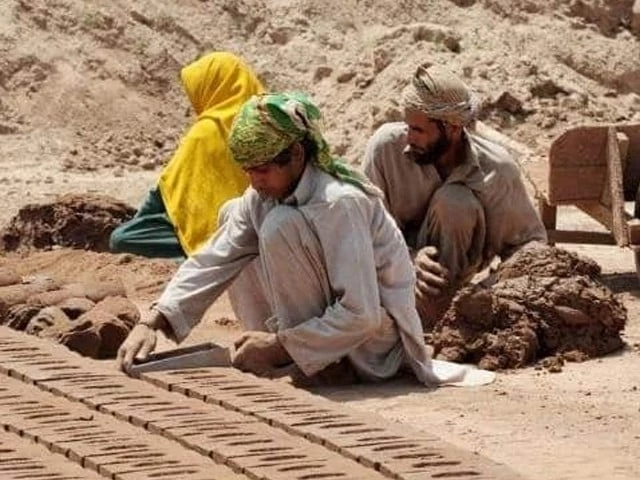
Labour Day presented a stark contrast as government officials and clerks enjoyed a full holiday, spending time with families at recreational spots such as Patriata, Murree and Ayub Park, while real labourers continued to struggle for daily wages across the city.
Across intersections, workers carrying pickaxes, shovels, hammers, stone-cutting machines and construction tools remained indifferent to the "blessings" of the May 1 holiday as they searched for livelihood to feed their children.
Labourers continued to earn in fruit and vegetable markets, goods transport hubs and wholesale centres, while work remained ongoing at brick kilns, iron melting furnaces and factories.
Masons, painters and construction workers were engaged in building houses, painting official residences, and working on under-construction overhead bridges and underpasses. No daily wage male, female or child labourer received a holiday.
Meanwhile, union leaders and political figures dressed in cotton suits and waistcoats gathered on roads and in markets, raising hollow slogans of labour unity and holding photo sessions that went viral on social media throughout the day.
Despite a minimum wage of Rs40,000 in Pakistan, workerseven in government institutionsare forced to accept monthly salaries ranging from Rs17,000 to Rs25,000. Leaders fulfilled the ritual of Labour Day by issuing appealing statements, while workers remain without support amid rising inflation that has made life increasingly difficult for labourers and the middle class.
All brick kilns, tyre-melting units and wholesale markets in Rawalpindi remained fully operational on May 1.
Labourers sat all day at city intersections with their tools seeking work; some found jobs, but the majority returned home disappointed, relying on charity meals.
International Labour Day is observed every year on May 1 in memory of the sacrifices made by workers in Chicago in 1886 for an eight-hour workday. The movement, which was met with violence, strengthened labour rights globally. The day was officially recognised worldwide in 1889, and in Pakistan it has been observed as a public holiday since 1973.
Workers waiting for employment at Raja Bazaar, Dingi Khoi Chowk, Banni Chowk and Adiala Road said they gained nothing from the day. "We cannot return home without earning. If rallies could provide us bread, we would join them," they said, adding that missing even a single day forces them to beg or borrow.
They said inflation has surged, with even a cup of tea costing Rs100, and accused successive governments of exploiting labourers while pushing them deeper into poverty.




This material may not be published, broadcast, rewritten, redistributed or derived from. Unless otherwise stated, all content is copyrighted © 2026 The Express Tribune.













COMMENTS
Comments are moderated and generally will be posted if they are on-topic and not abusive.
For more information, please see our Comments FAQ