Pakistan, seven other Muslim states condemn Israeli minister's 'disgraceful' actions against flotilla detainees
Updated 1 hour ago

Conditions going from bad to worse in Gaza
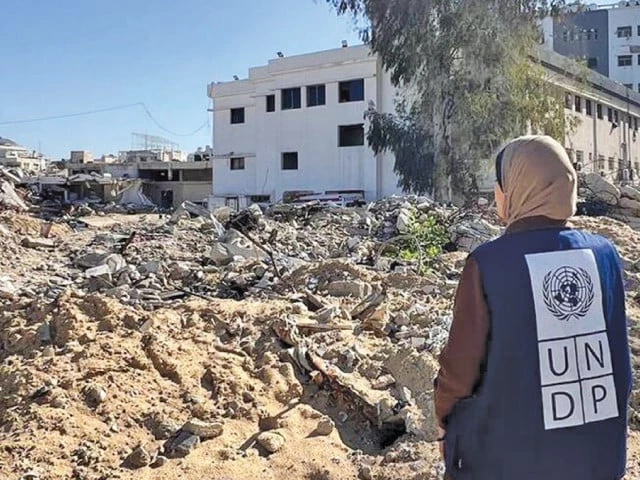
At least nine people were reported to have been killed in southern Lebanon on Thursday, as ongoing hostilities continue to exact a heavy toll on civilians and drive a worsening humanitarian crisis marked by rising hunger and strained public services.
The UN relief coordination office, OCHA, cited reports from Lebanese authorities that at least 13 people were also injured in multiple airstrikes and military activity across towns in the south.
Between 17 and 28 April alone, 48 people were killed and 183 injured, bringing the total toll since the escalation began on 2 March to more than 2,500 killed and over 7,800 wounded, according to the country's health ministry.
Despite an extended ceasefire, the situation remains "fragile and volatile," OCHA said, with continued violence hampering humanitarian access and recovery efforts.
Aid agencies have managed to carry out 100 assisted missions to hard-to-reach areas through a UN-coordinated notification system, allowing some relief to reach communities under strain.
Insecurity, coupled with the economic impact of the conflict, has further strained livelihoods, while rising costs and supply disruptions are worsening food insecurity.
Estimates indicate that nearly a quarter of the population is facing acute hunger.
A new alert from the UN-backed global food security tracker IPC on Wednesday warned that the situation is deteriorating rapidly.
Around 1.2 million people could face high levels of acute food insecurity between now and August.
"Behind every number are families struggling to meet their food needs consistently," the UN World Food Programme (WFP) said, as it continues to scale up assistance, together with partners.
In one school-turned-shelter in Jdeideh, in northern Beirut city, 377 people – around 90 families – are living in cramped conditions, the World Health Organization (WHO) reported, highlighting the pressures on basic infrastructure.
The UN health agency has been working with partners to strengthen medical treatment options including support for hospital blood banks to ensure lifesaving transfusions during emergencies.
Gaza conditions deteriorate
In Gaza, humanitarian conditions remain dire, with families facing overcrowded shelters, limited access to water and growing health risks.
OCHA said UN and partner teams visiting displacement sites in eastern Gaza city found around 600 families living in "harsh conditions," sheltering in damaged buildings and tents with little access to clean water and virtually no sanitation services.
Rodents and insects are widespread, increasing the risk of disease, while untreated waste and overcrowding are compounding already difficult living conditions.




This material may not be published, broadcast, rewritten, redistributed or derived from. Unless otherwise stated, all content is copyrighted © 2026 The Express Tribune.










COMMENTS
Comments are moderated and generally will be posted if they are on-topic and not abusive.
For more information, please see our Comments FAQ